Prepositions Matter: Choosing Marrakech, Morocco
I wanted to go somewhere different. There were countless places I could have chosen, but Marrakech made the list for one very specific reason: I wanted to see the snake charmers. That was it. That was enough. Sometimes a choice does not need to be supported by a spreadsheet of pros and cons. Sometimes curiosity is reason enough to book the flight.
Getting to Marrakech required a long layover in Amsterdam, so the day before I left, I mapped out a list of things to see between flights. I did not expect much from the stopover. Amsterdam was not the destination; it was merely a preposition—a place I had to pass through on my way to somewhere else. It overdelivered.
I left on KLM Thursday afternoon, repeatedly changing seats in the hope of securing an entire row to myself. That plan did not quite work. Instead, I ended up beside a small, older woman who did not speak English and mostly kept to herself. It was a quiet, easy flight. I sat in 26A, directly in front of the bathroom, on both long-haul flights. Some people might consider that a bad seat, but it worked for me. Nobody kicked the back of my chair, and I could recline without disturbing anyone. Every choice has trade-offs.
Somehow, during the ten-hour flight, I watched only one television show. I did not work. I did not sleep. I am still unsure how I managed to occupy the rest of the time. Meanwhile, Grant was at home dealing with the solar installation and trying to get our system running. There was not much I could do from the airplane, but by the time I landed, we thought he had figured it out.
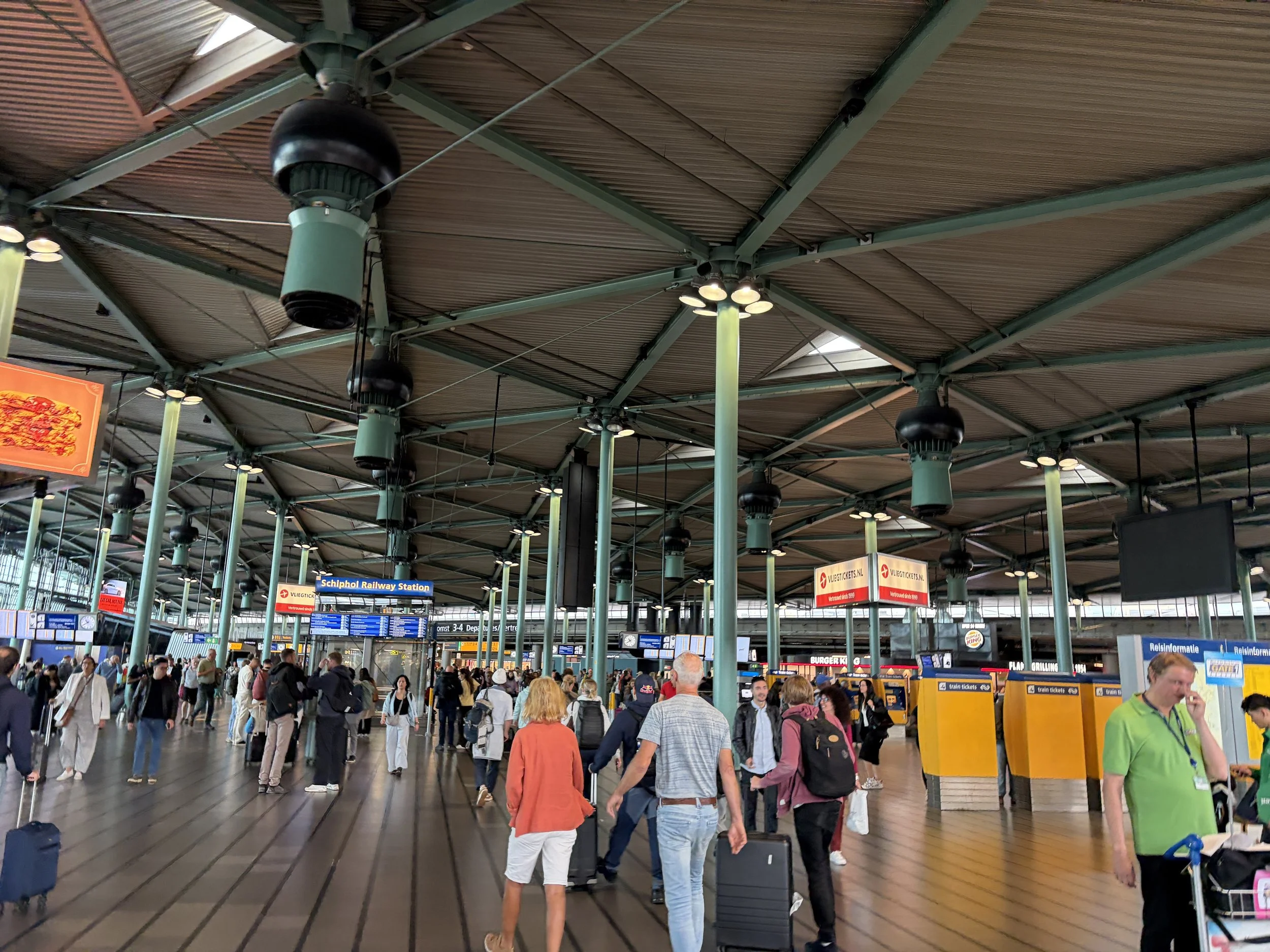
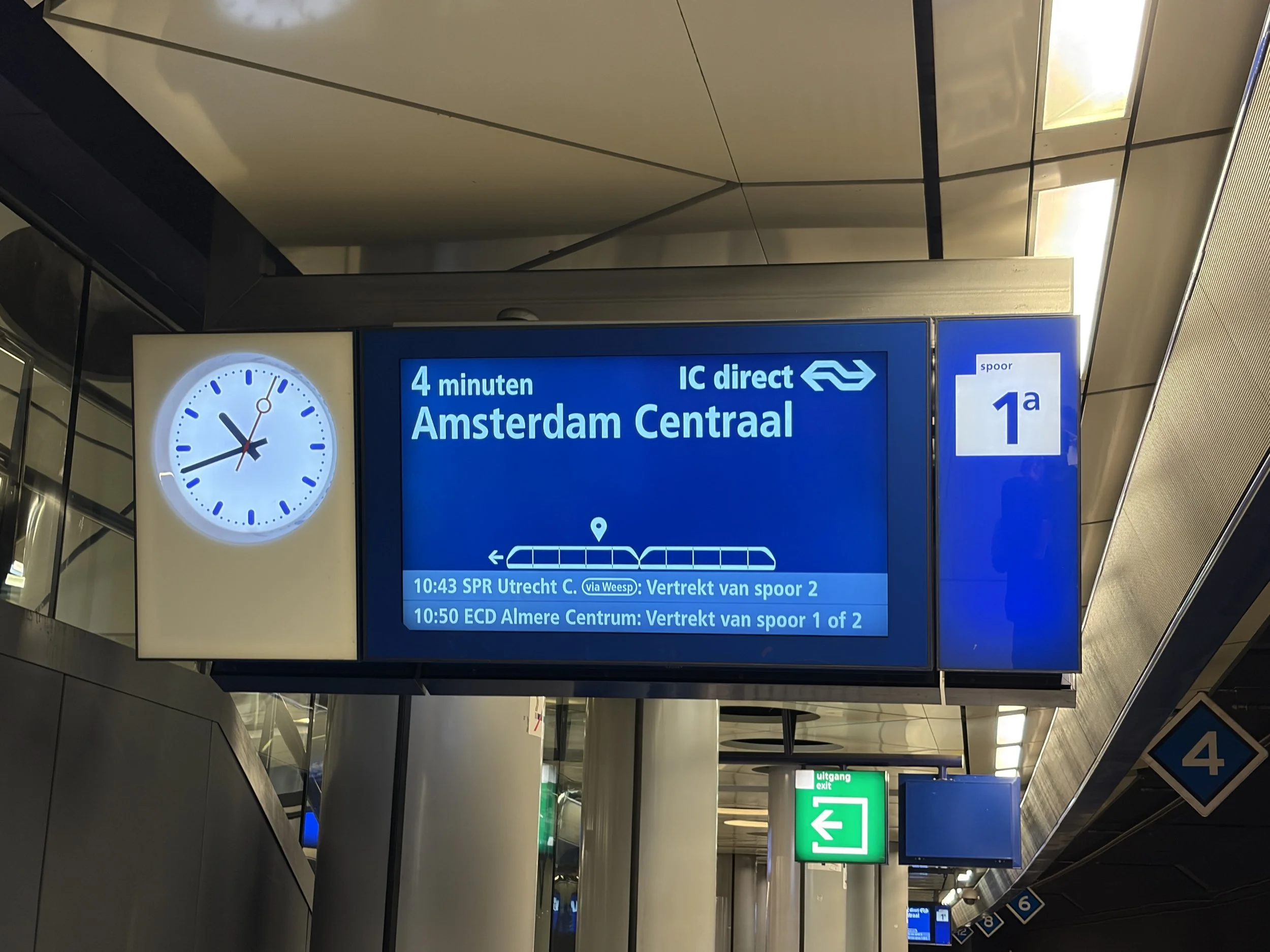
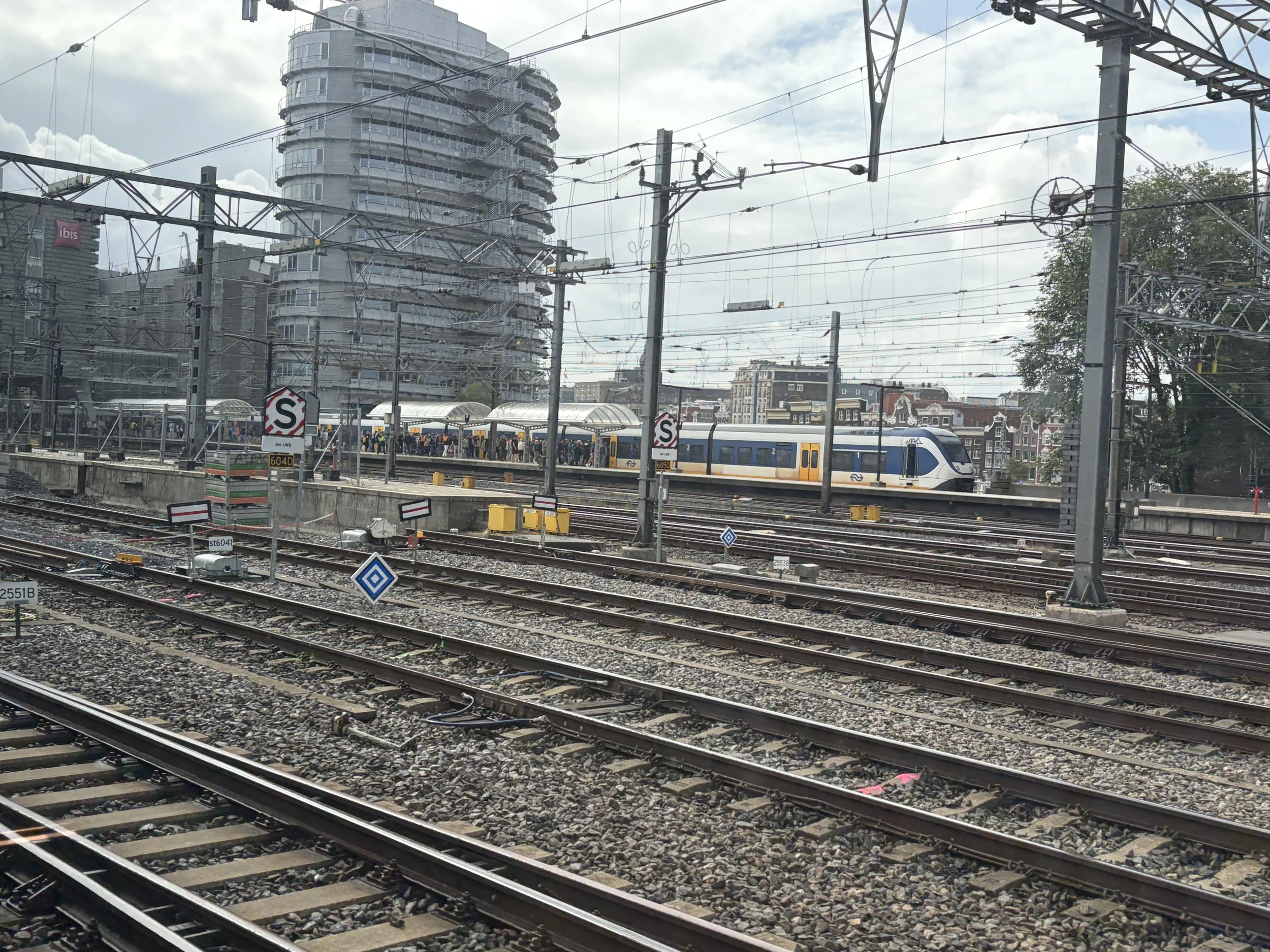
Amsterdam was remarkably easy. I cleared the airport in under an hour, boarded a train to the city center, and started checking places off my list.
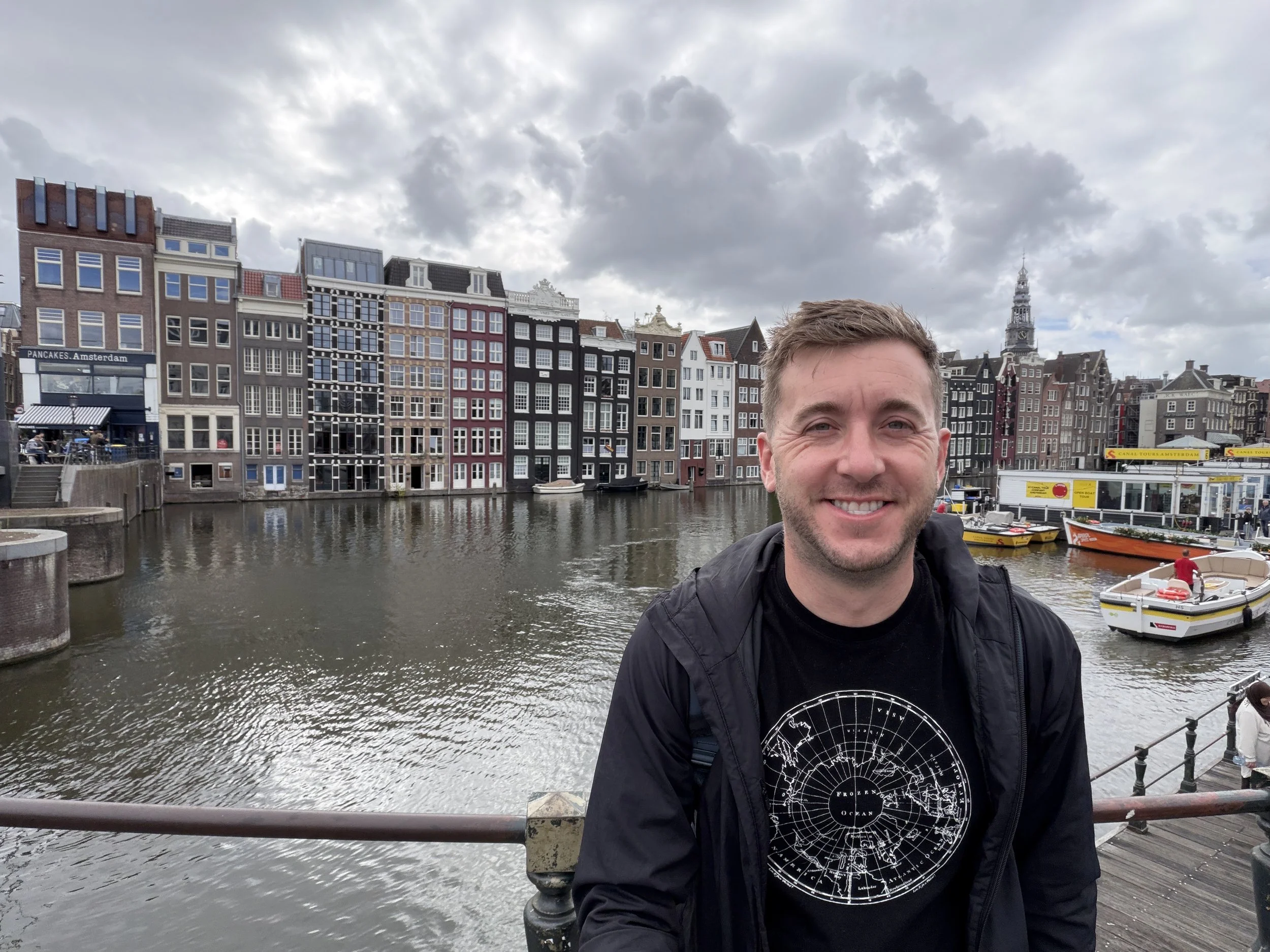
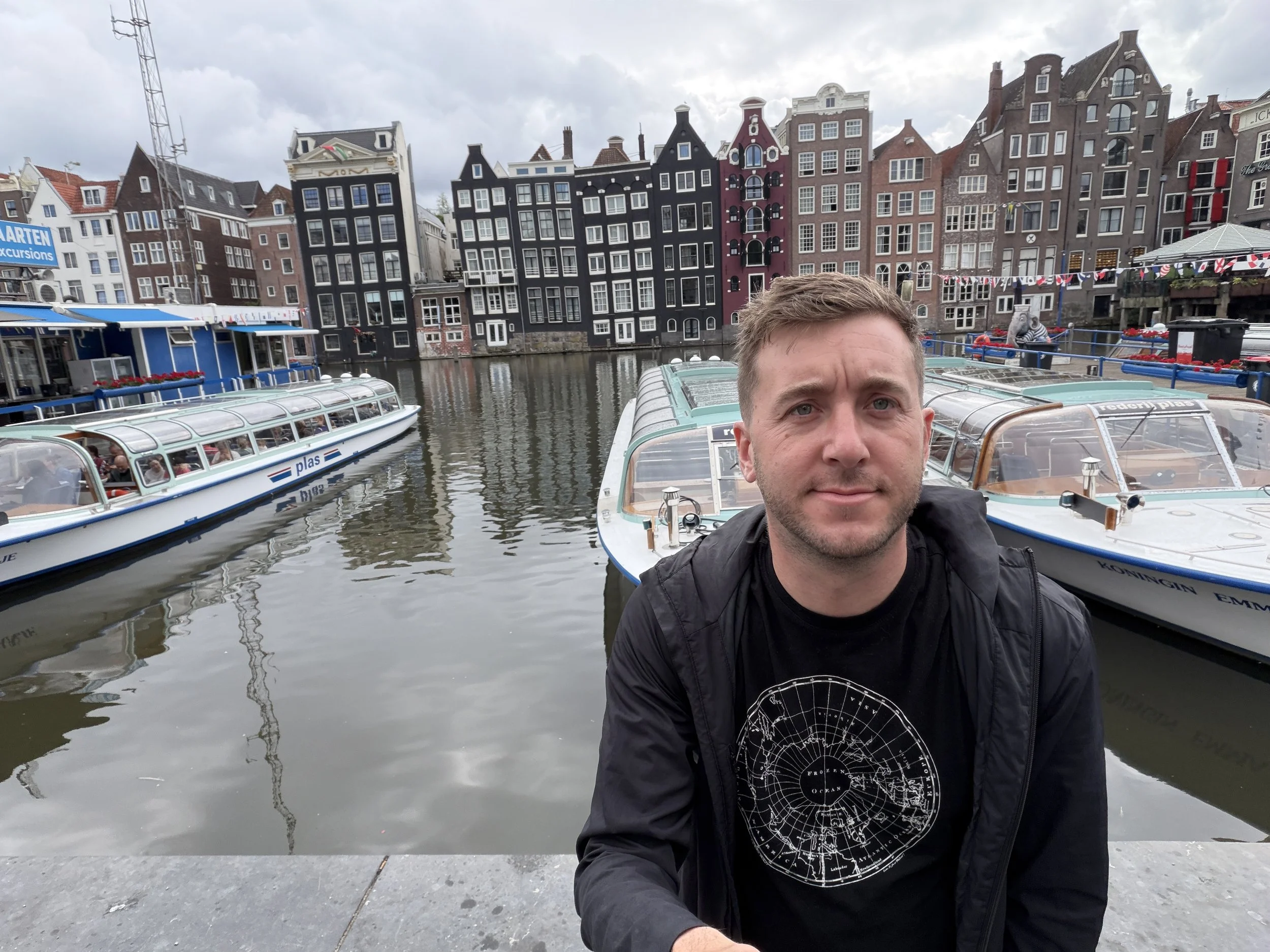
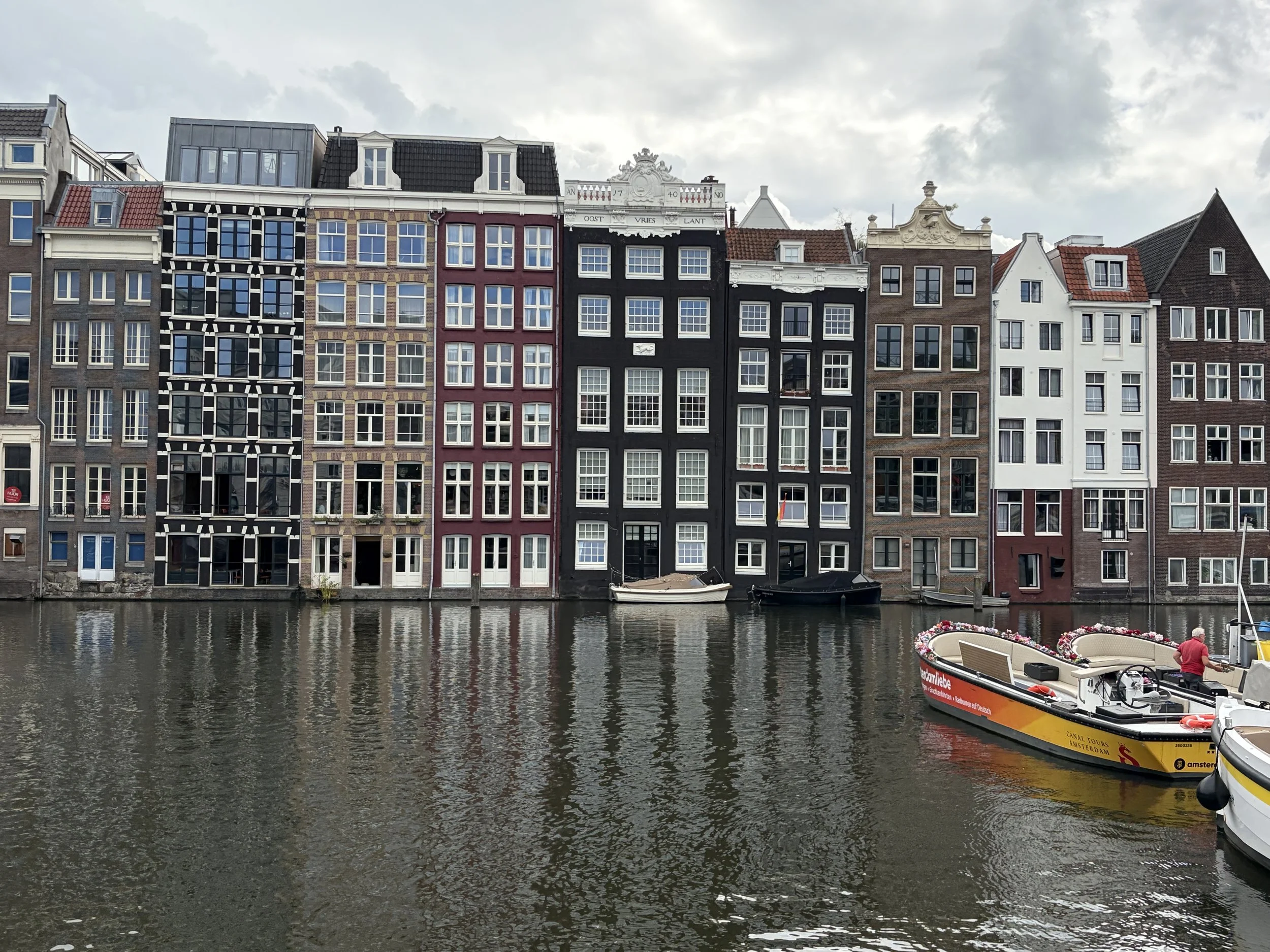
My first stop was the row of narrow, slightly crooked canal houses along the Damrak. These tall buildings were constructed on Amsterdam’s soft, marshy ground, supported by wooden pilings driven into the earth. Over time, shifting foundations caused many of them to lean, creating the famously uneven skyline. The houses were also built narrow because property taxes were historically based in part on frontage. The result is one of the city’s most recognizable views: a line of elegant buildings that look as if they have made a collective choice not to stand straight.
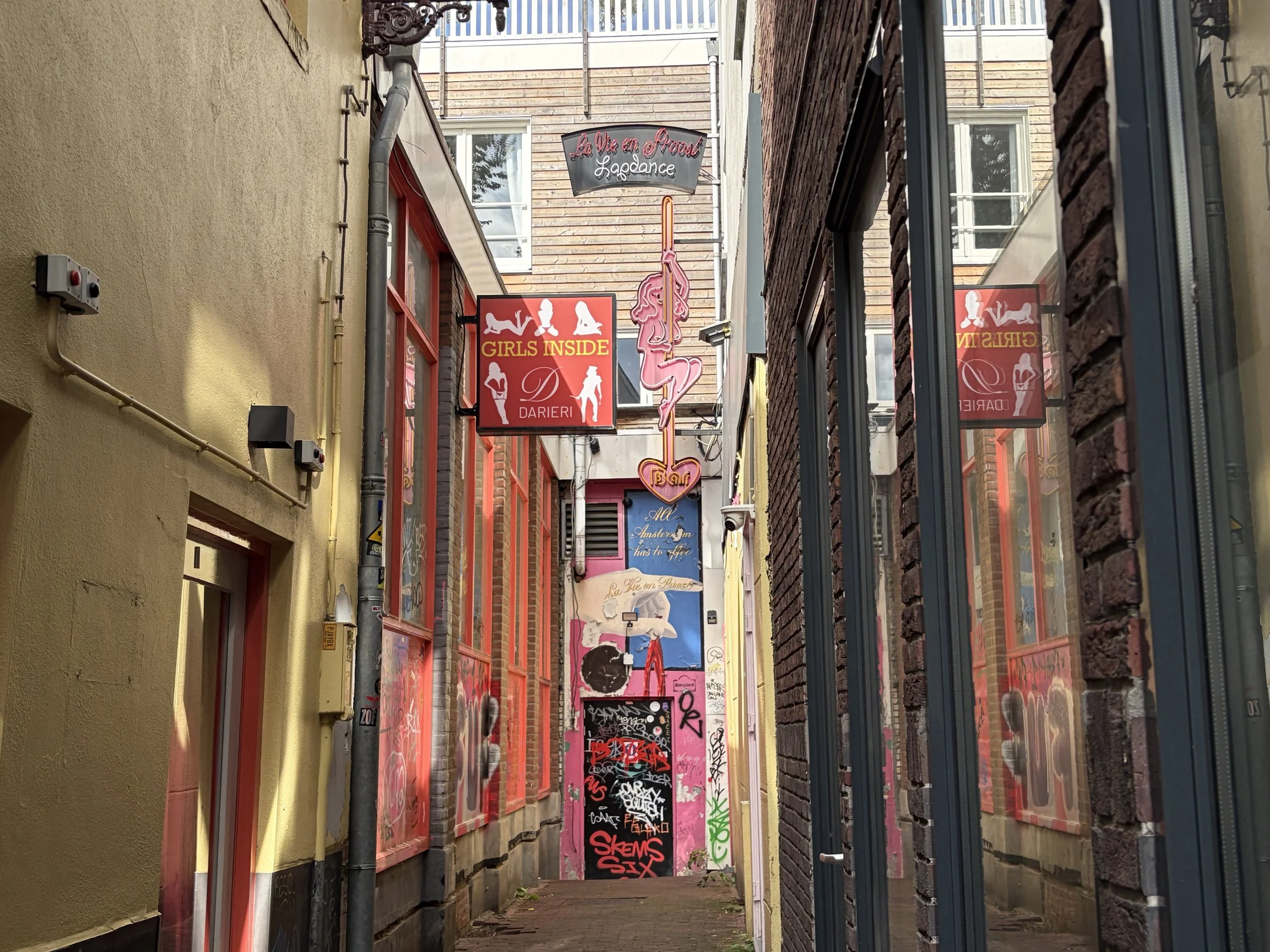
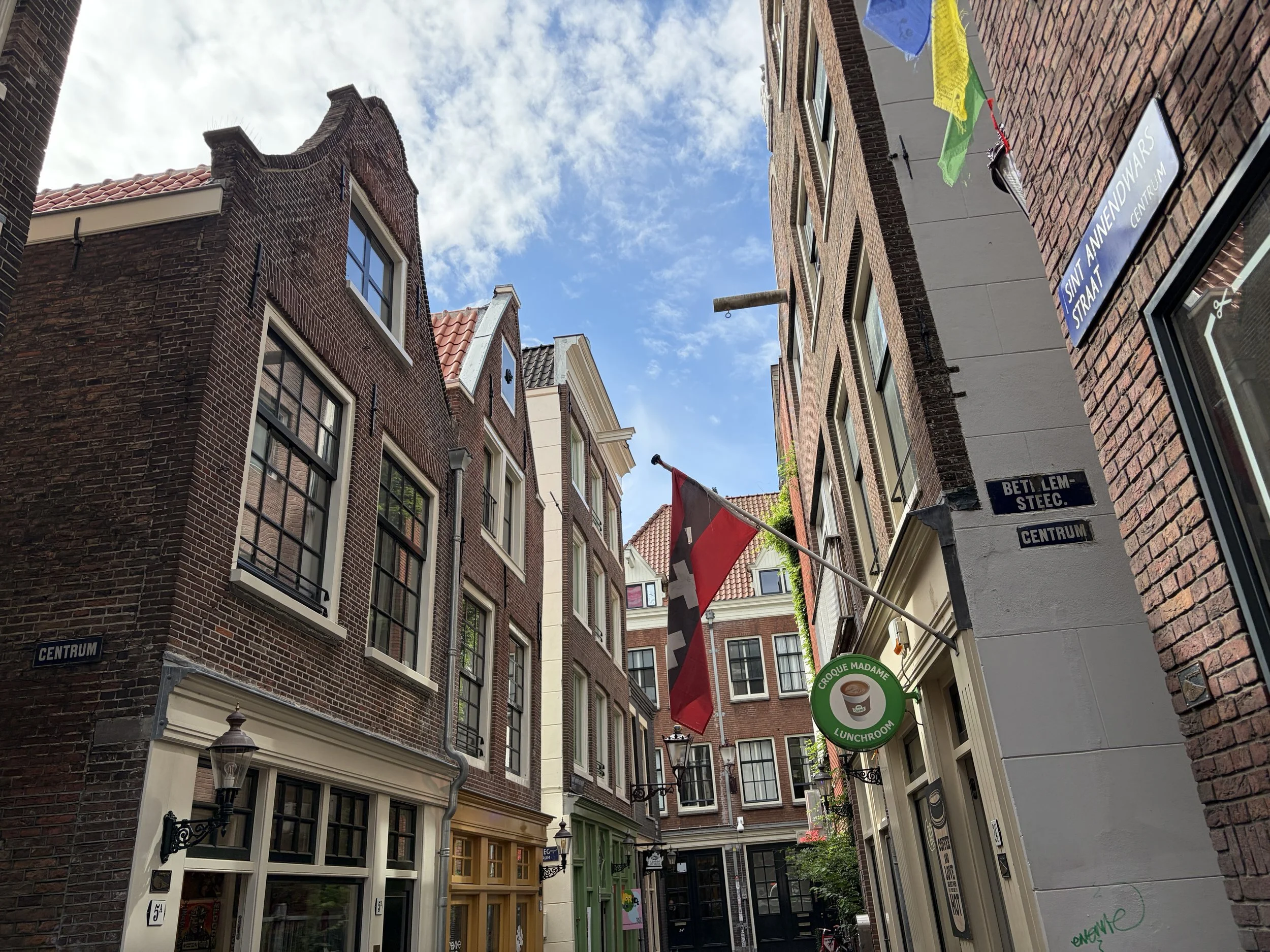
Before arriving, the two things I associated most with Amsterdam were marijuana and the Red-Light District. Marijuana tourism has lost some of its novelty as laws have changed elsewhere, but legalized prostitution remains a significant draw. It was not a personal attraction, but I was curious to see the area. I wandered the narrow streets of the Red-Light District in the morning. The district was mostly quiet, with only remnants of where the red lights had flickered a few hours earlier. It was still interesting to see, even if it was not fully turned on. Pun intended.
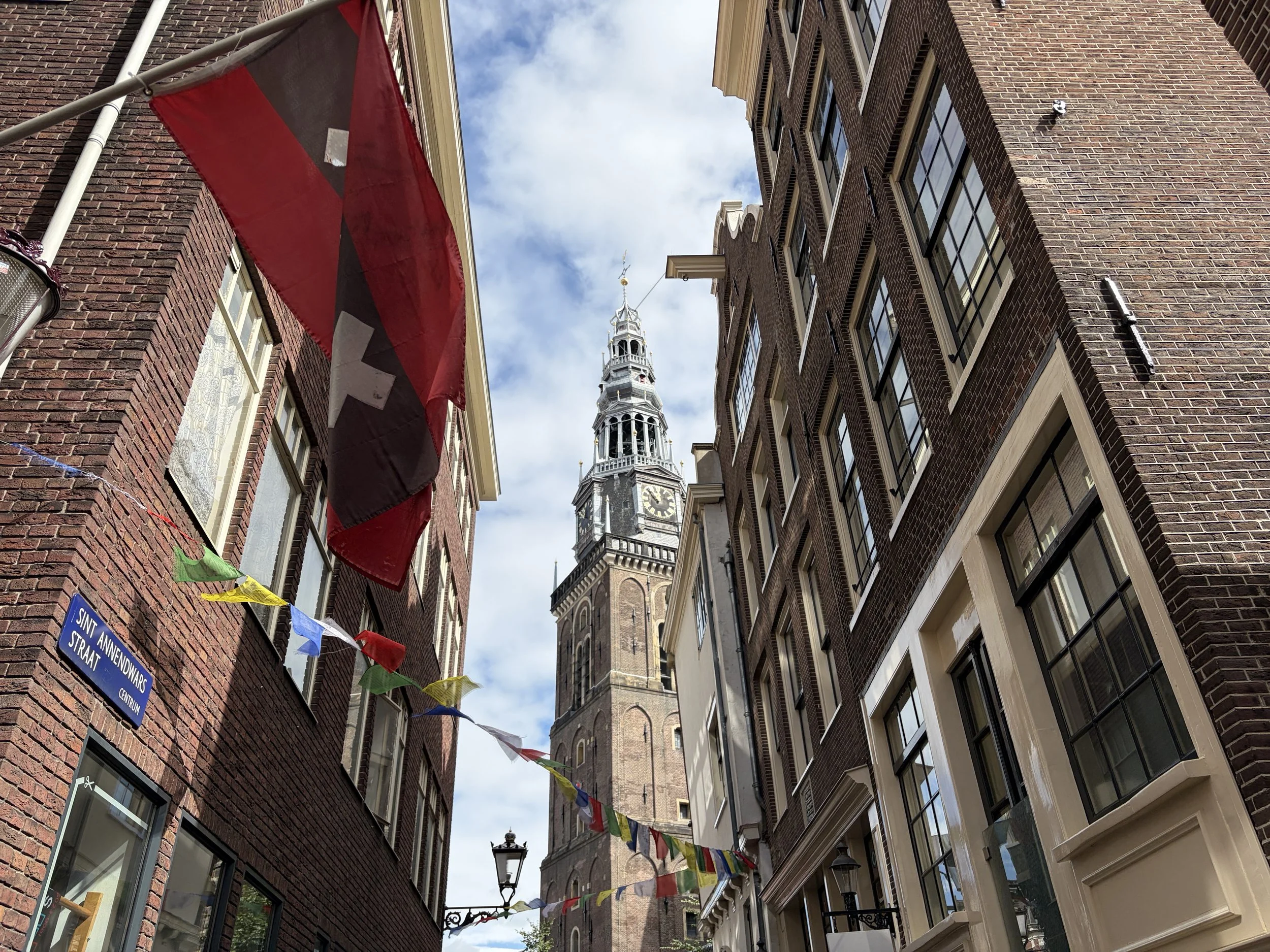
Right beside the district stands the Oude Kerk, or Old Church. Consecrated in the early 14th century, it is Amsterdam’s oldest surviving building. Its location creates a strange but fascinating junction of religion and sex, sacred and commercial, repentance and temptation. Few places demonstrate so clearly how different human choices can occupy the same narrow street.
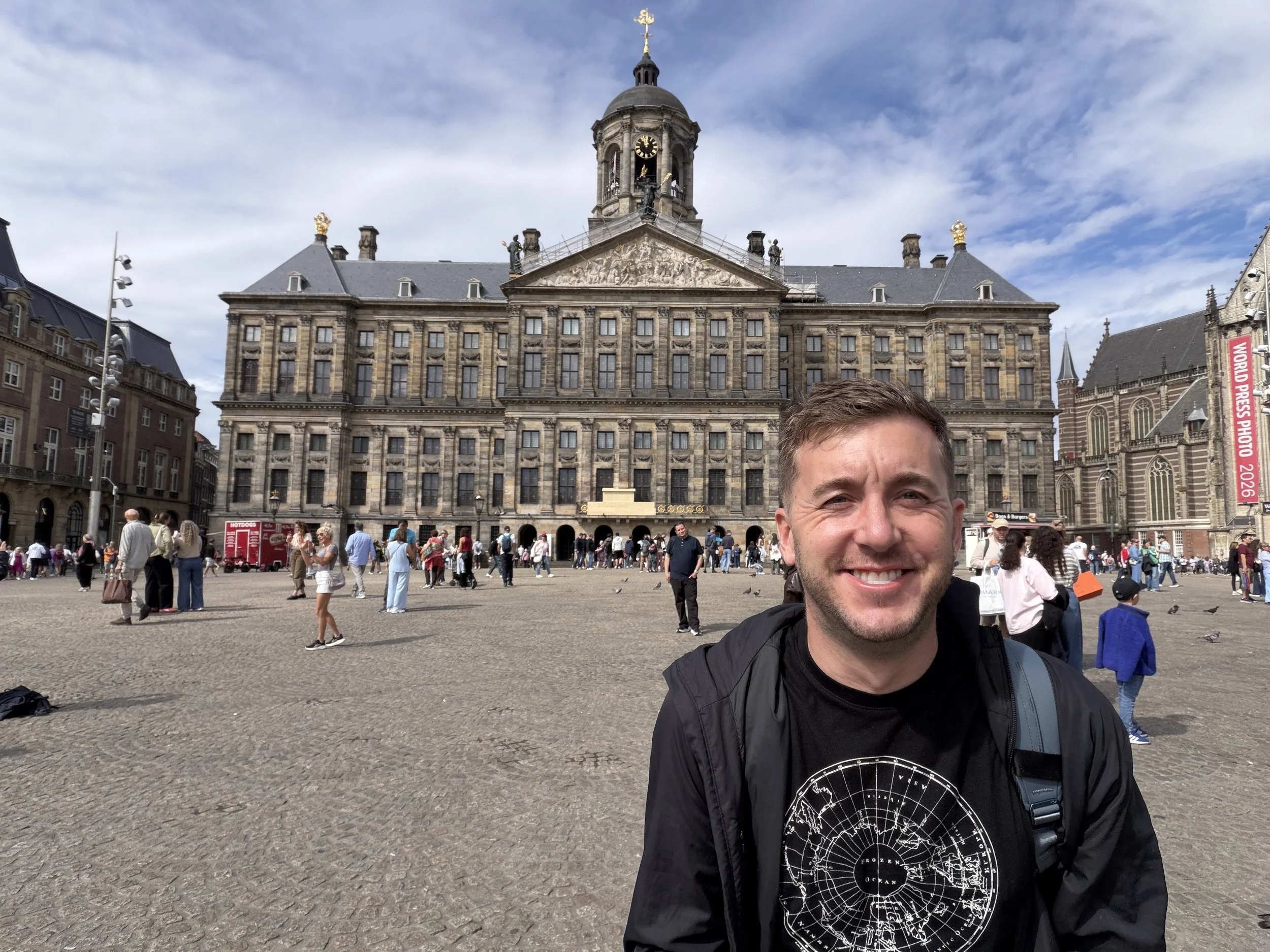
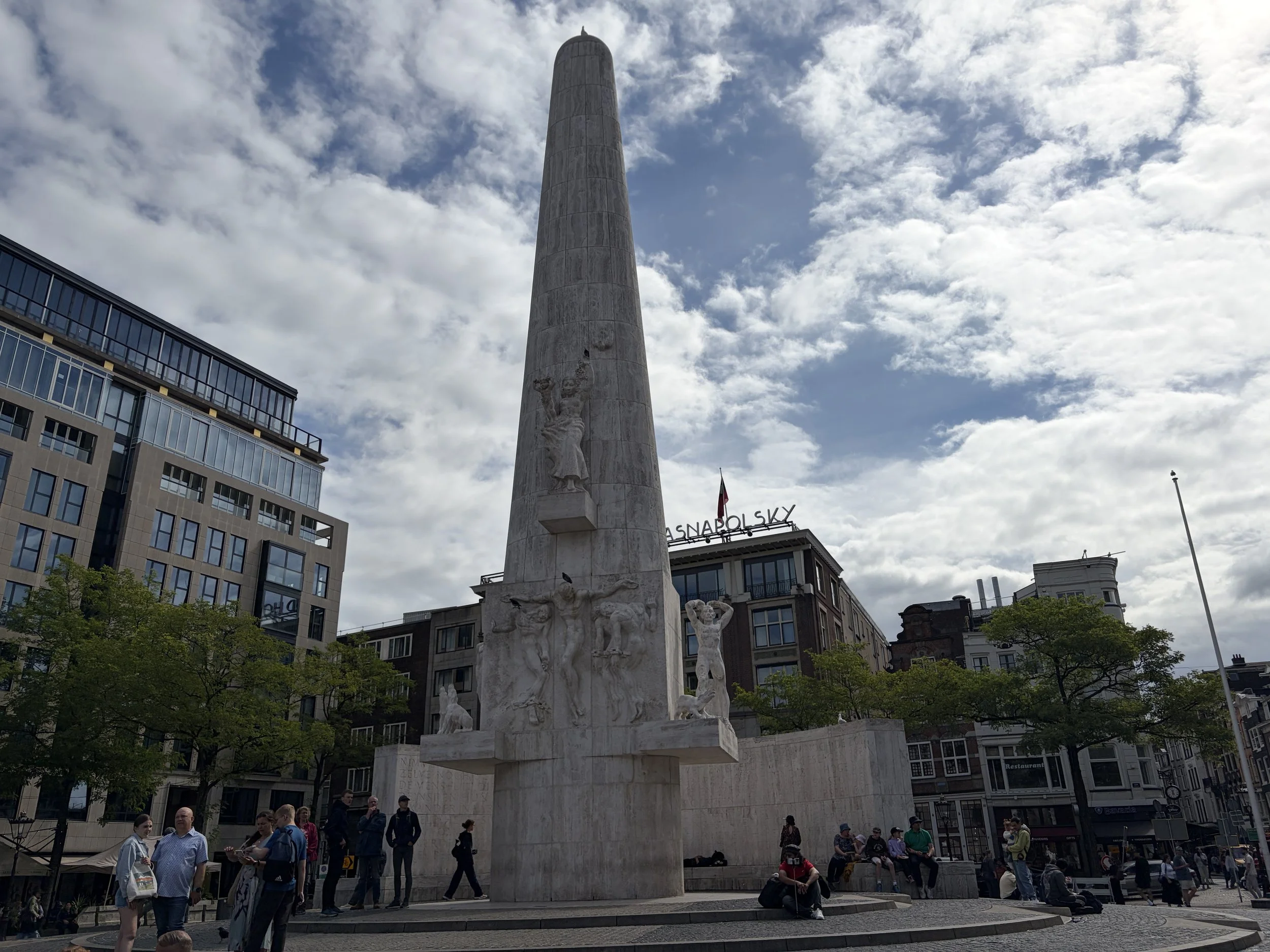
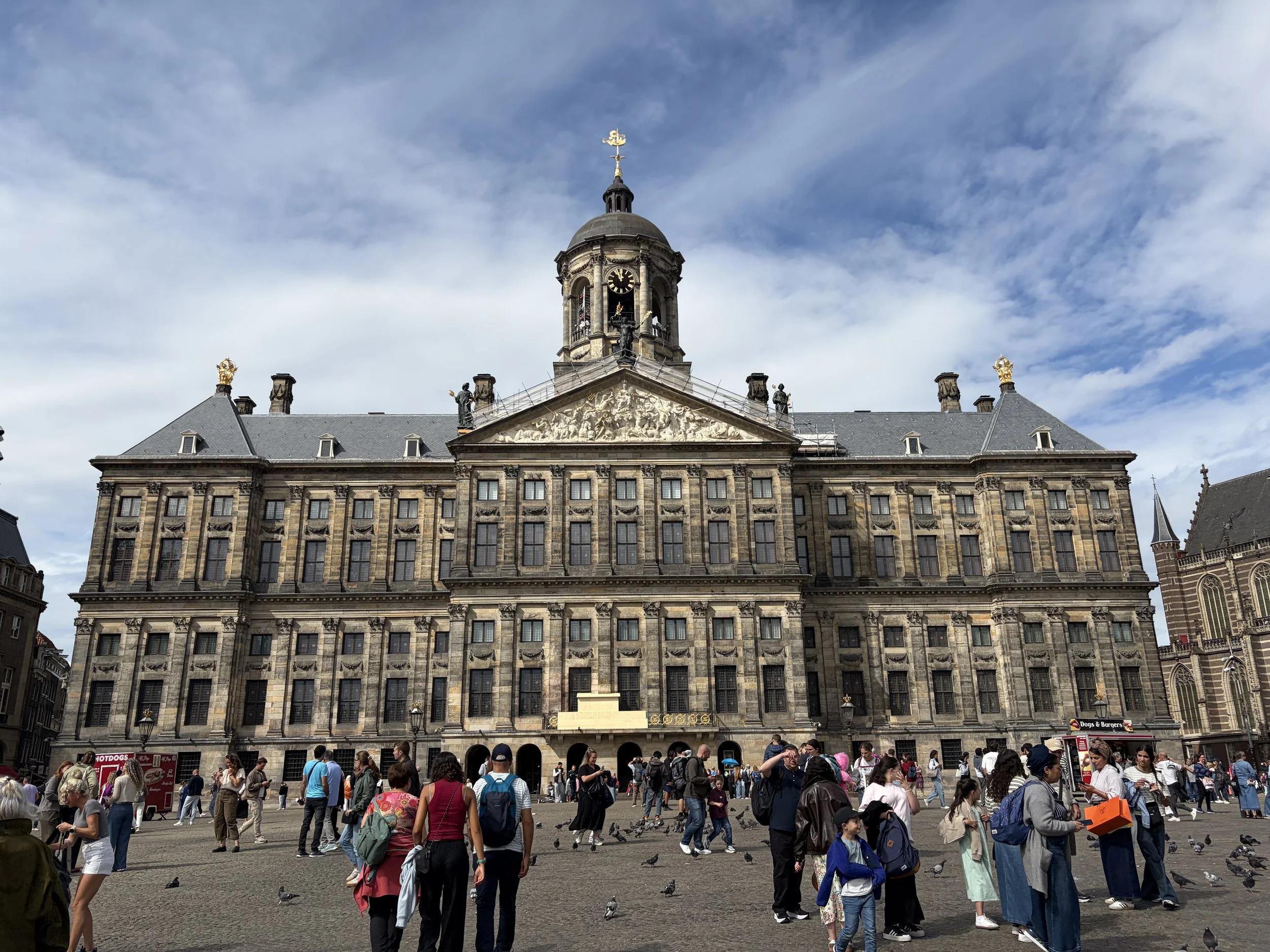
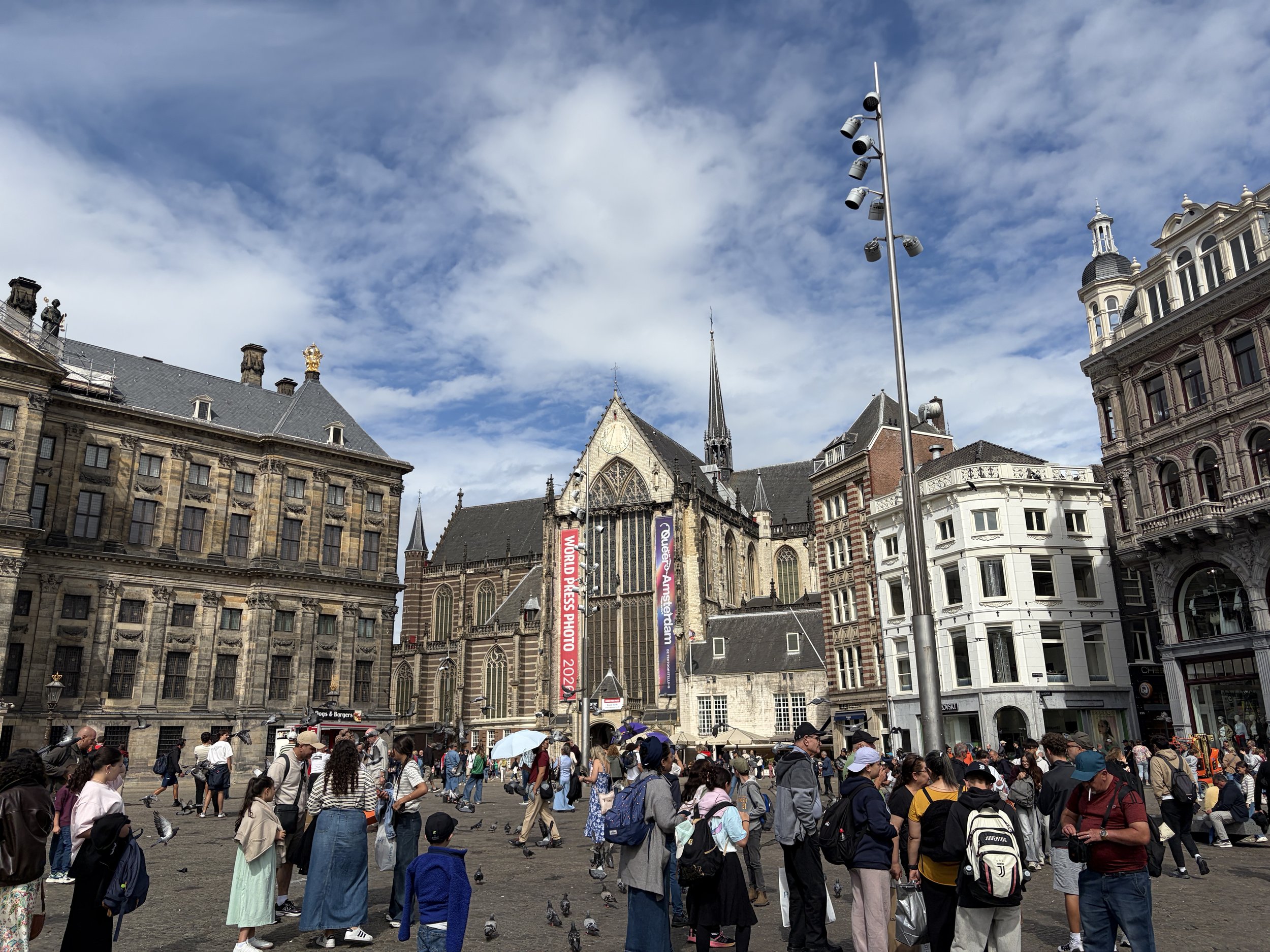
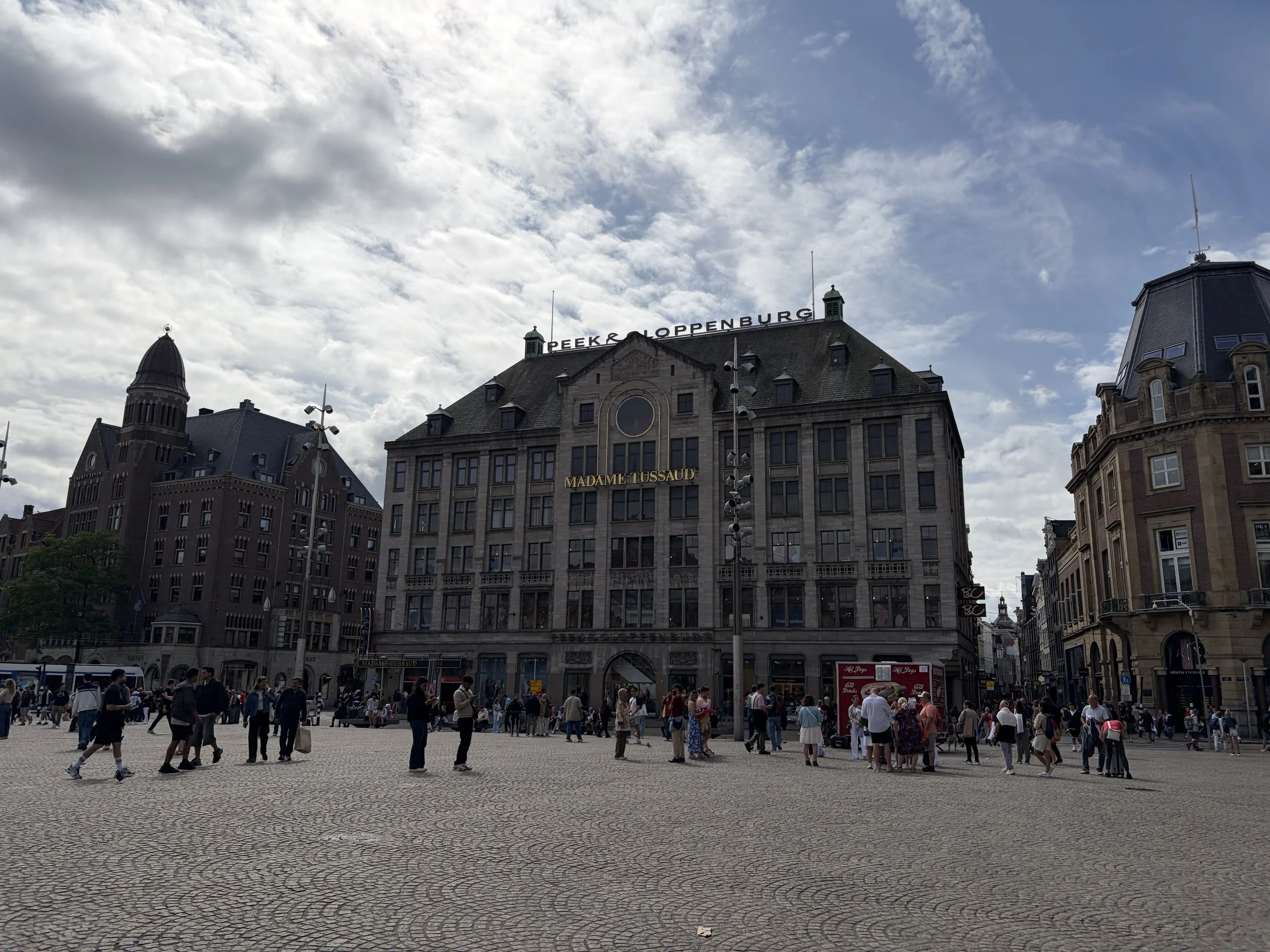
From there, I went to Dam Square, the historic center of the city. I saw the Royal Palace, the Nieuwe Kerk, the white National Monument, and the De Bijenkorf department store. The square sits near the original dam built across the Amstel River—the structure that eventually gave Amsterdam its name. They were pretty buildings, but not much else.
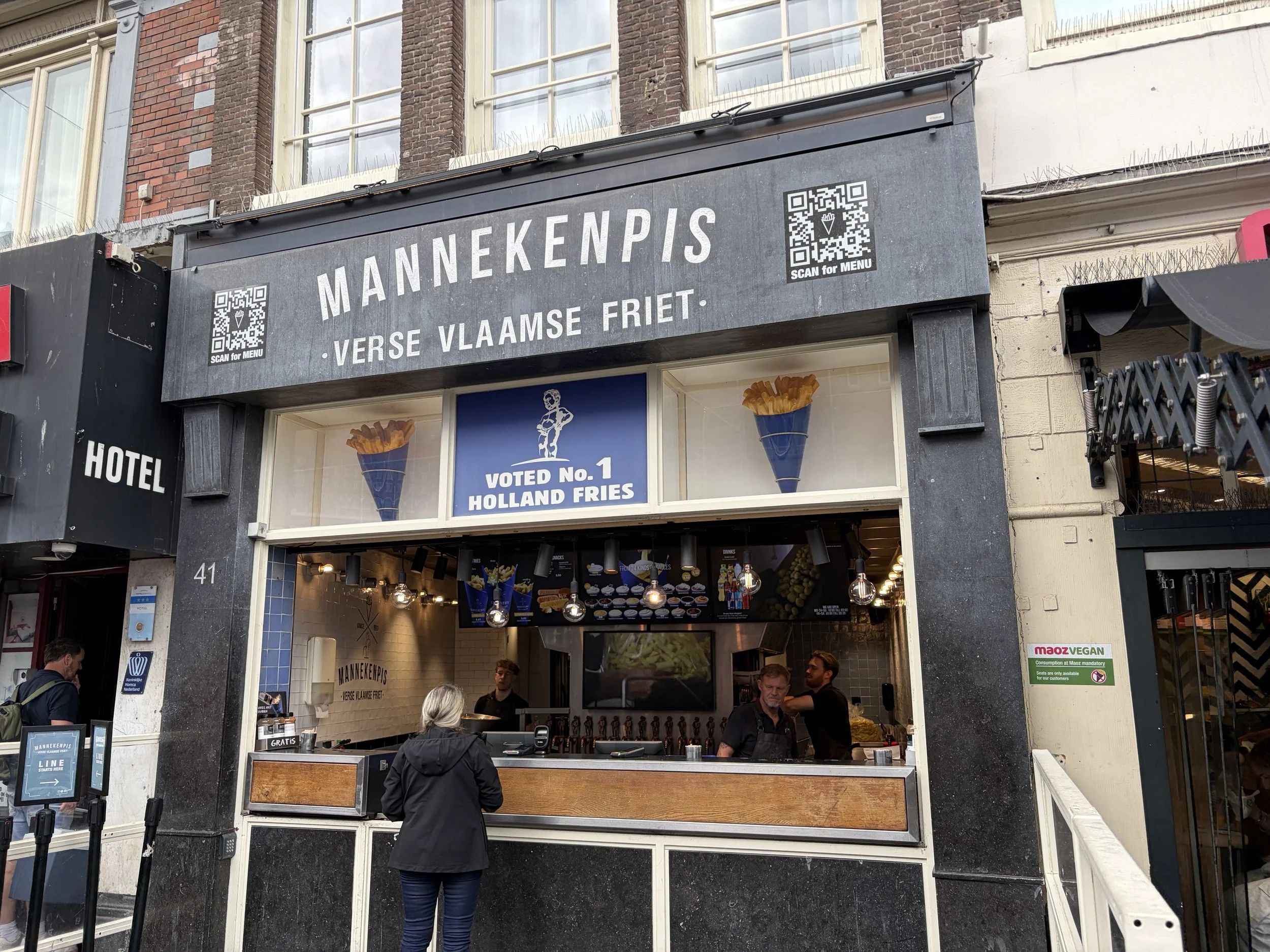
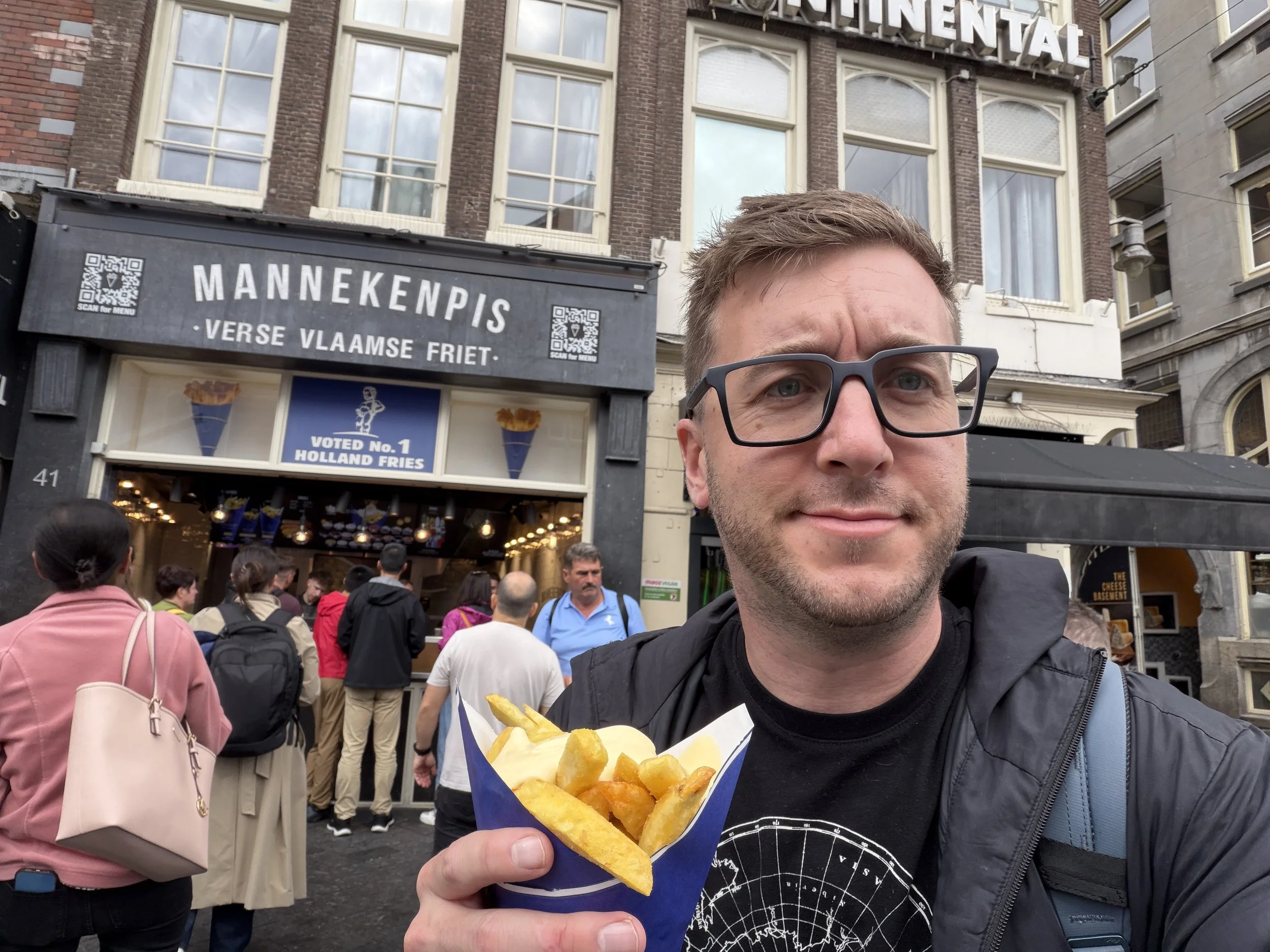
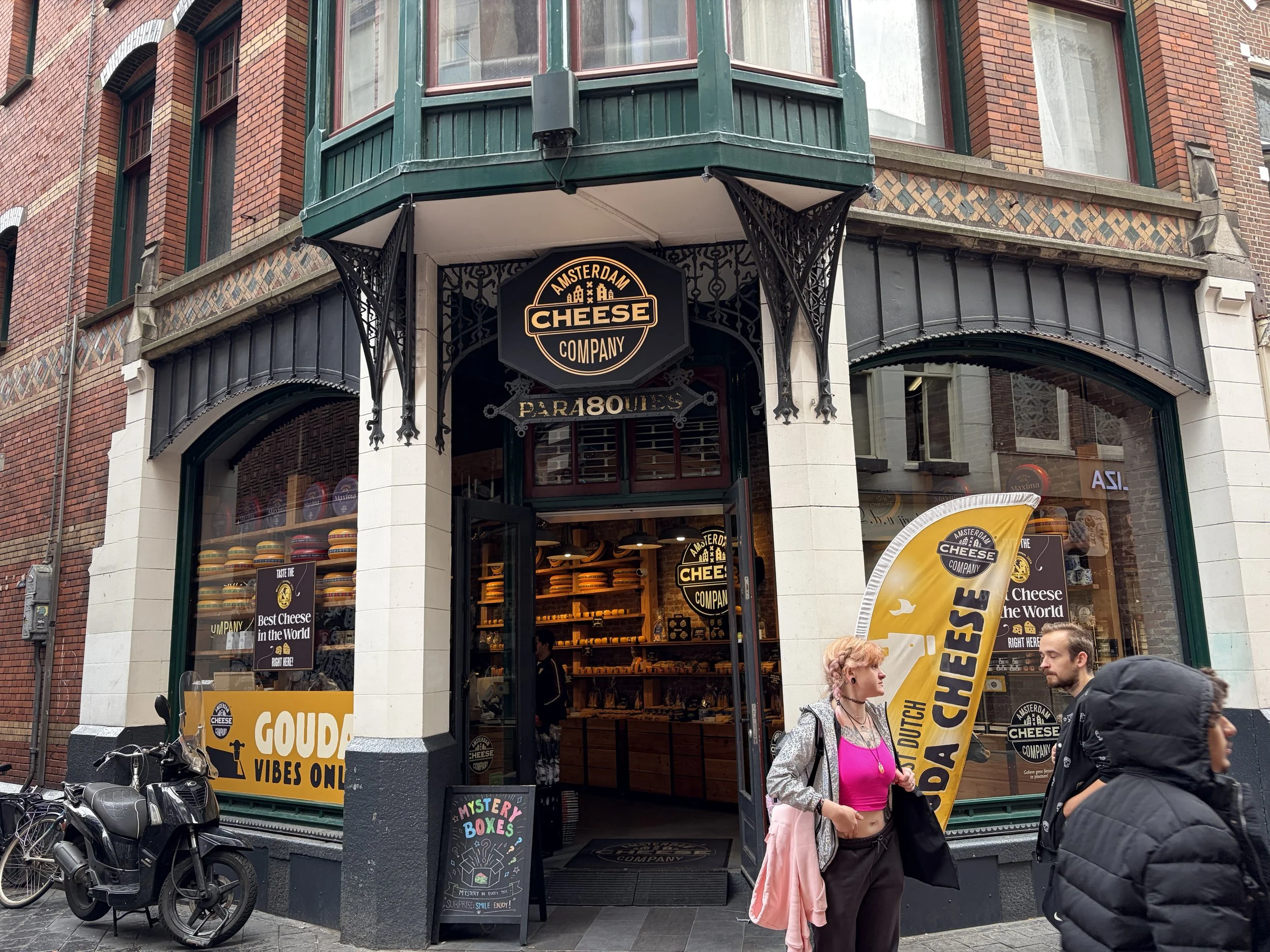
By then, I was hungry and chose the most sensible possible meal: fries followed by cheese. Both are taken seriously in Amsterdam, and I saw no reason to argue with local culture. I stopped at the Amsterdam Cheese Company, sampled its award-winning cheese, and bought some to take home. If I had to compare the Netherlands to US states—it clearly would be Idaho and Wisconsin, if for nothing more than the food they specialize in.
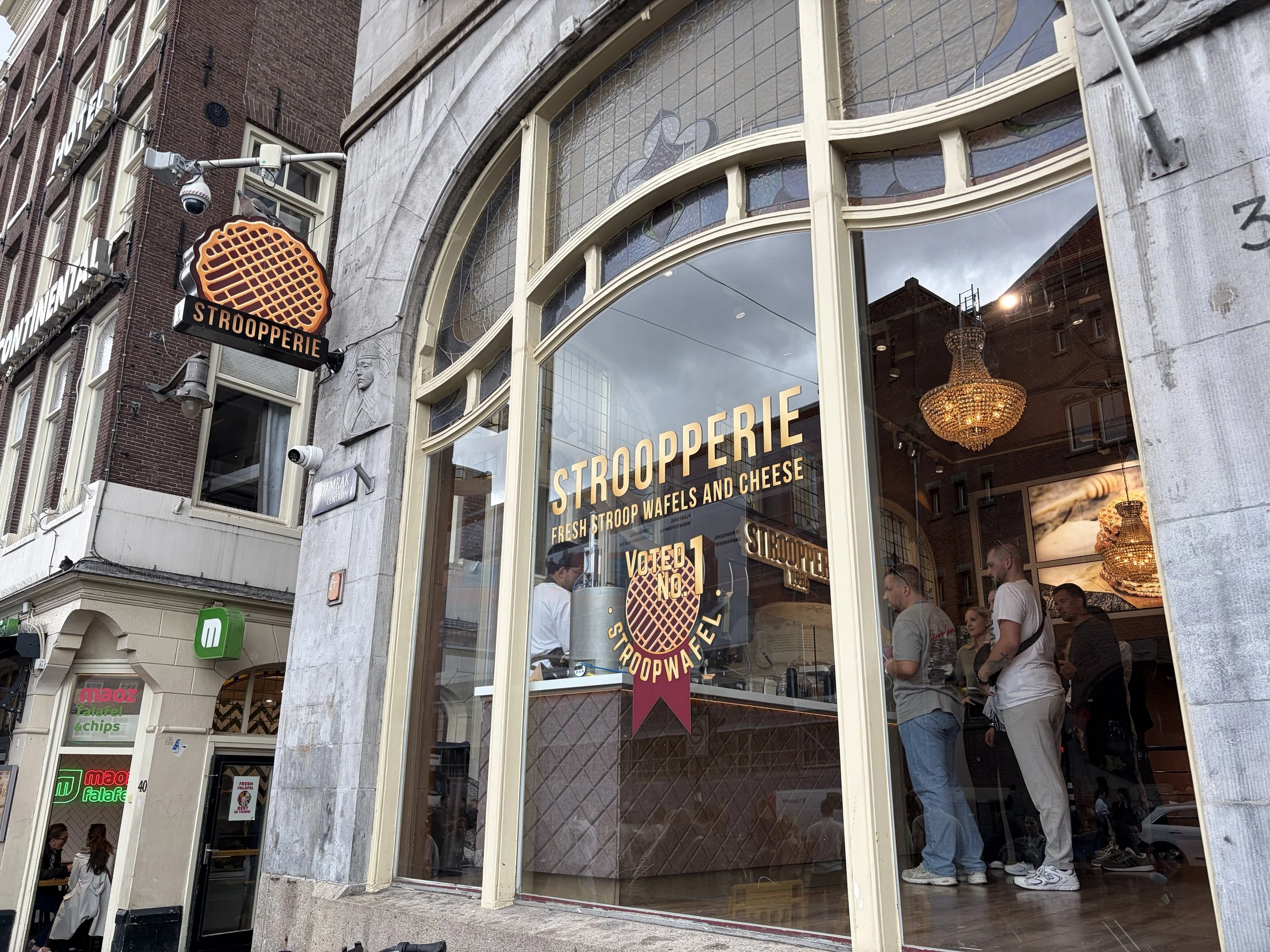
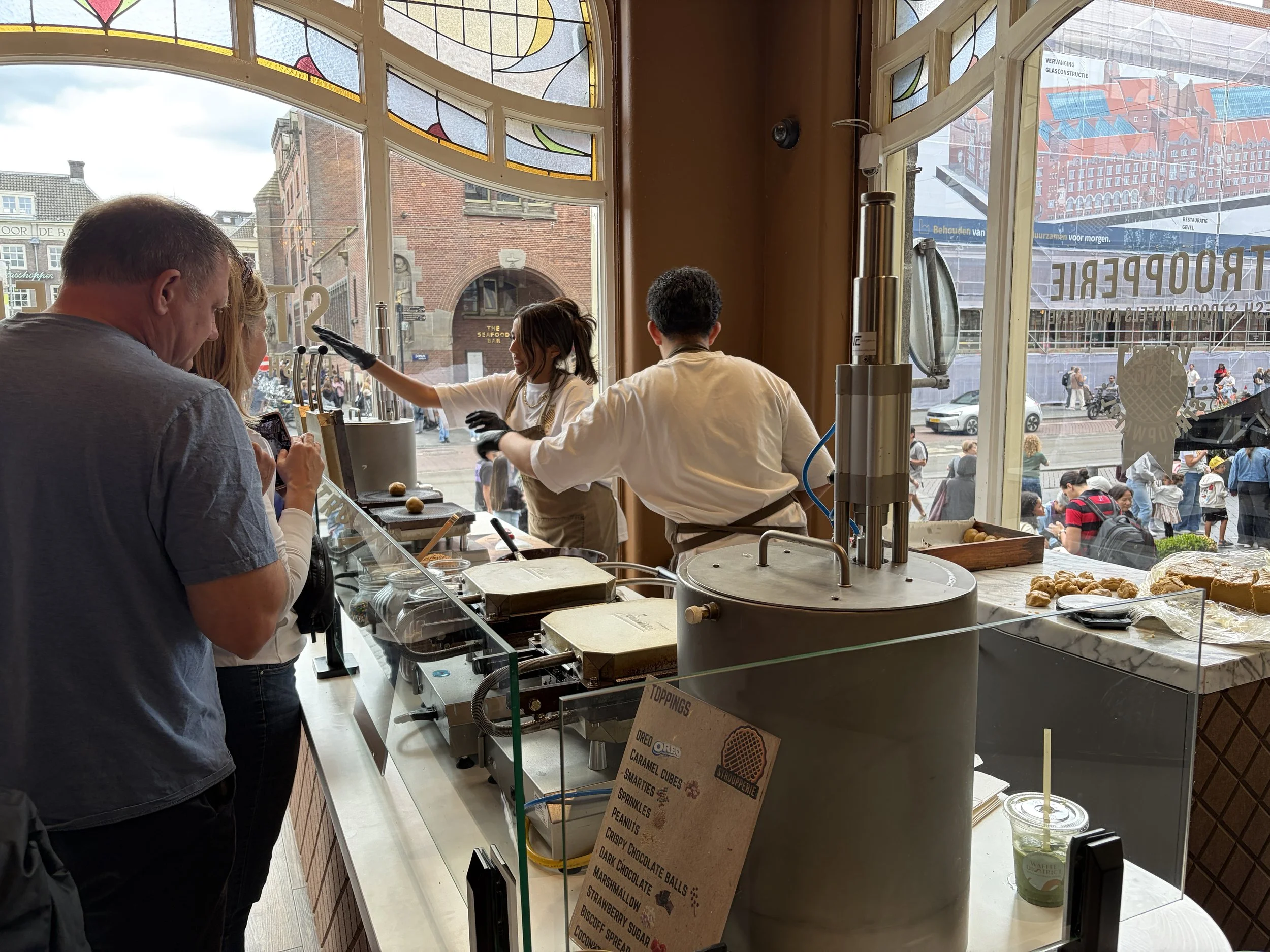
The other big item to order was stroopwafels, and a nearby shop making them in the window called me in. I ordered mine with Nutella, and it was delicious.
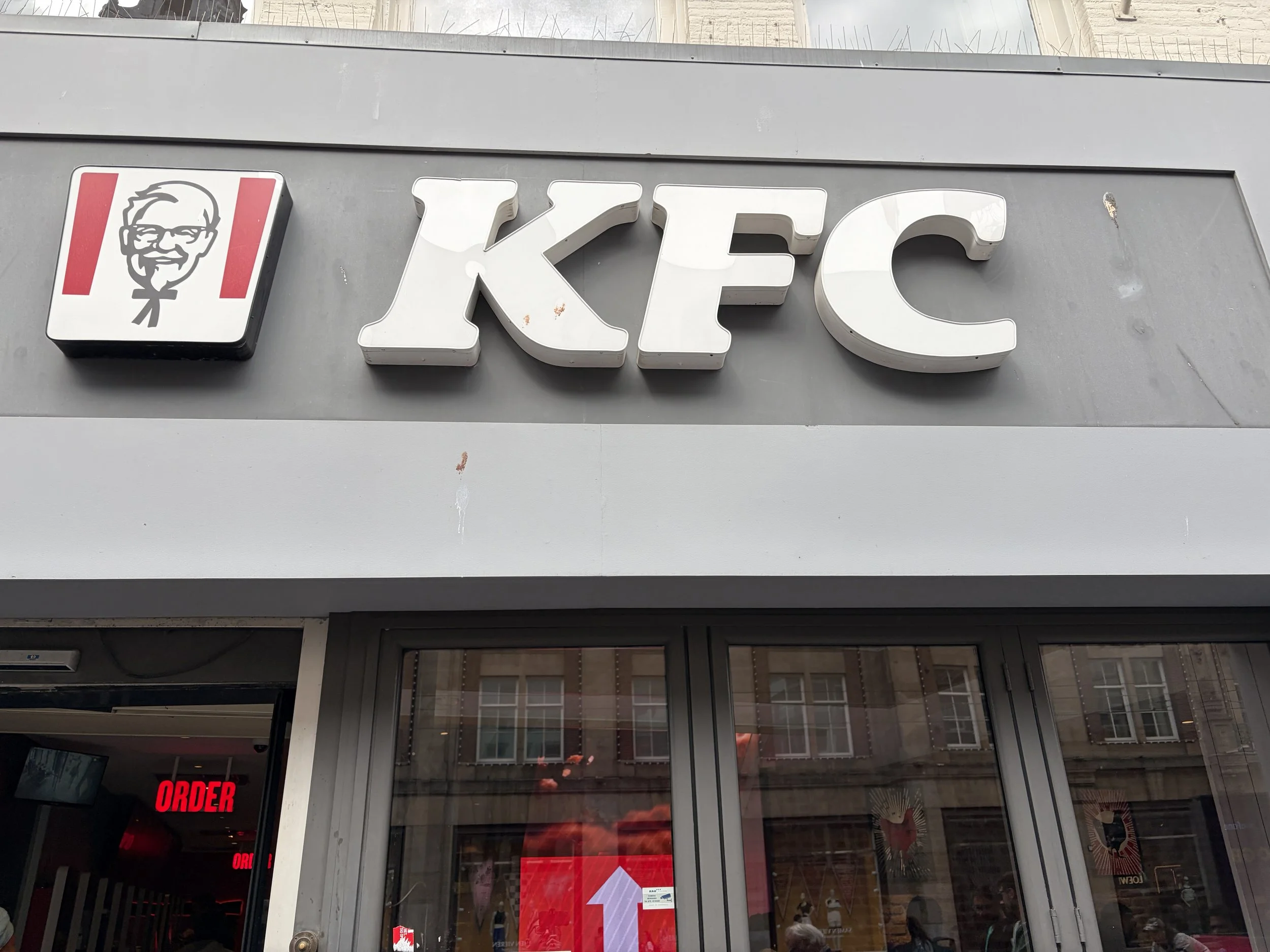
It was right then that I realized I had to use the bathroom. I hate trying to find a bathroom in Europe. After trying several places, I fell back on the internationally reliable option: KFC. It looked promising until I discovered a turnstile requiring a euro to enter the restroom. At that point, the decision had already been made for me. I started toward the Anne Frank House, but rain began to fall. Rather than risk getting drenched and missing my flight, I chose to return to the airport. It was the right call. By the time my train arrived, the rain was pouring.
Security and passport control were so fast that I reached my gate much earlier than necessary. I probably could have spent another hour in Amsterdam, but choosing safety meant I did not have to sprint through an unfamiliar airport. After a seven-hour layover and another four-hour flight on Transavia, I finally reached Marrakech.
Arriving in the Medina
When traveling in another country, I usually arrange for my hotel—or, in this case, my riad—to pick me up. I had no idea, so I figured I should share —a riad is a traditional Moroccan home built around an interior courtyard or garden. Many have been converted into small, family-operated boutique hotels. They are designed inward, with rooms facing the central courtyard rather than the street.
Outside the airport, dozens of drivers held signs. I circled the first group without finding my name and briefly wondered whether my ride had failed to appear. Then I noticed a second group of drivers. Thankfully, one of them was waiting for me. My driver could not take me directly to Riad Kniza because it was inside the medina—the old, walled section of Marrakech. The medina is a dense network of pedestrian lanes, shops, homes, mosques, markets, and dead ends. Cars cannot reach many parts of it, although scooters seem to believe they can reach every part of it.
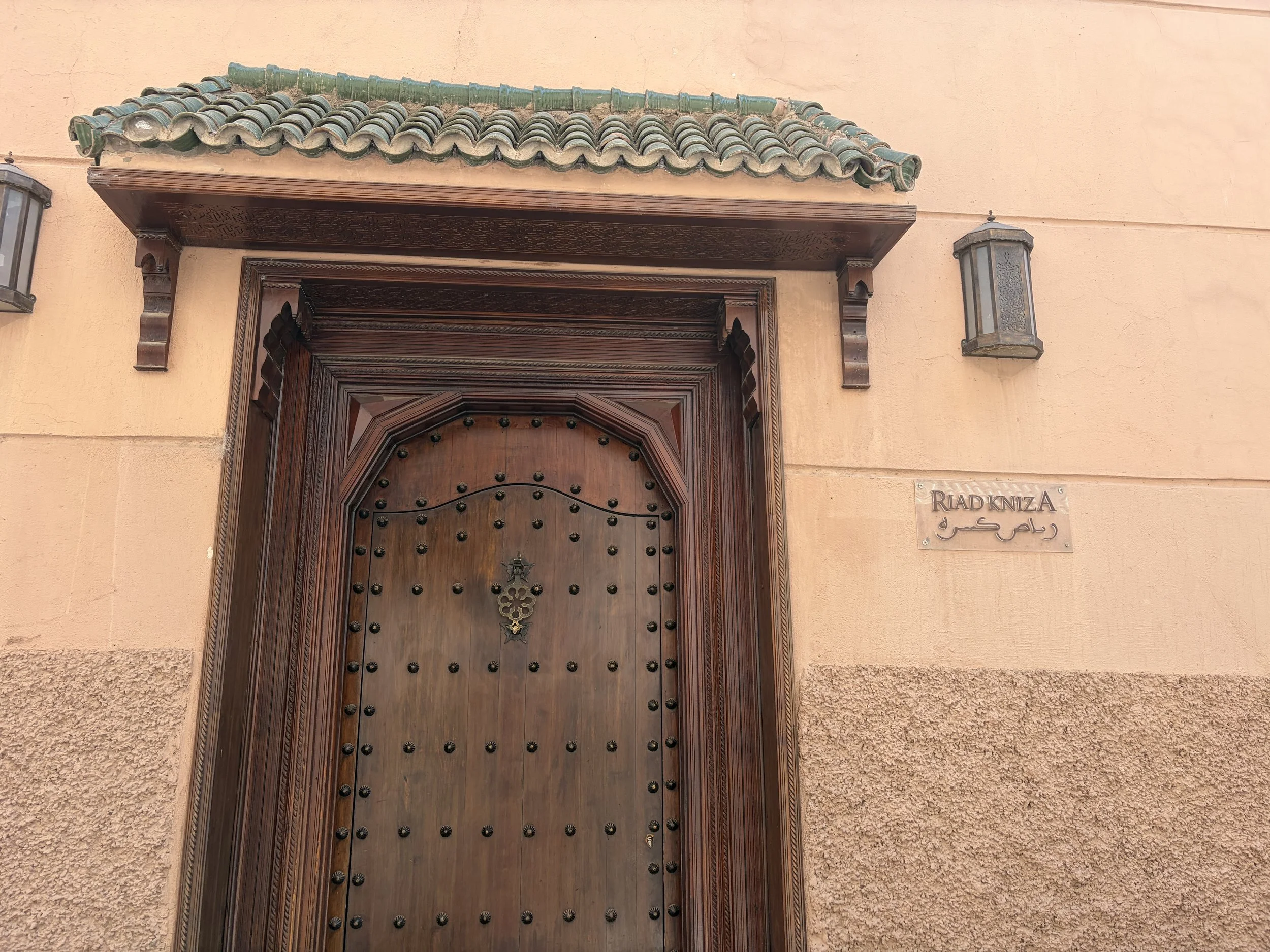
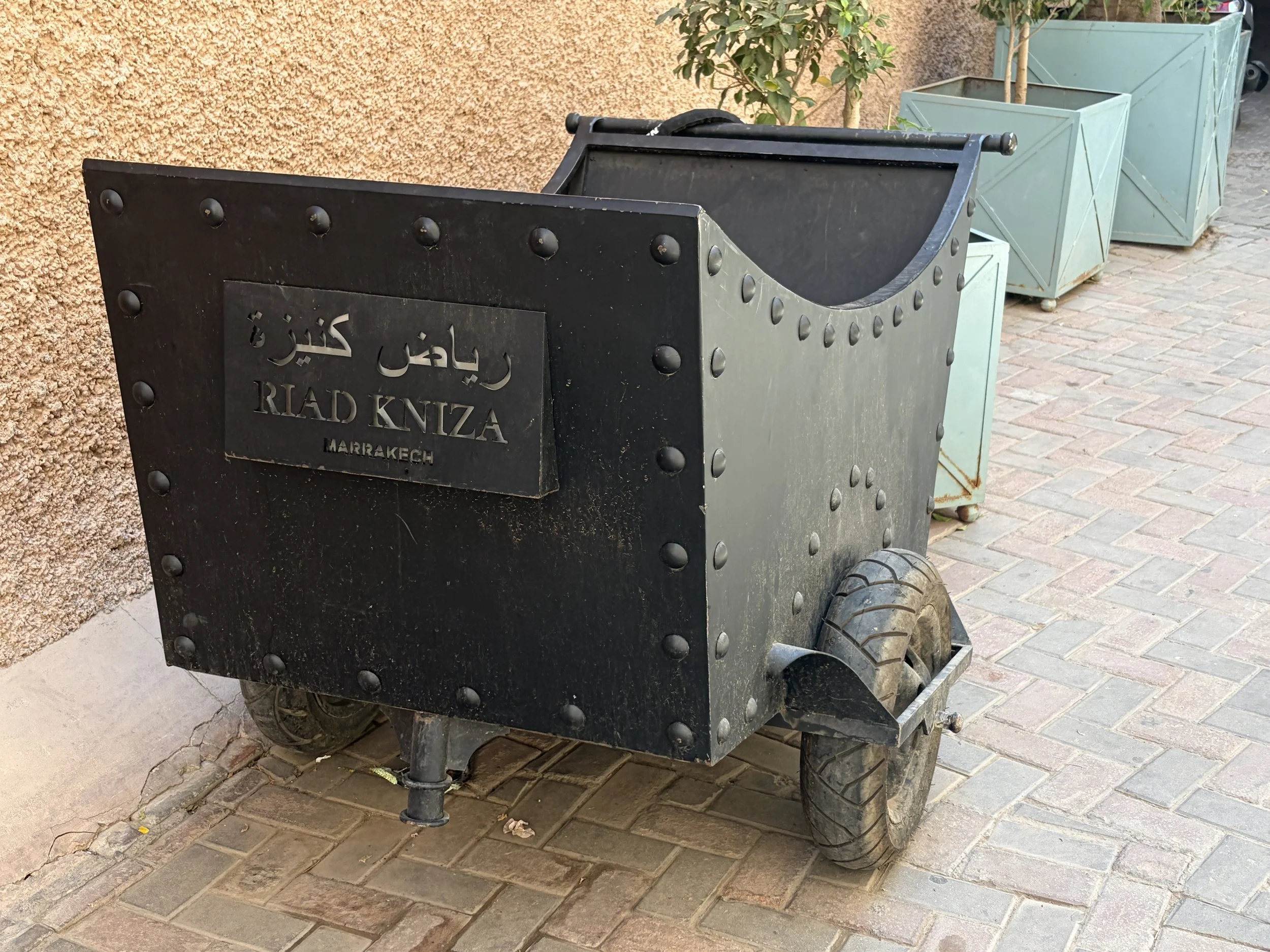
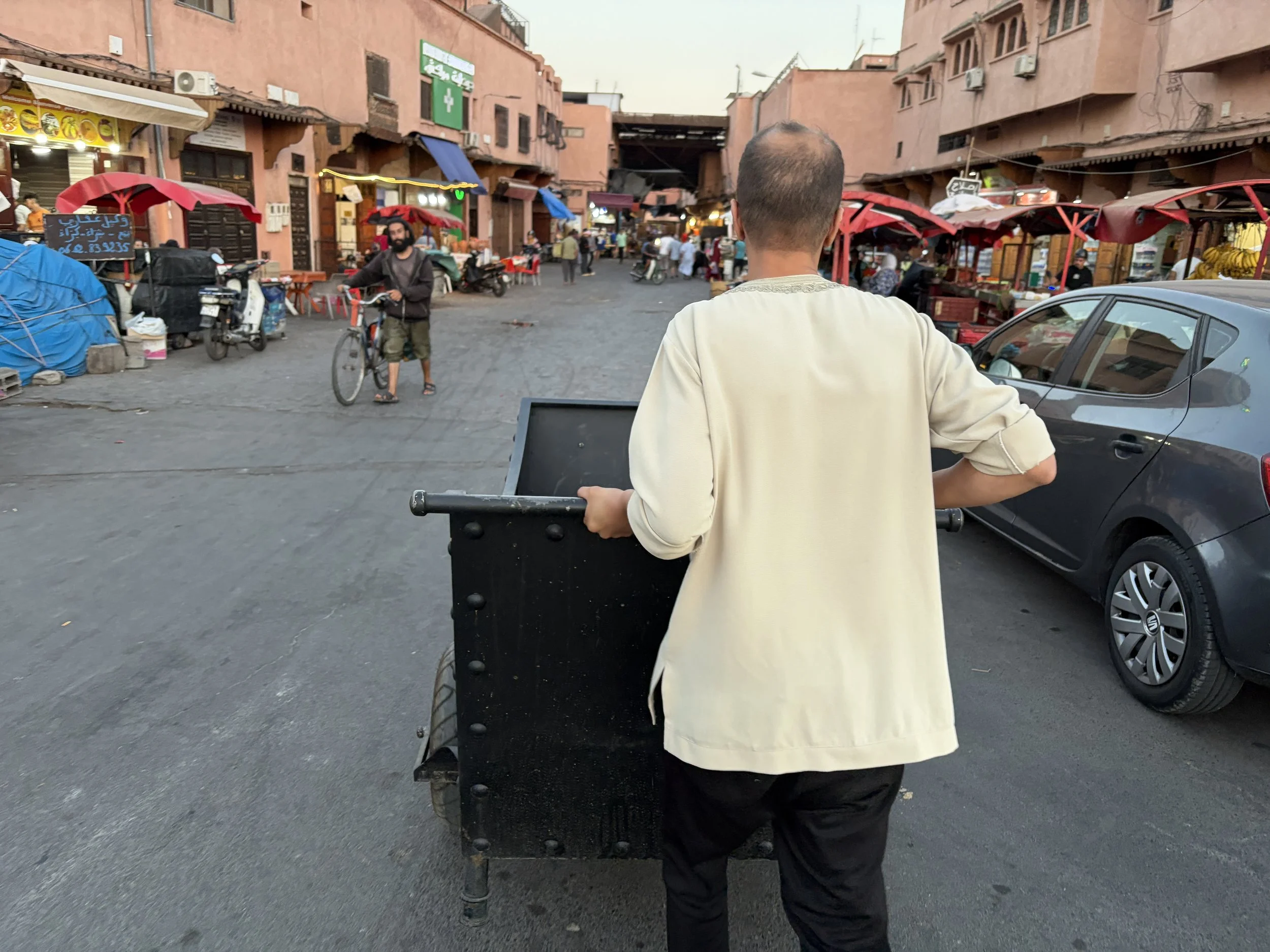
The driver called ahead, and a bellman arrived with a large cart for my backpack and grocery bag of snacks I hadn’t eaten on the plane. Ripley currently weighs about 32 pounds. My luggage weighed roughly the same before I filled it with souvenirs, so I welcomed the cart.
Check-in was simple. The staff prepared mint tea and cookies. I do not usually like tea, but Moroccan mint tea was surprisingly good. I have always found it strange that people drink hot tea in hot climates. A guide once explained that serving hot tea represents work, preparation, and respect in a way that pouring a cold drink does not. Personally, I would happily respect anyone willing to find ice and put it in my glass.
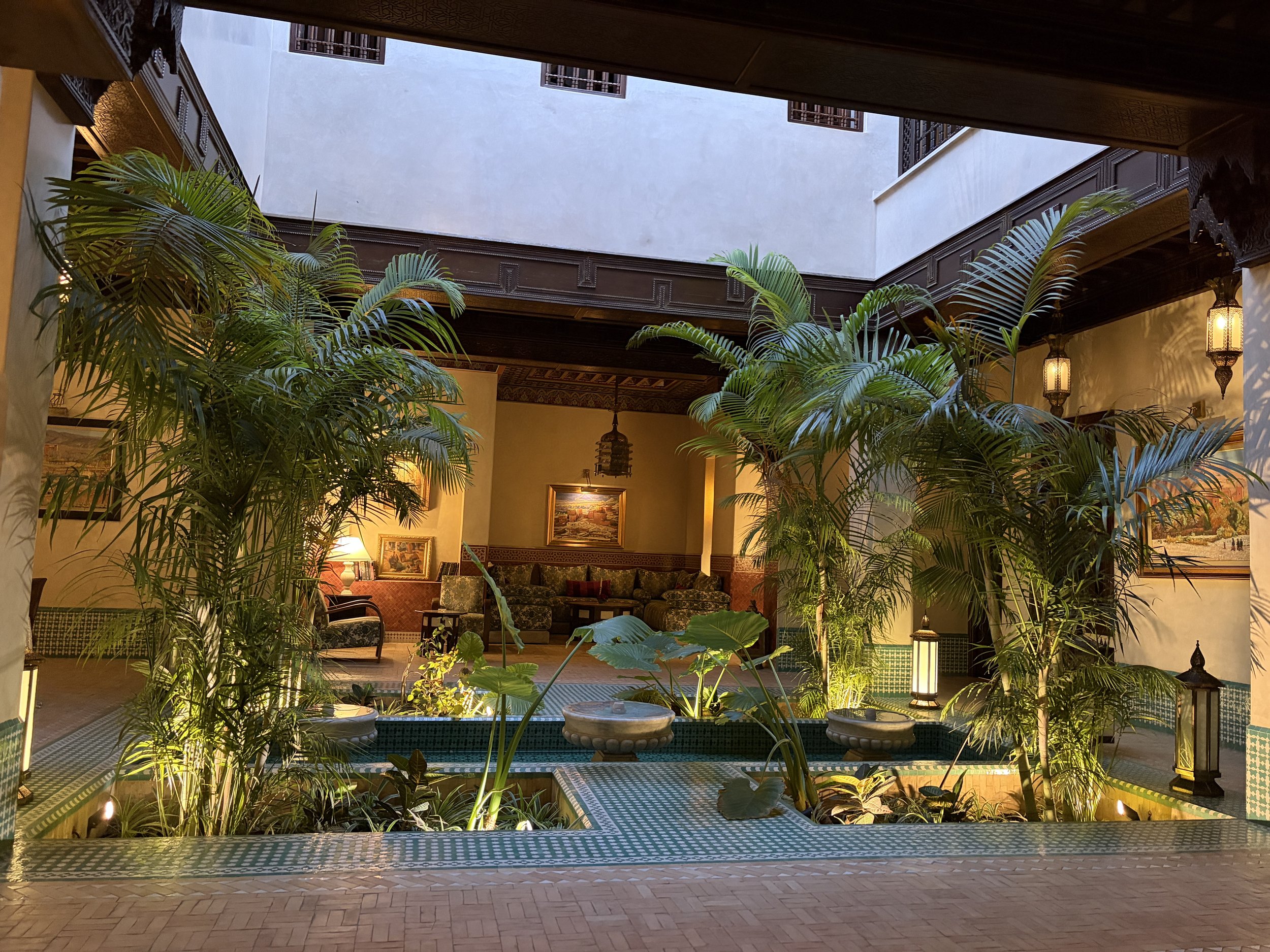
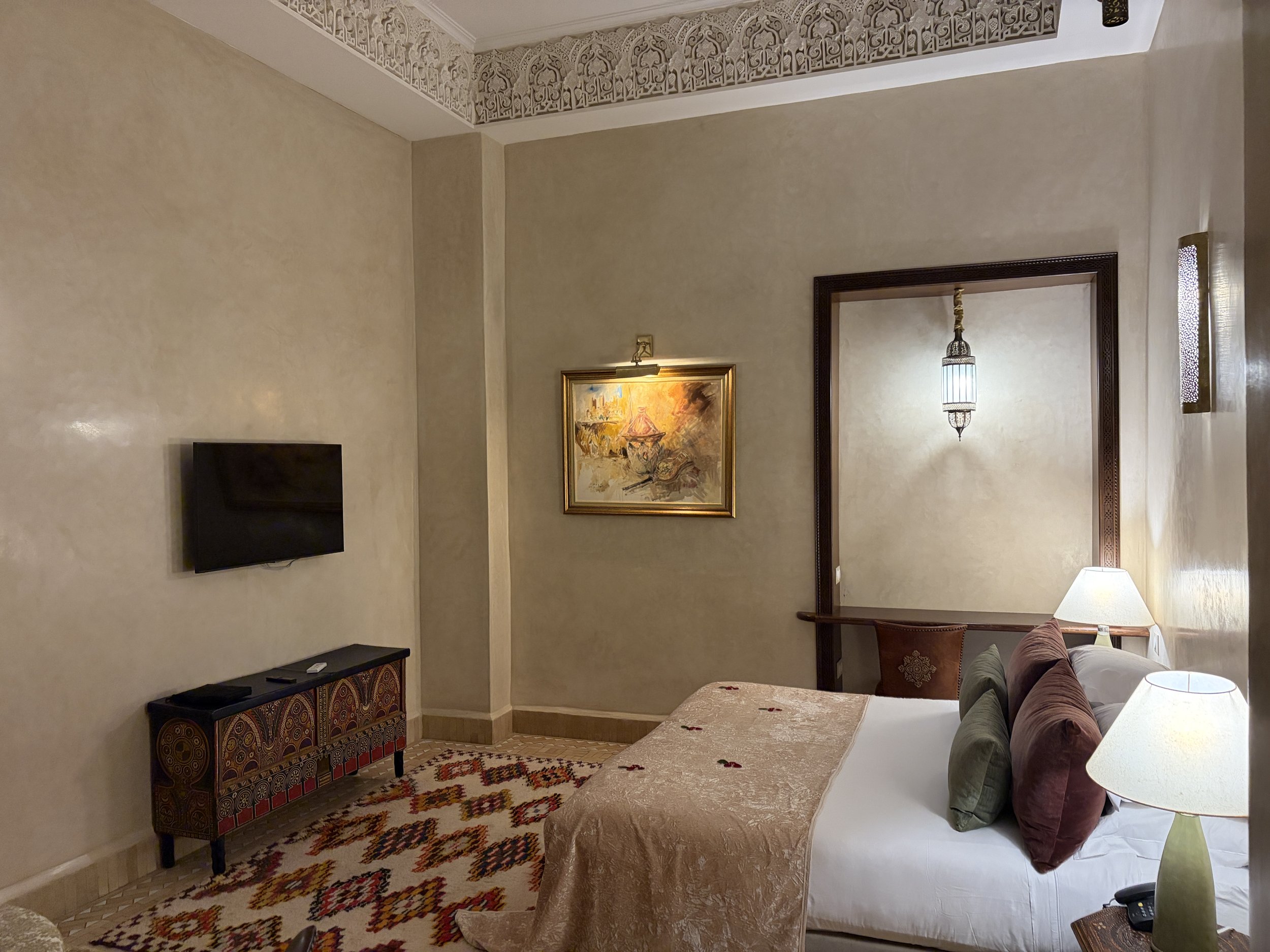
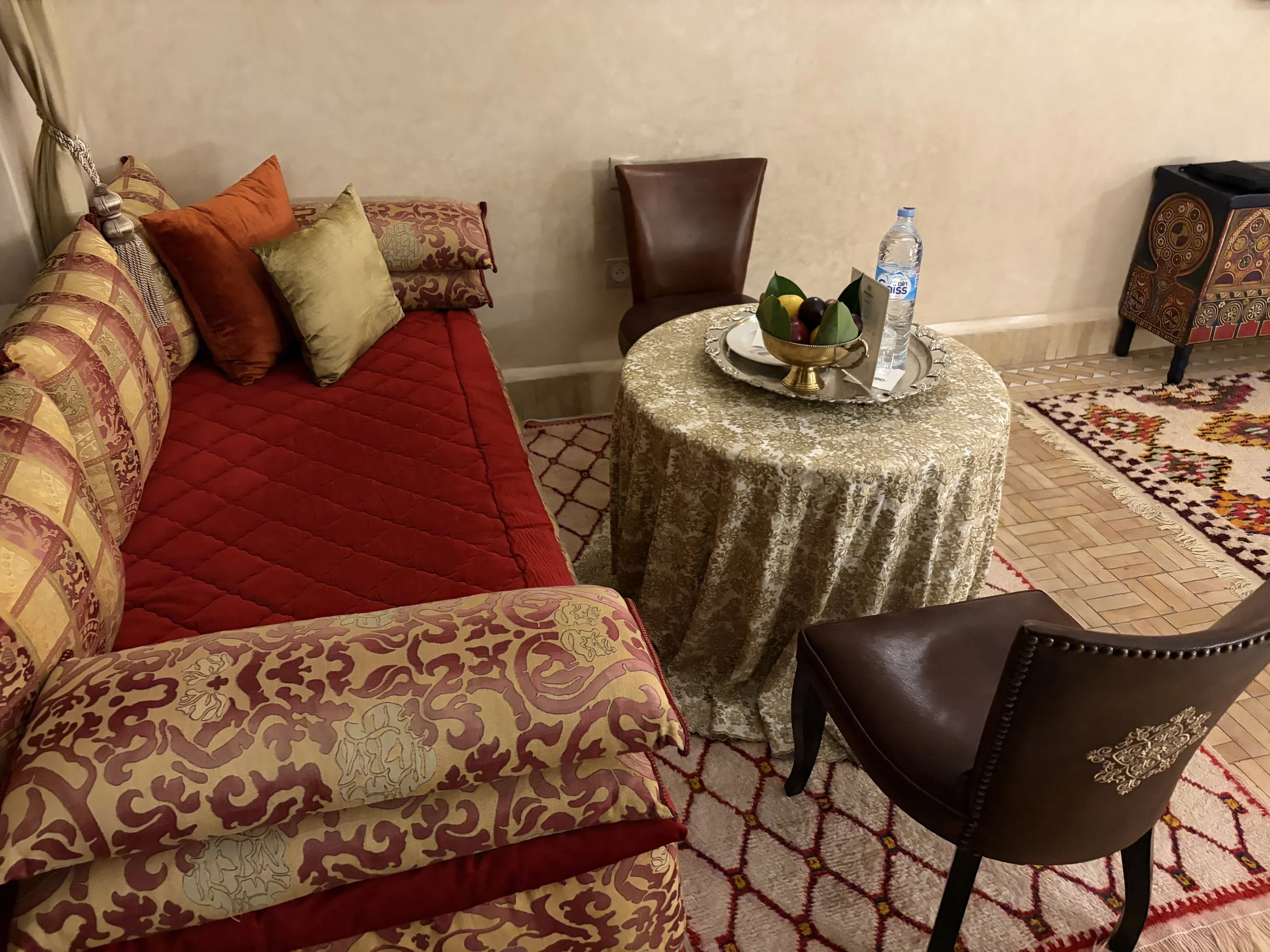
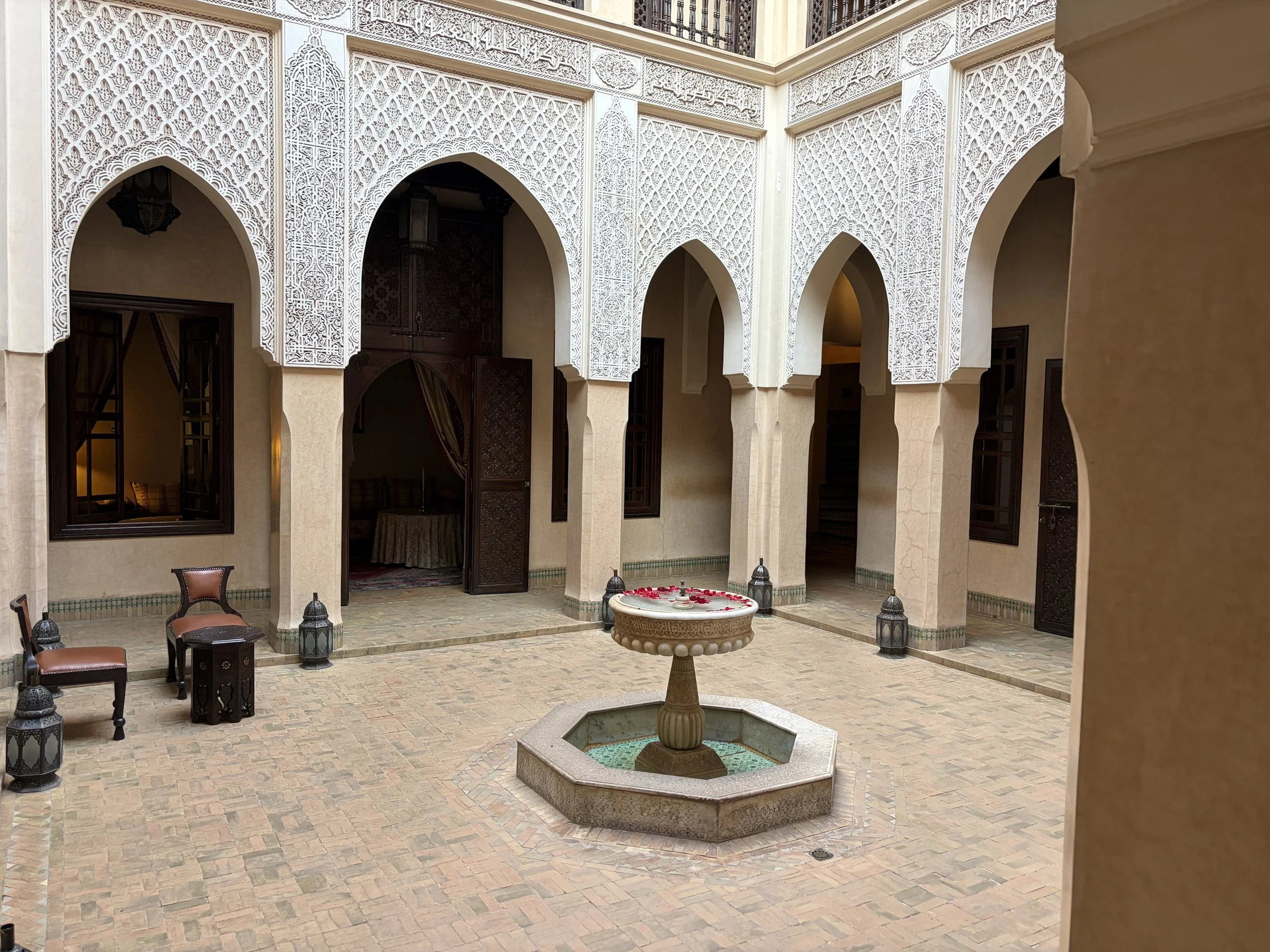
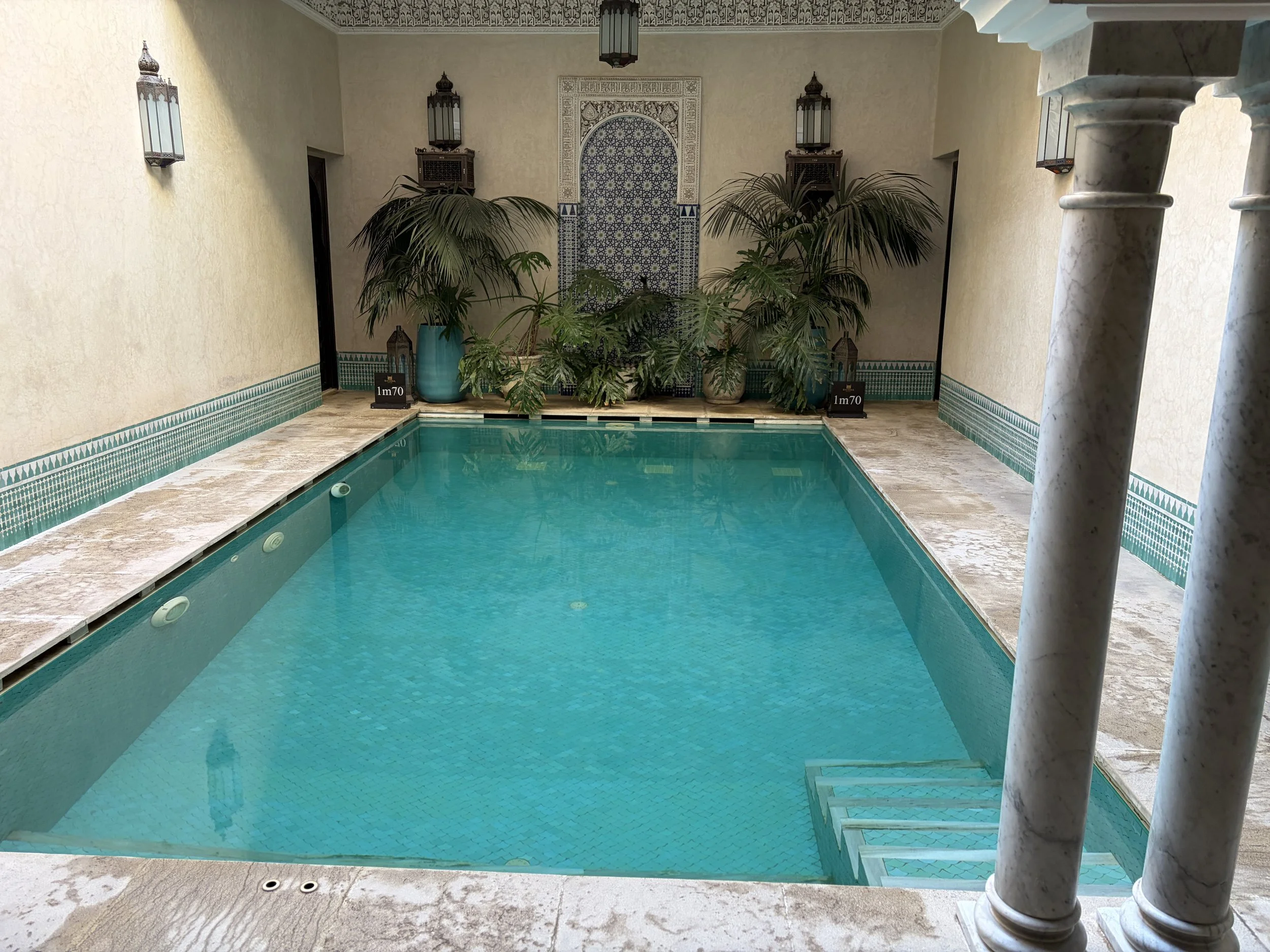
My room had high ceilings, intricate woodwork, and bright colors. Calling it “Moroccan-themed” seemed silly. In Morocco, it was simply country-appropriate. I FaceTimed Grant and Ripley before bed, catching Ripley before his afternoon nap.
That evening, I ate at the riad and shared a table with a couple from Boston who were leaving the next day. They gave me useful advice from an American traveler’s perspective. I ordered chicken tagine with preserved lemon and olives. A tagine is both the cone-shaped clay cooking vessel and the slow-cooked dish prepared inside it. The design traps steam and returns moisture to the food, producing tender meat and rich flavors. It was a good first choice.
Marrakech Wakes Up
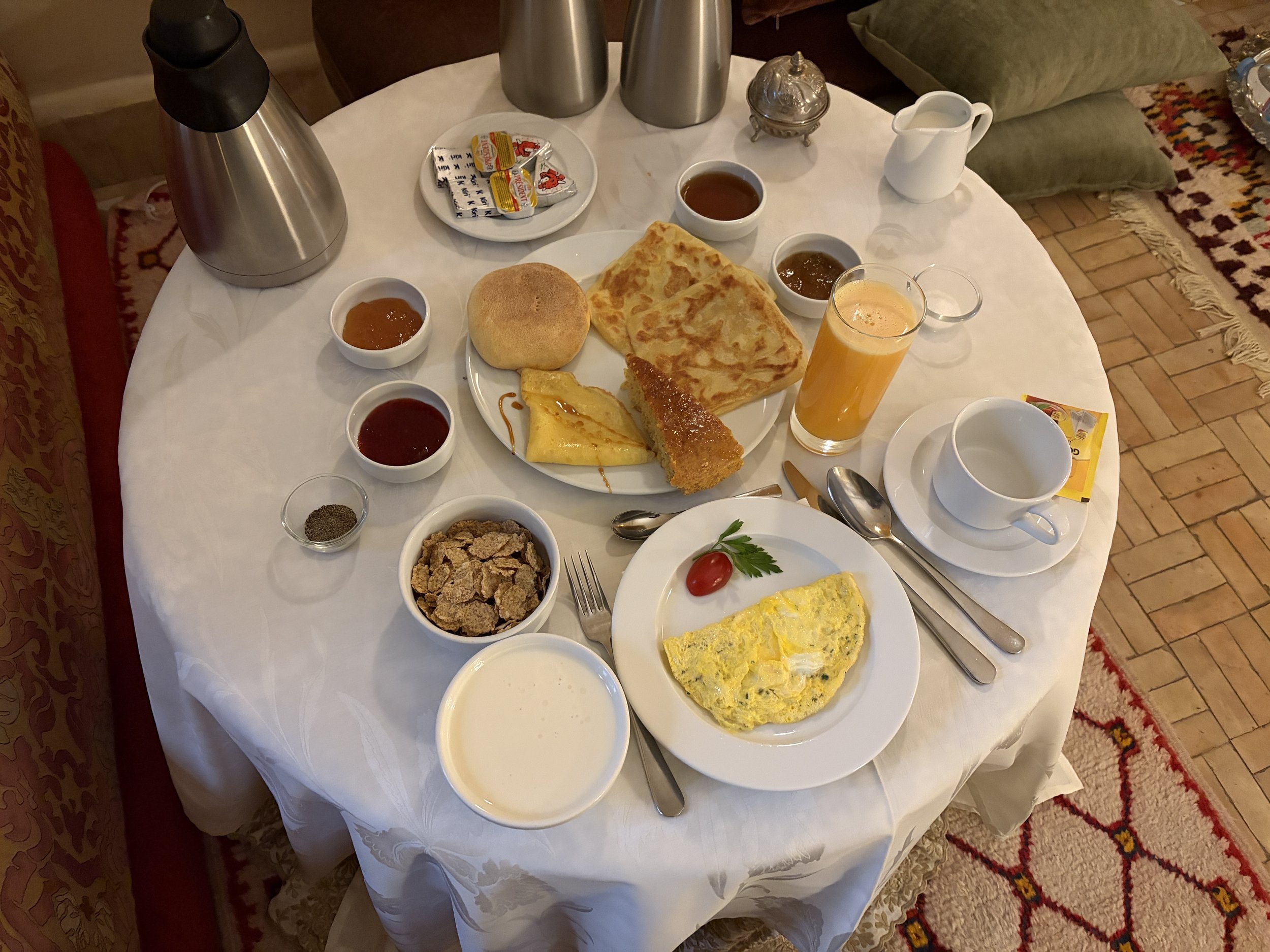
The next morning, I woke with a jolt and remembered: I was finally in Marrakech.
I had the riad’s Moroccan-style breakfast brought to my room. It was an elaborate spread of pastries, an omelet, homemade yogurt, and granola. It was tasty, although not necessarily something I would clamor for again.
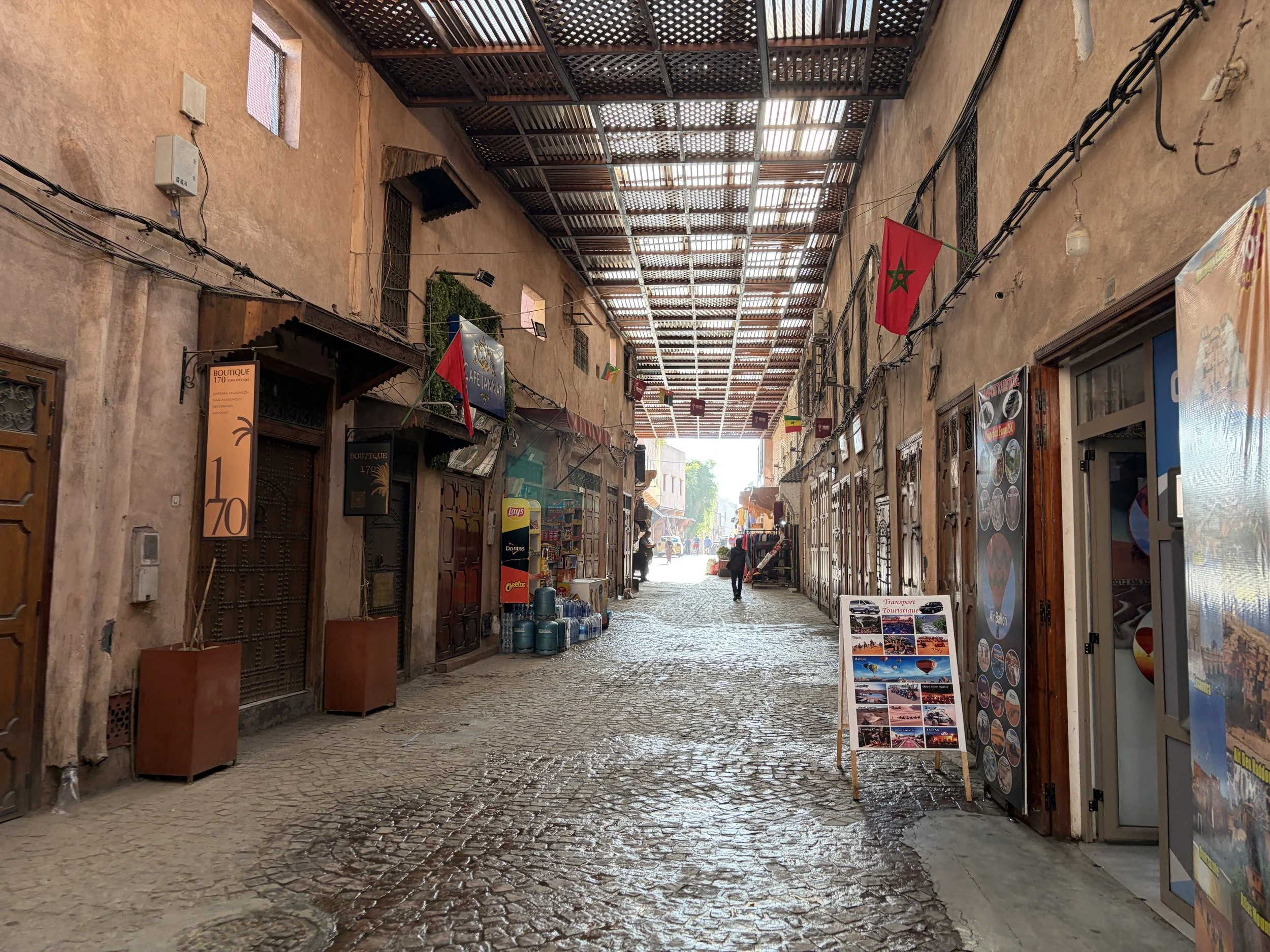
I had imagined Marrakech as an early-morning city. With so many stores, markets, and workshops, I assumed the early bird would get the worm. Instead, most of the birds slept until nine or ten. Marrakech comes alive later in the day and continues late into the night. Walking through the medina before it fully awakened gave me a chance to watch the shops open. Doors lifted, merchandise appeared, and quiet lanes slowly filled with people and scooters.
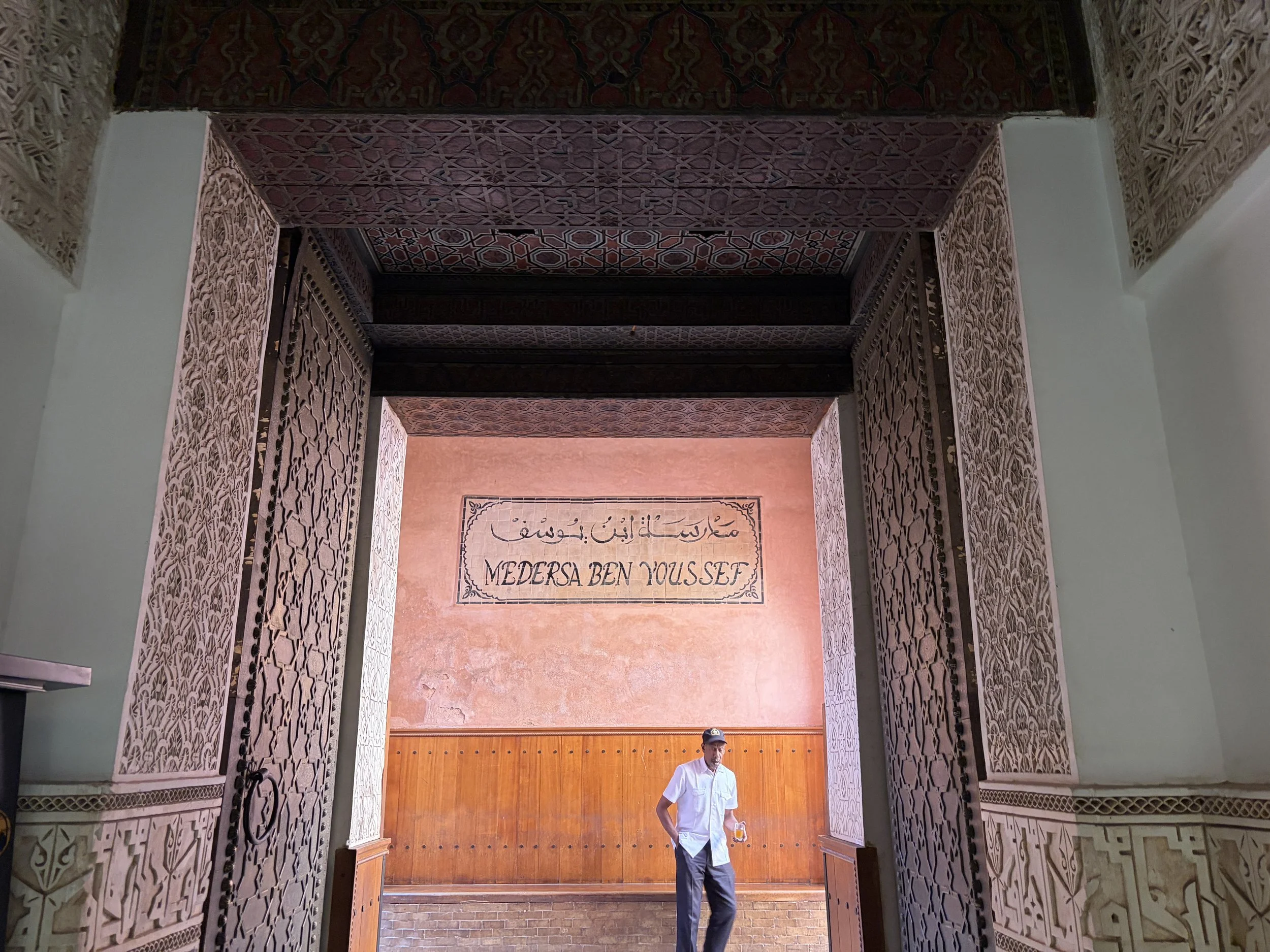
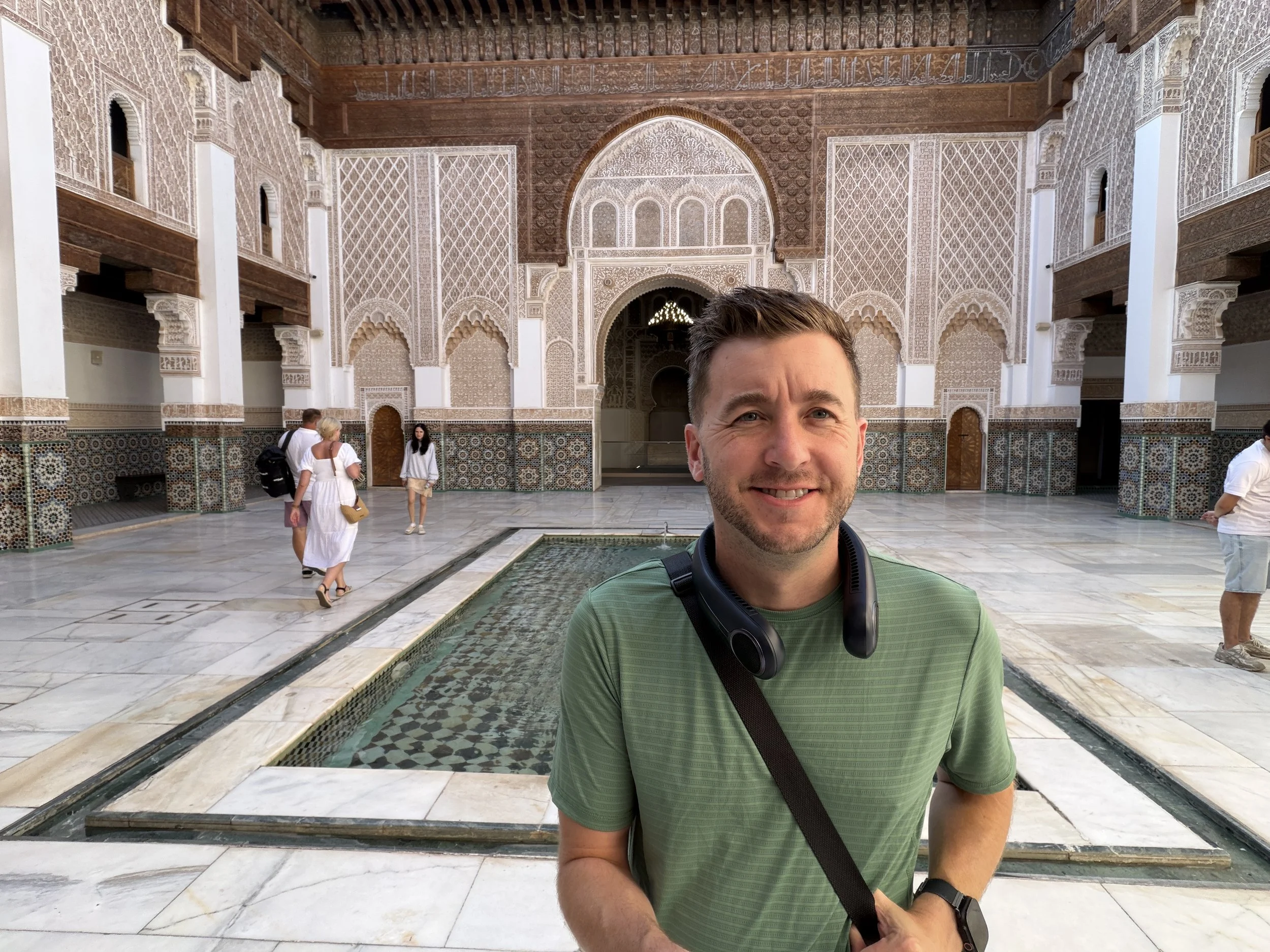
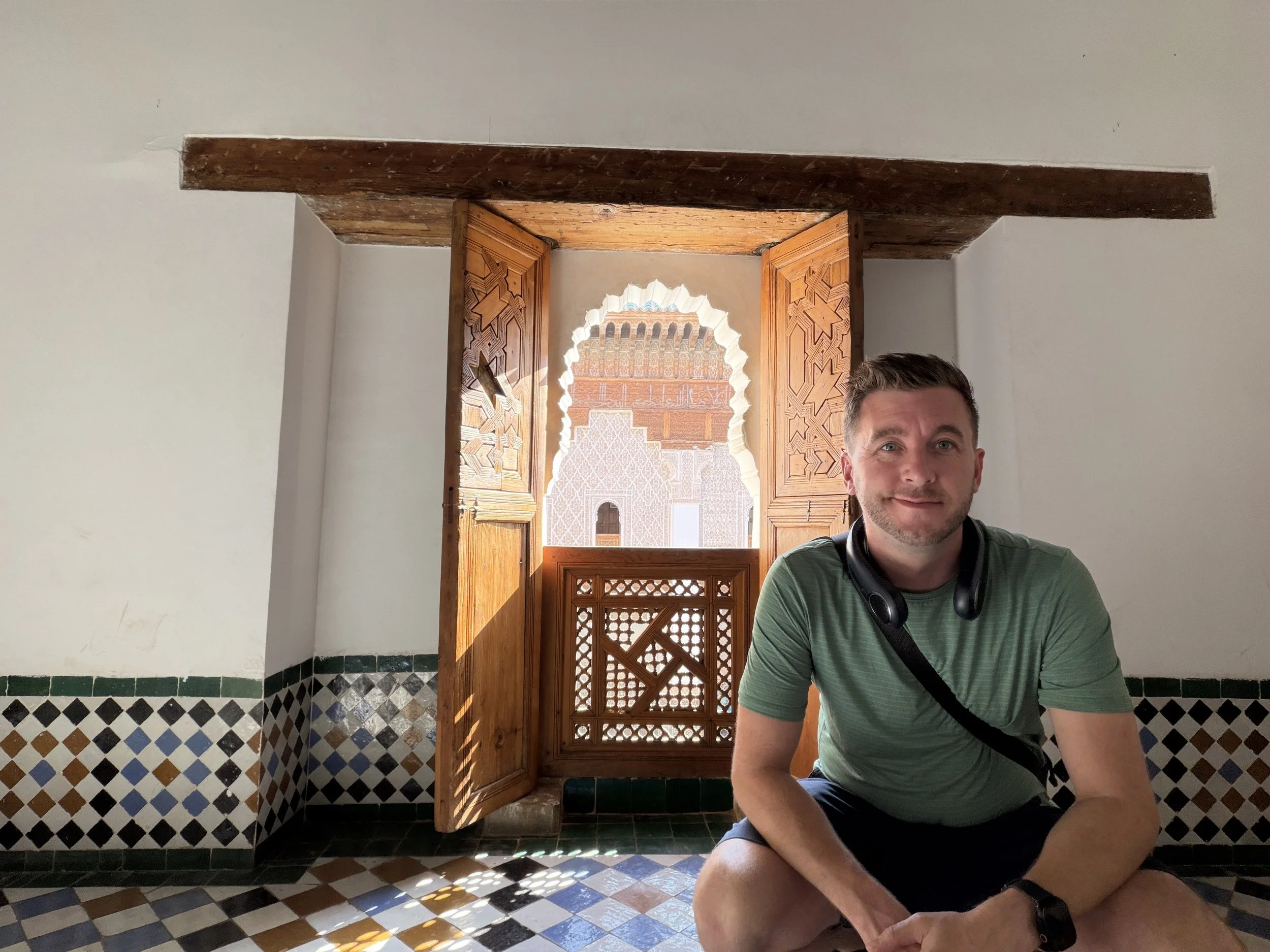
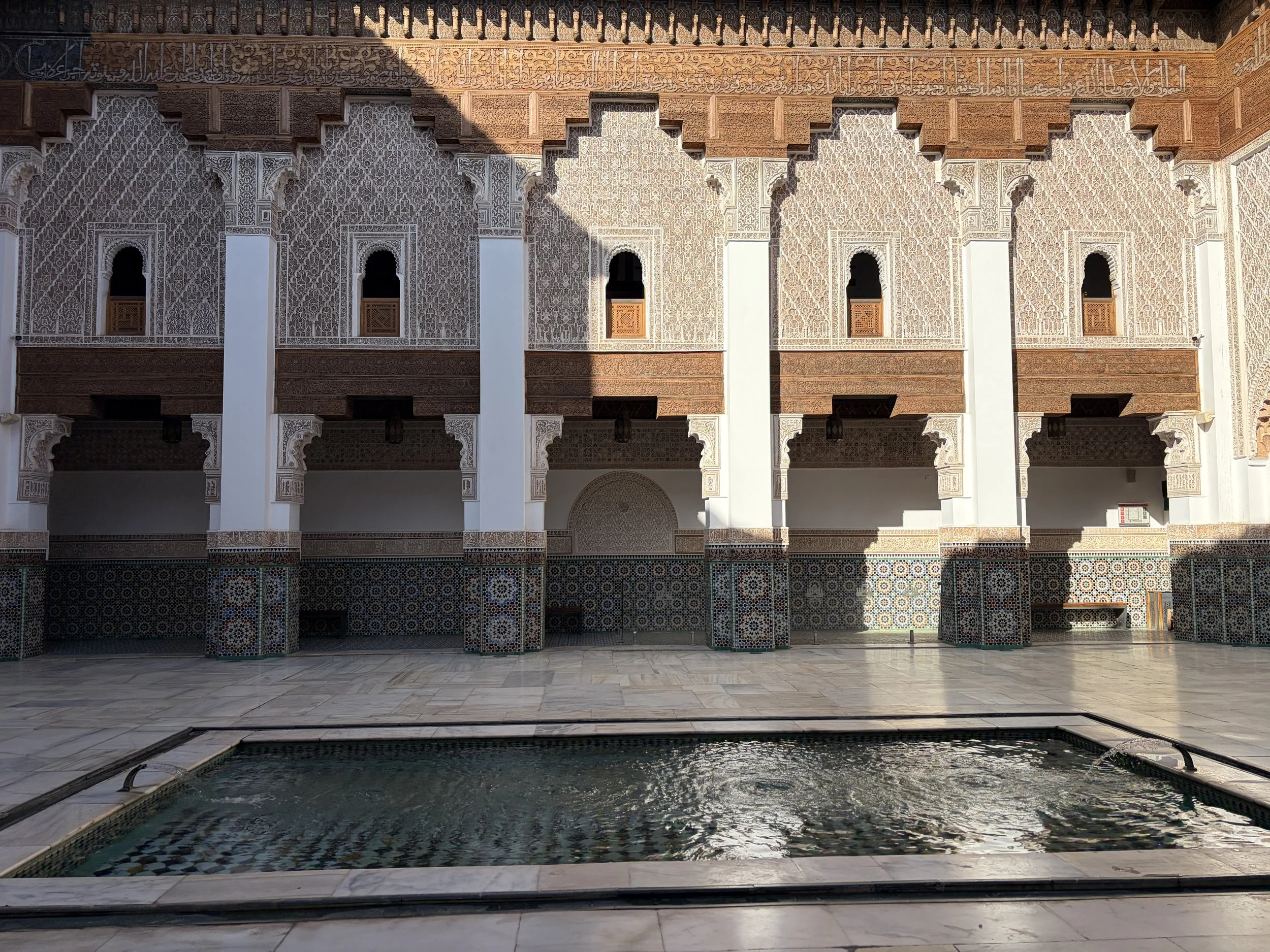
One place that opened early was the Ben Youssef Madrasa. Founded during the Marinid period and rebuilt in the 16th century under the Saadian dynasty, it became one of North Africa’s most important Islamic colleges. Students once lived and studied there, learning subjects including theology and law. The outside is modest. Inside, it opens into an extraordinary courtyard filled with geometric tilework, carved cedar, marble, and ornate plaster. Looking at the precision of work created by hand centuries ago—and maintained or restored since—was remarkable. People had made thousands of individual artistic choices, yet every detail belonged to a coherent whole.
People say it is easy to get lost in Marrakech because it is easy to get lost in Marrakech. I had mapped the route ahead of time, and my phone worked surprisingly well. Twice, men told me the road ahead was closed and offered to guide me along another route. This is a common tactic used to collect money from tourists. I declined and continued walking. Shocker: the road was not closed.
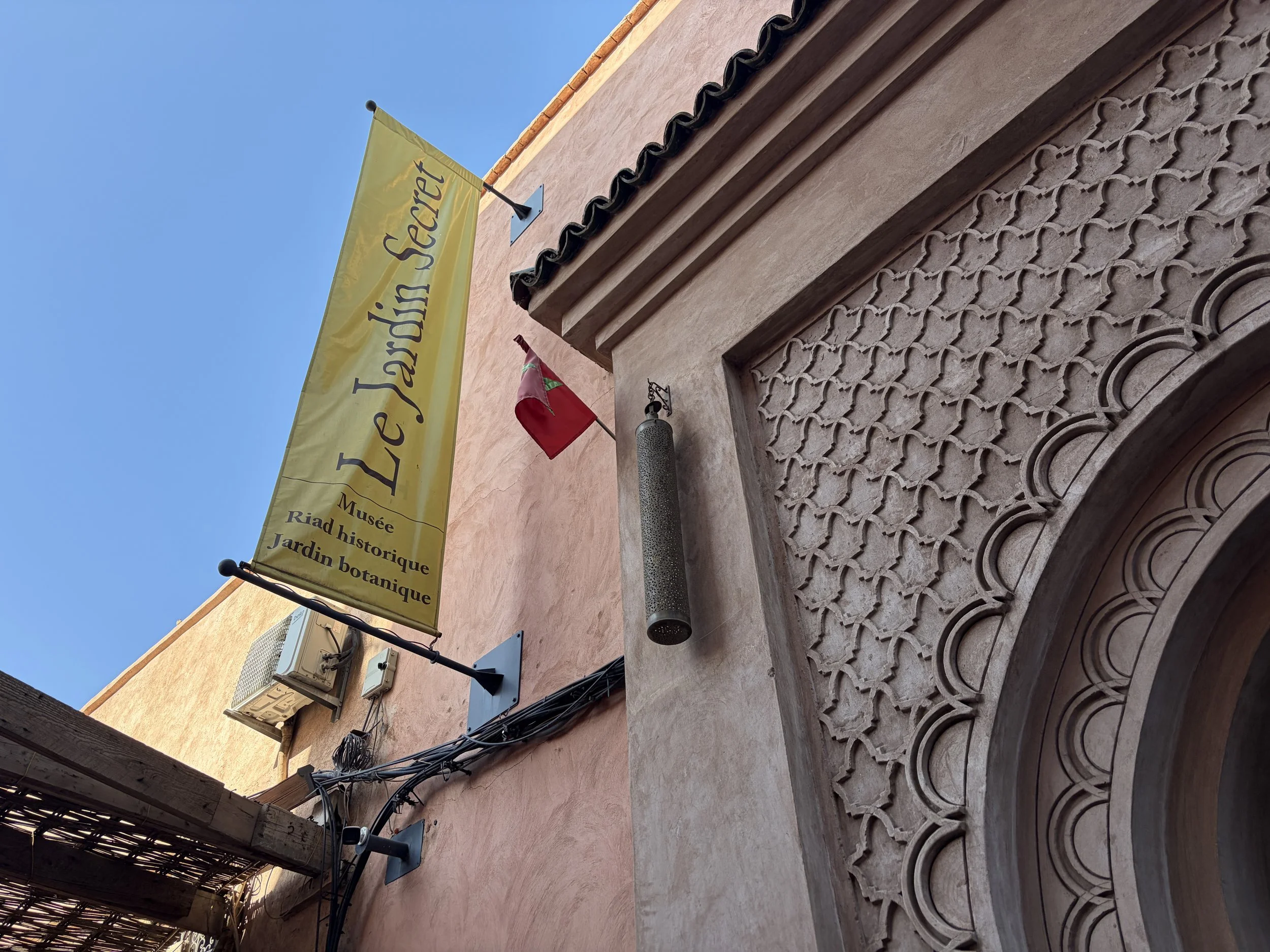
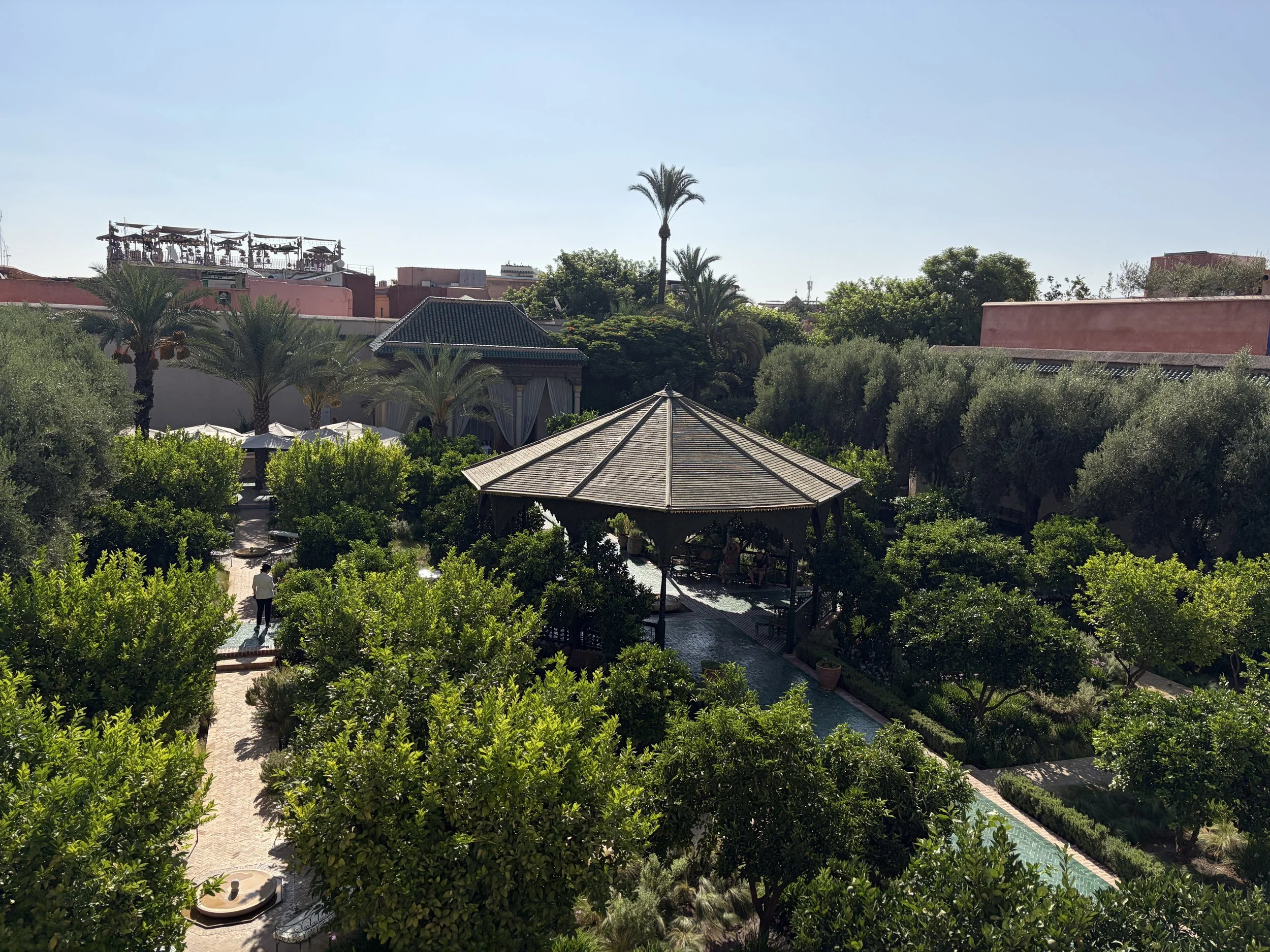
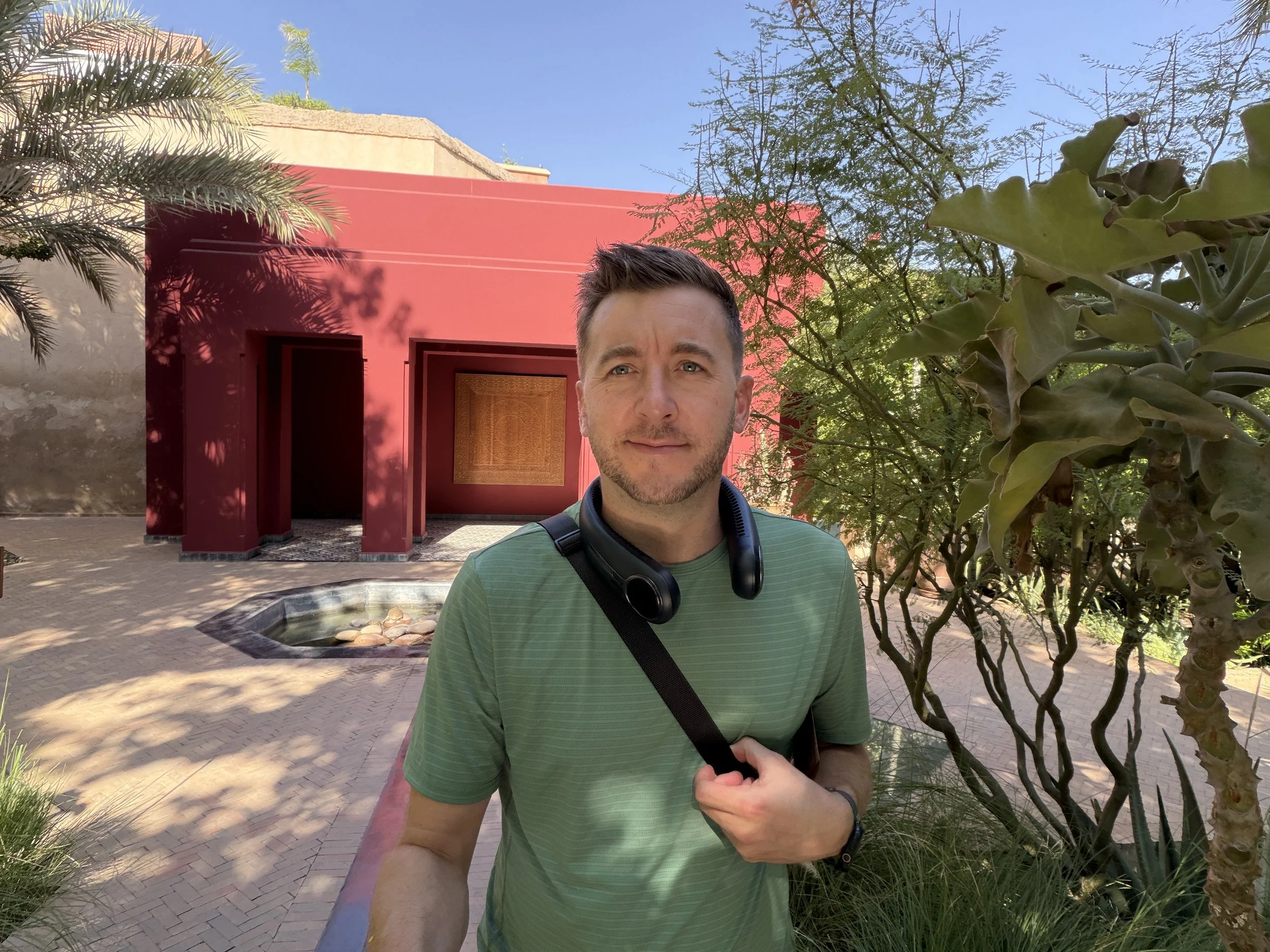
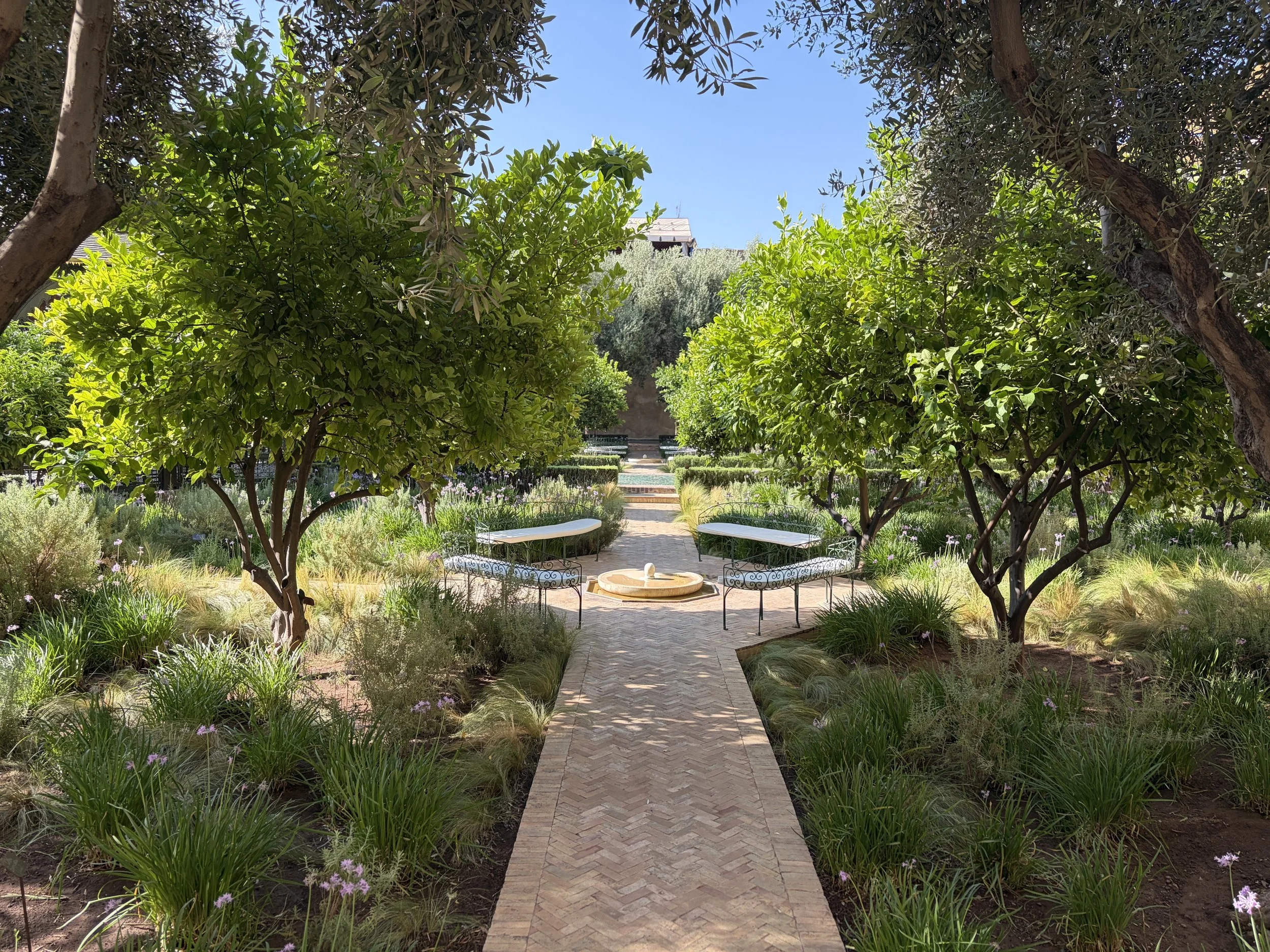
Le Jardin Secret, my second stop, was built more than 400 years ago and was once associated with some of Marrakech’s most influential families. After decades of neglect, it was restored and reopened to the public. Traditional Islamic Garden design, shaded paths, and flowing water make it feel cool and quiet despite the chaos beyond its walls. Marrakech constantly gives you competing choices: noise or silence, movement or stillness, stimulation or escape. Le Jardin Secret was the quiet choice. It felt like a flower growing after an explosion, or a lone tree standing in a landscape that had been cleared around it. I wanted chaos so I didn’t stay long.
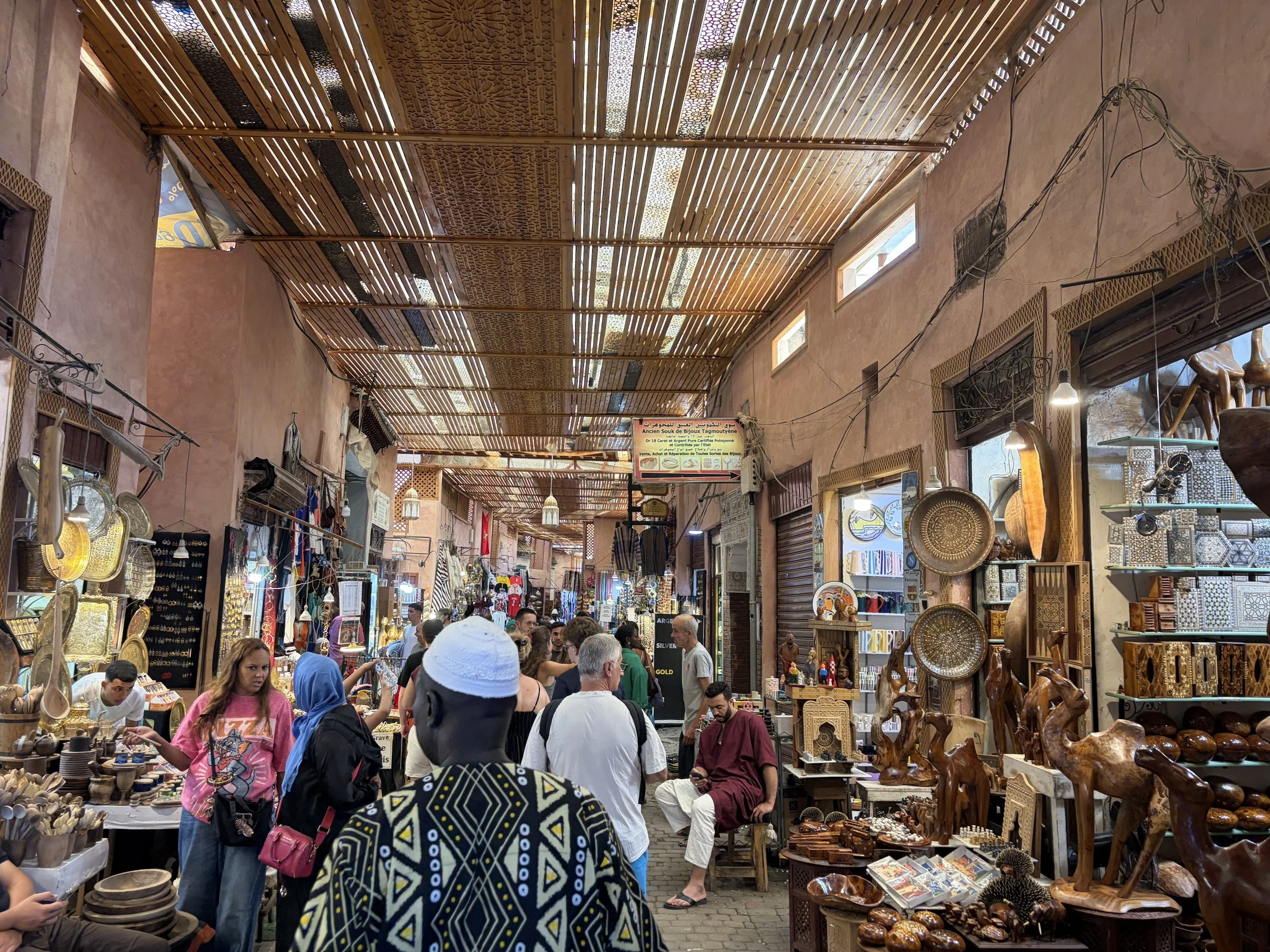
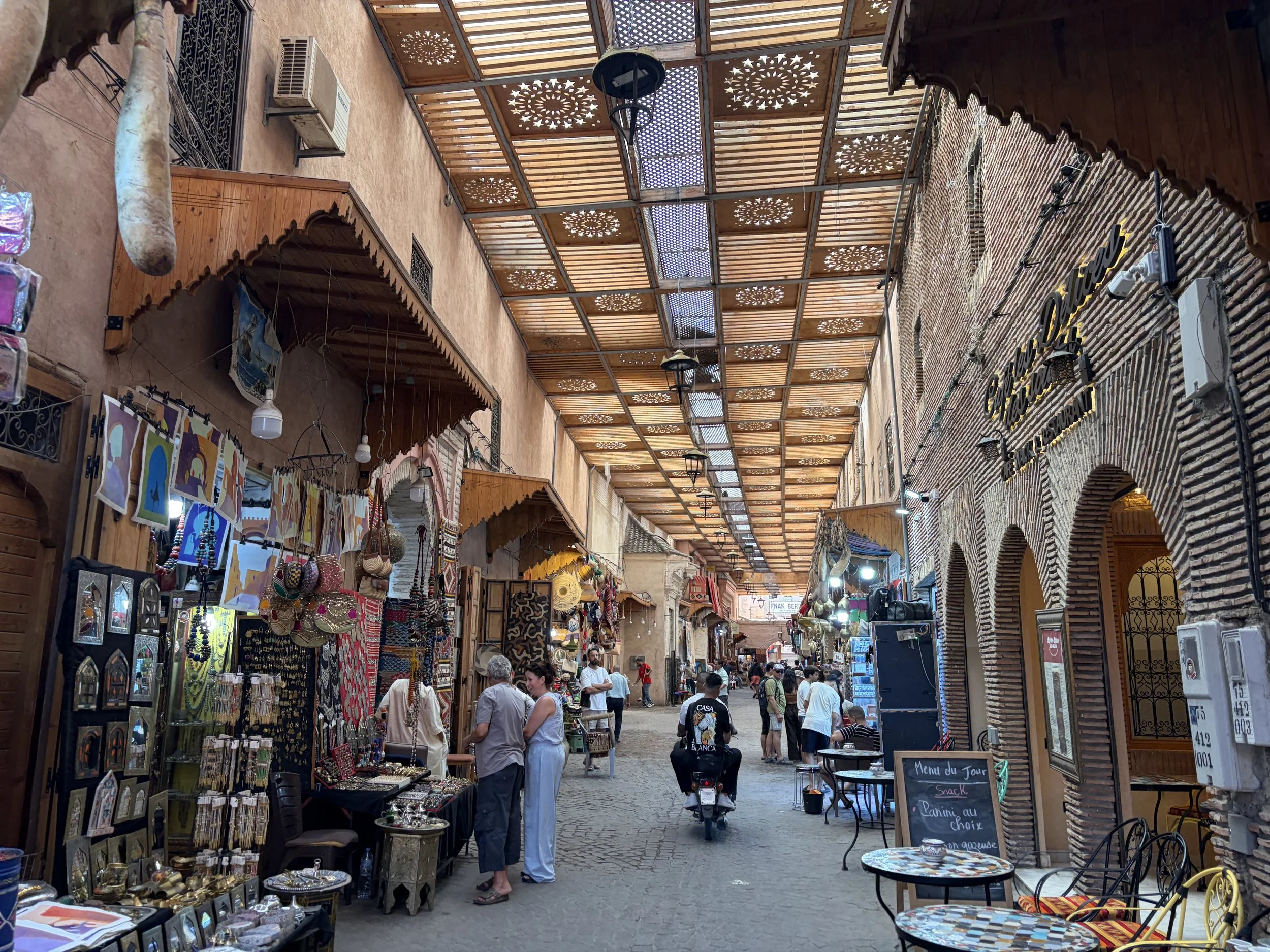
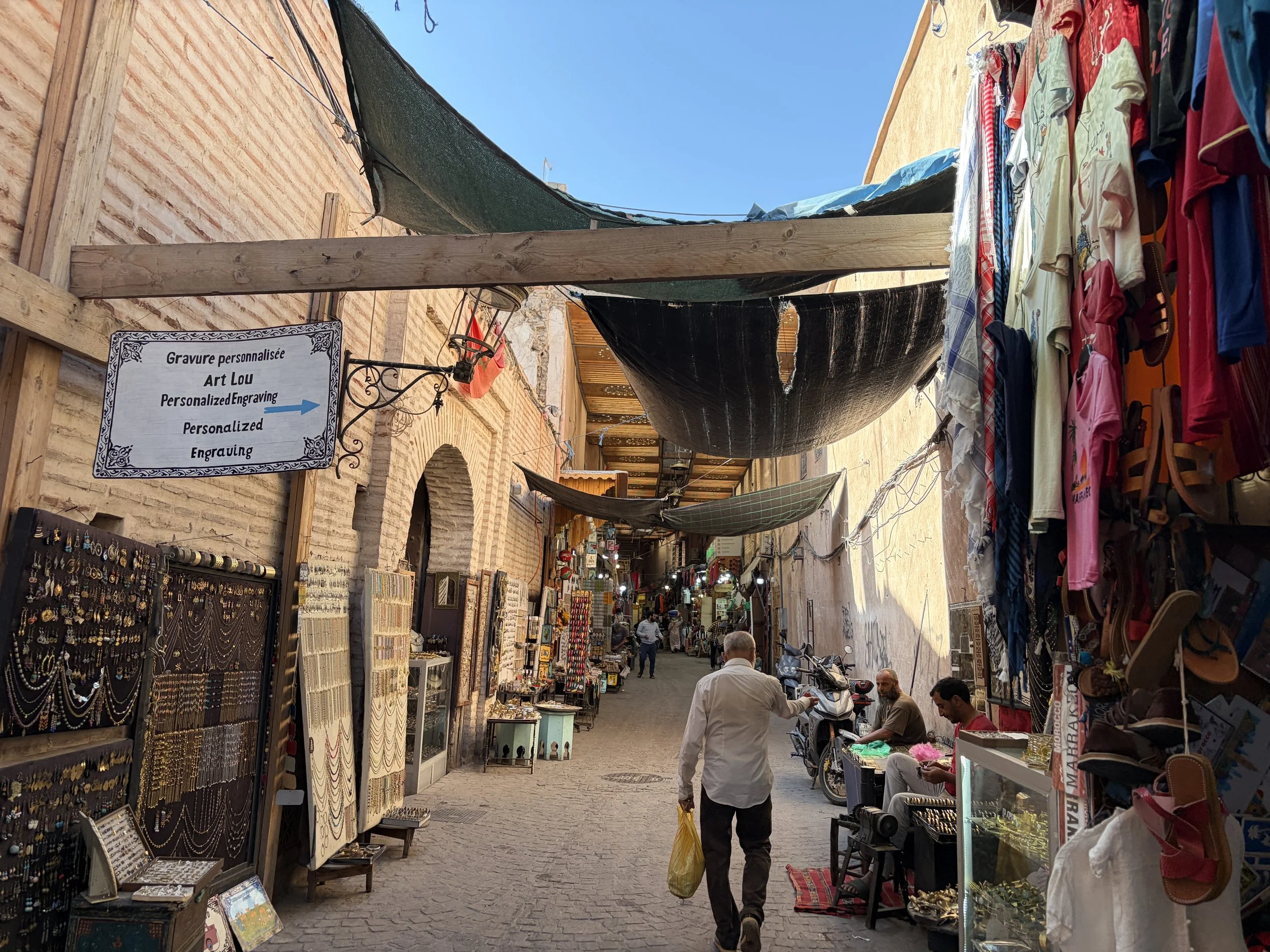
By the time I left, Marrakech was fully awake. I wandered through the souks, one of the largest networks of traditional markets in the region. Thousands of merchants sell woodwork, spices, clothing, leather, fabric, metalwork, lamps, ceramics, and almost anything else a tourist might try to fit into a suitcase. I had researched what to buy and arrived with a plan. Once I entered the souks, that plan disappeared. I decided I would buy something only if it felt distinctive. The problem was that seeing the same object in every store made it feel less special. I liked a thuya burl-wood box, but nearly everyone sold one. One merchant wanted 1,300 dirhams. Another wanted 2,000. Online estimates suggested a much lower price.
I loathe negotiating for souvenirs. I want to see a price, decide whether I will pay it, and either buy the item or move on. I do not want to perform a fifteen-minute drama over something sold by six other merchants on the same street. After several inflated prices—and several irritated shopkeepers watching me walk away—I chose to retreat. I returned to the riad to rest and regroup.
The souks overwhelmed me. There was too much to see, too many people trying to get my attention, and too many scooters racing through spaces that barely seemed wide enough for pedestrians. I later learned that the licensing requirements for scooters are minimal – purchase a bike and a helmet. The end.
Eventually, I found a fixed-price store outside the medina. I could finally choose without haggling. I bought several things, but more importantly, I gained a baseline for what items should cost.
The Choice That Brought Me There
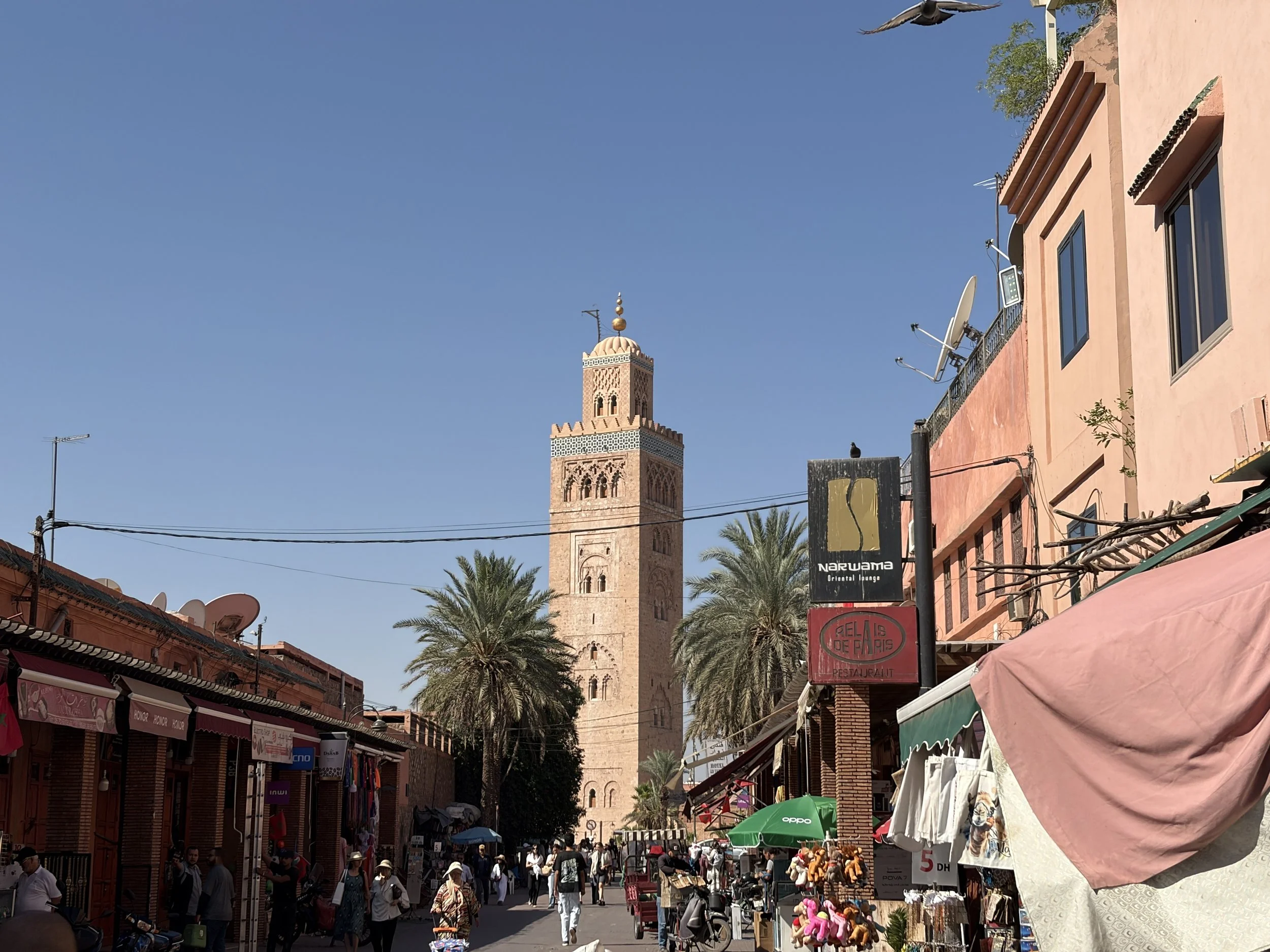
On the way back, I asked the driver to leave me near the Koutoubia Mosque. Completed in the 12th century, its sandstone minaret rises nearly 250 feet and is the most recognizable landmark in Marrakech. The mosque was beautiful, but it was also a strategic starting point for the walk to Jemaa el-Fna.
The closer I came to the square, the more energetic the city became. Streets filled with tourists, vendors, musicians, horse-drawn carriages, and performers. Jemaa el-Fna has functioned as Marrakech’s great public gathering place for centuries. UNESCO recognizes its cultural space for the living traditions practiced there—storytelling, music, food, performance, and, yes, snake charming. The snake charmers were the reason Marrakech had landed on my bucket list. They were the original choice behind every choice that followed.
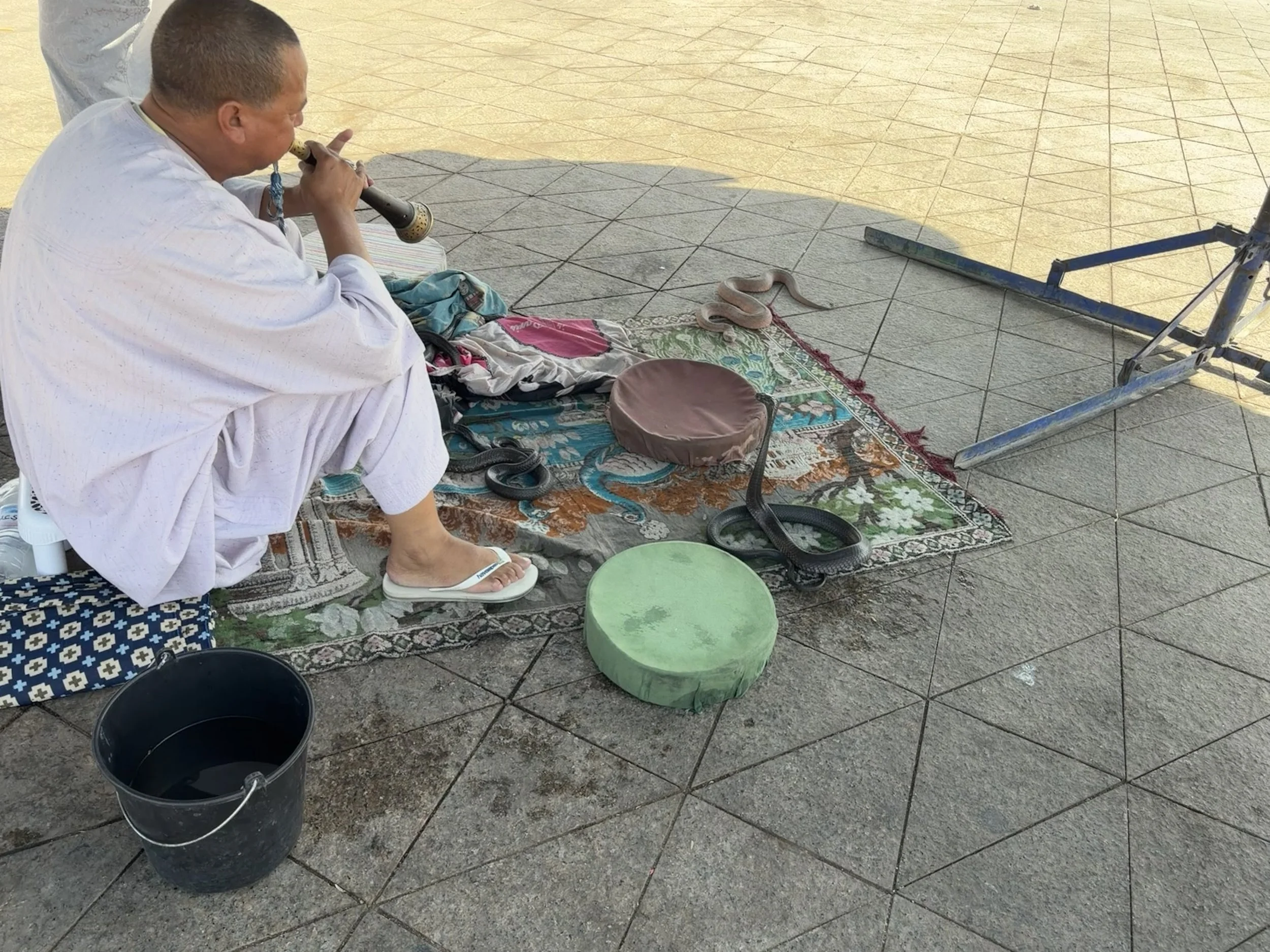
As I approached, the handlers immediately tried to pull me into the performance. I kept walking at first, wanting to understand what was happening before participating. Four venomous snakes moved freely on the ground, some raised in defensive positions as the musician played. When I finally circled back, one of the men tried to place a snake over my shoulders. I politely declined. I suspected the routine was to put the snake on a tourist, demand money, and delay removing it until the tourist agreed to pay. I chose observation over participation.
I took a quick photograph, paid the performers, and left. Bucket-list item complete.
Later, a local guide told me that snake charmers occupy a complicated place in modern Morocco. Their skills were once valued when homes made from earth and plant materials were more vulnerable to snakes. Concrete construction, hardware-store traps, and professional pest control have reduced that need. What was once practical work has increasingly become a tourist performance. I was also told that the snakes were genuinely venomous and that handlers encouraged them to expend venom before appearing in the square. The handlers would get the snakes to attack a balloon to release venom daily, in an effort to remove it.
I did not want to become Marrakech’s first cautionary tale of the week, so I got out of there quickly. Check.
Freedom of Choice and Freedom to Choose
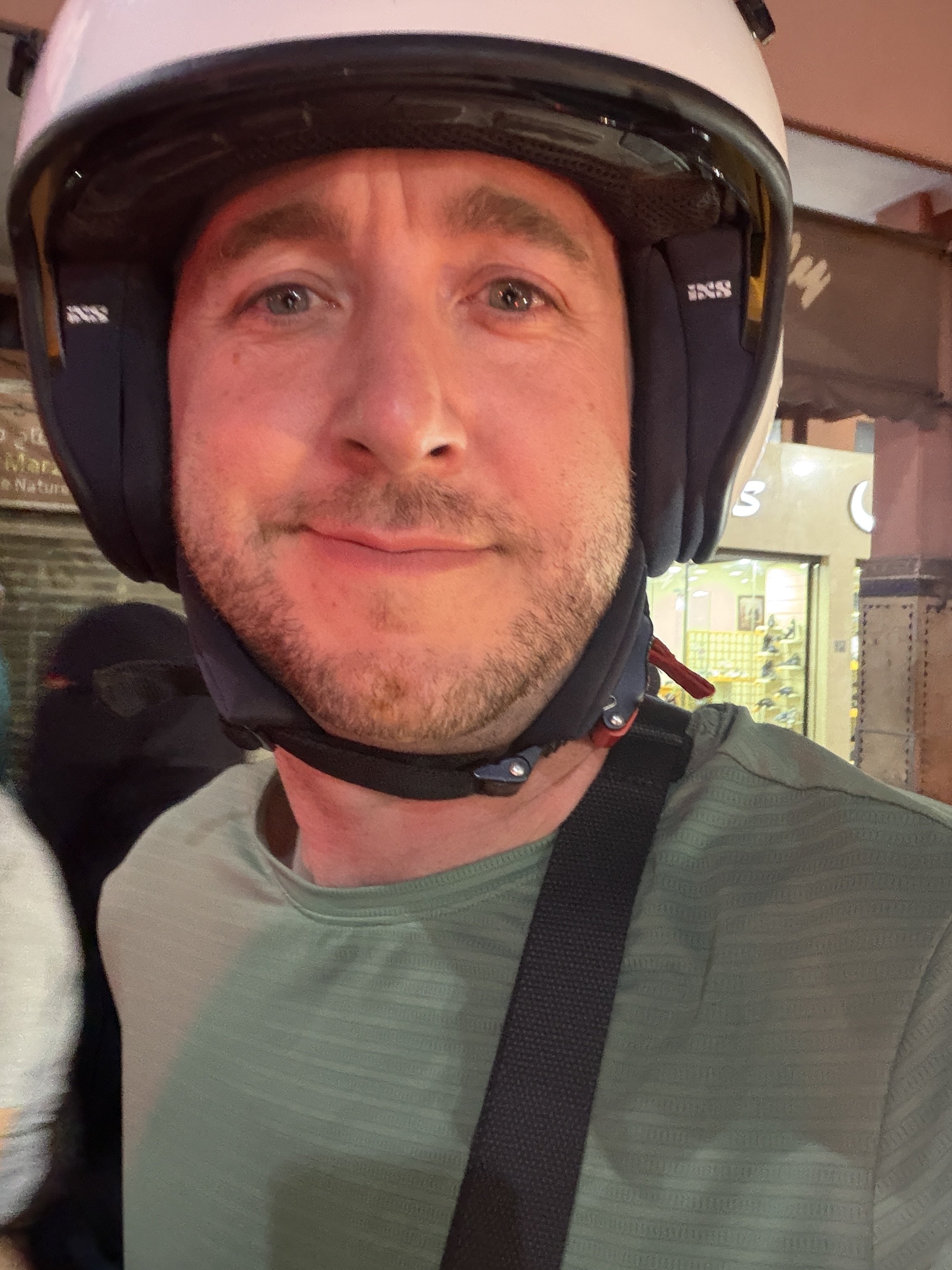
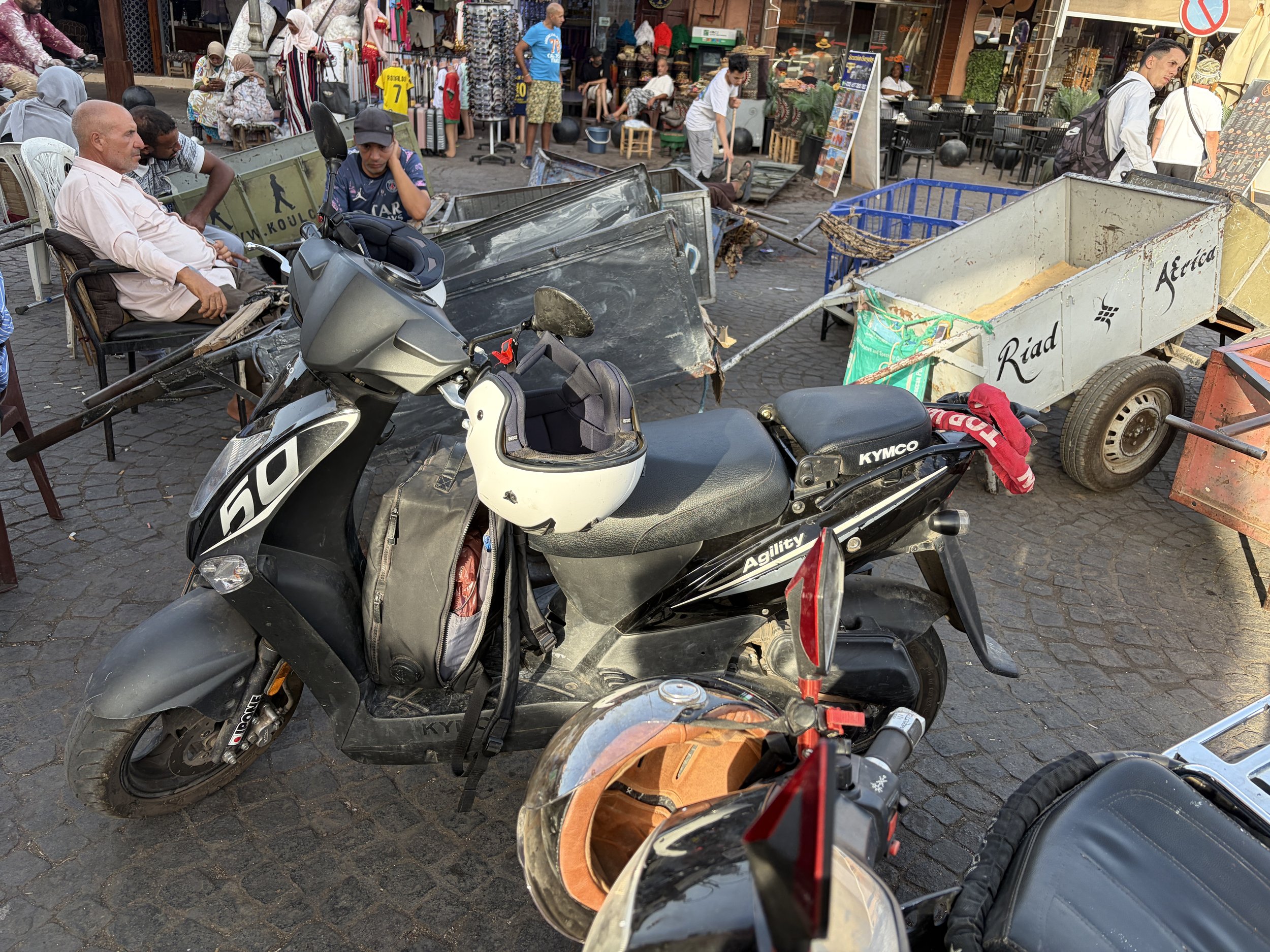
That evening, I had booked a food tour. About an hour before it began, the company called through WhatsApp to explain that no one else had registered. I could cancel or take the tour alone. I had no alternative plans, so I chose to go. There was one condition: instead of riding in a car, I would travel on the back of my guide’s scooter.
I agreed, then immediately began questioning my decision. That may be what getting older—and having a child—does to you. Choices that once would have felt adventurous now come with an internal risk assessment.
The guide arrived and explained that we would spend four hours traveling to different places and sampling Moroccan food. I told him we could finish early if we reached all the stops, but he insisted on honoring the full schedule. At first, the thought of spending four hours alone with a stranger while eating unfamiliar food sounded exhausting. Then I realized that I had a private guide and four uninterrupted hours. I might as well ask him everything.
We discussed Morocco’s monarchy, schools, religion, snake charmers, infrastructure, and personal freedom. I received a crash course in Moroccan culture, not from a textbook but from someone living inside it. The conversation that stayed with me was about the distinction between “freedom of choice” and “freedom to choose.”
At home, I often think of freedom of choice as access to a range of possibilities: A, B, C, or something we invent ourselves. Scholars can debate how much of that freedom is real and how much is shaped by economics, culture, family, and circumstance. Still, Americans generally expect options.
What my guide described felt more like freedom to choose: a choice is presented, and a person may select from within the boundaries already established by family, religion, law, or custom. There is still agency, but the menu may be shorter.
I do not pretend that one conversation explained an entire country. Morocco is diverse, and no guide could speak for everyone. Still, the distinction made me think about how easily I treat choice as a given. I had chosen the country, the flight, the riad, the tours, the food, and whether to follow a stranger through the medina. Even my uncertainty was a privilege. That conversation will stay with me for a while.
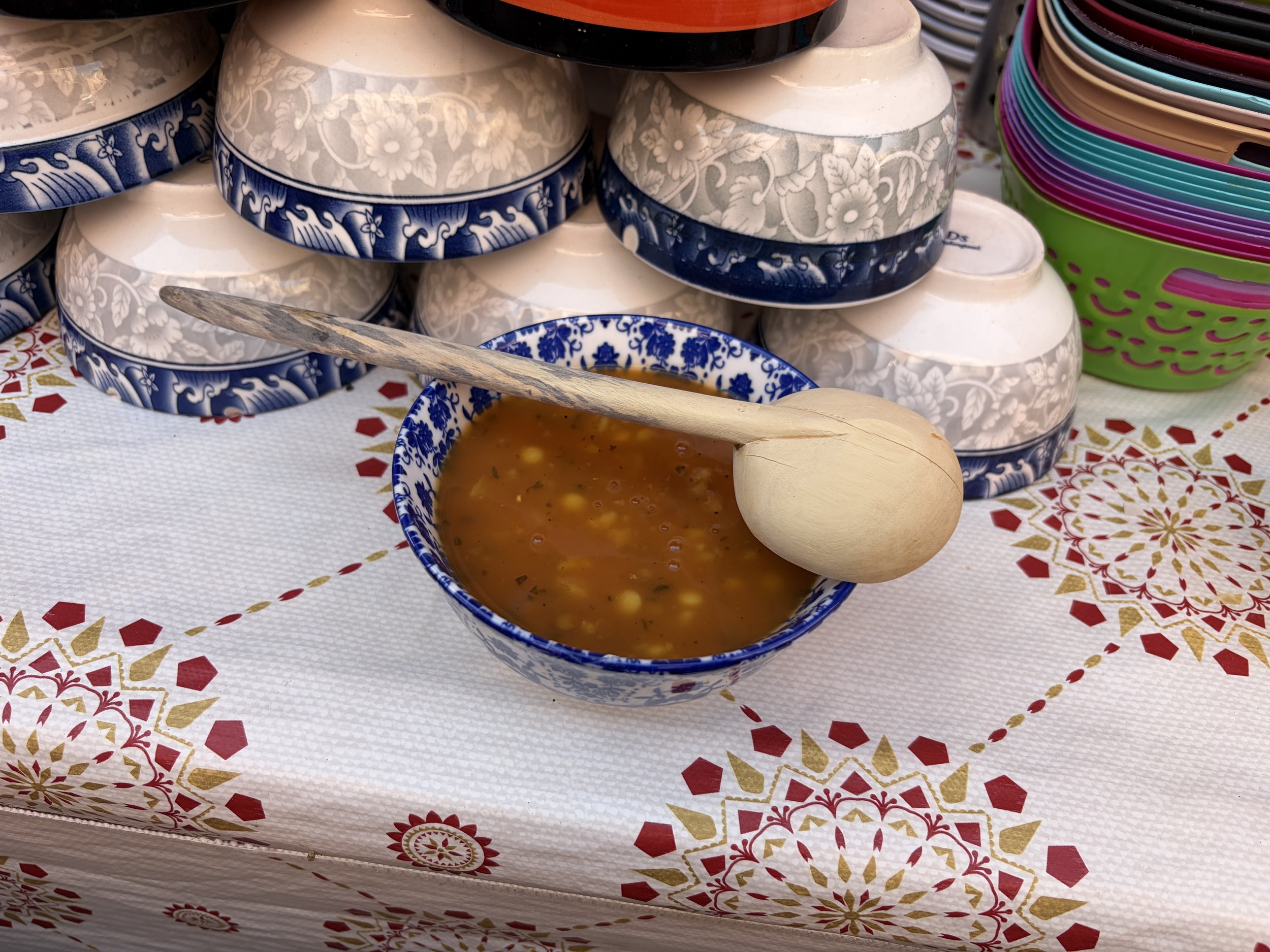
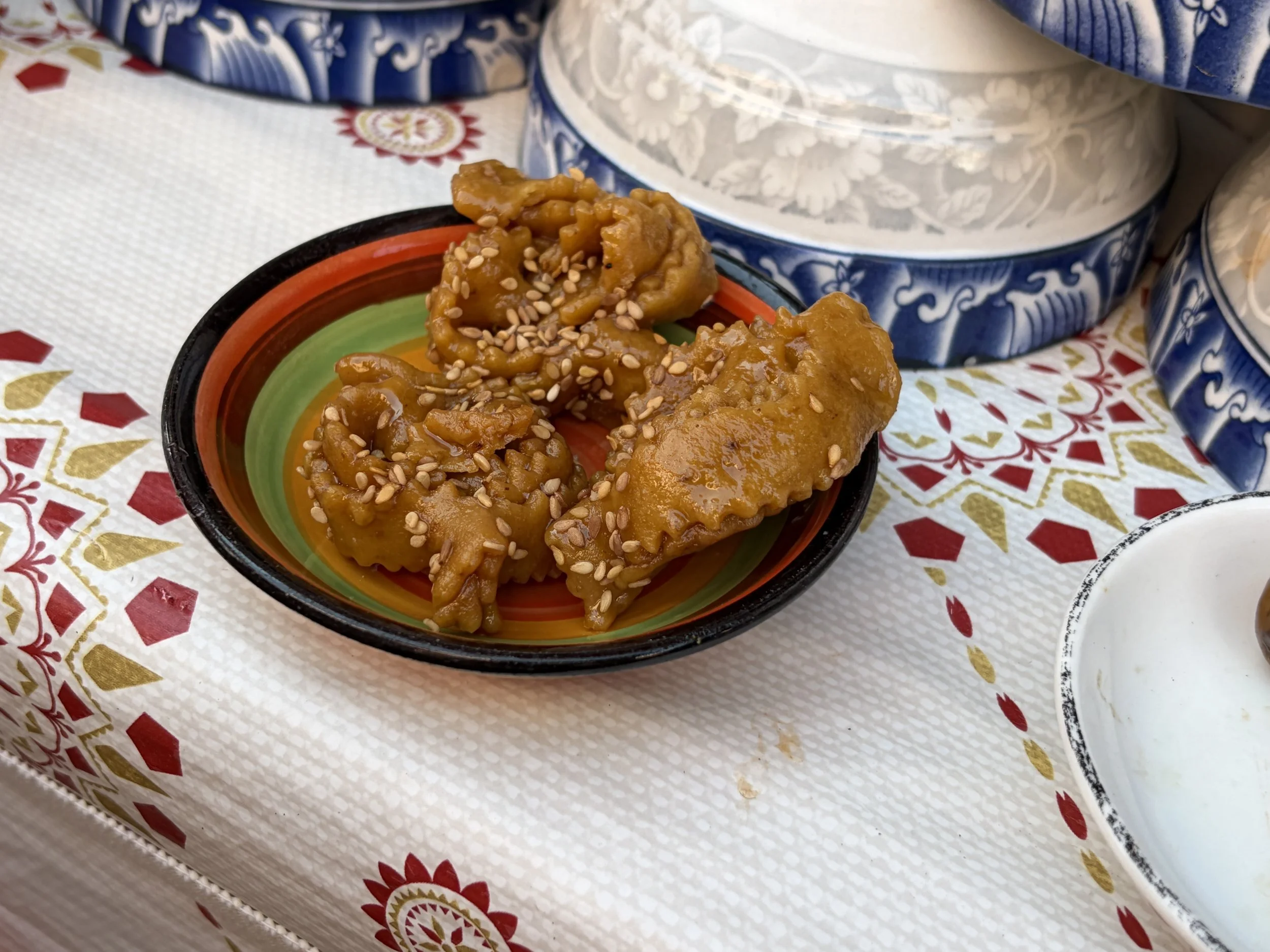
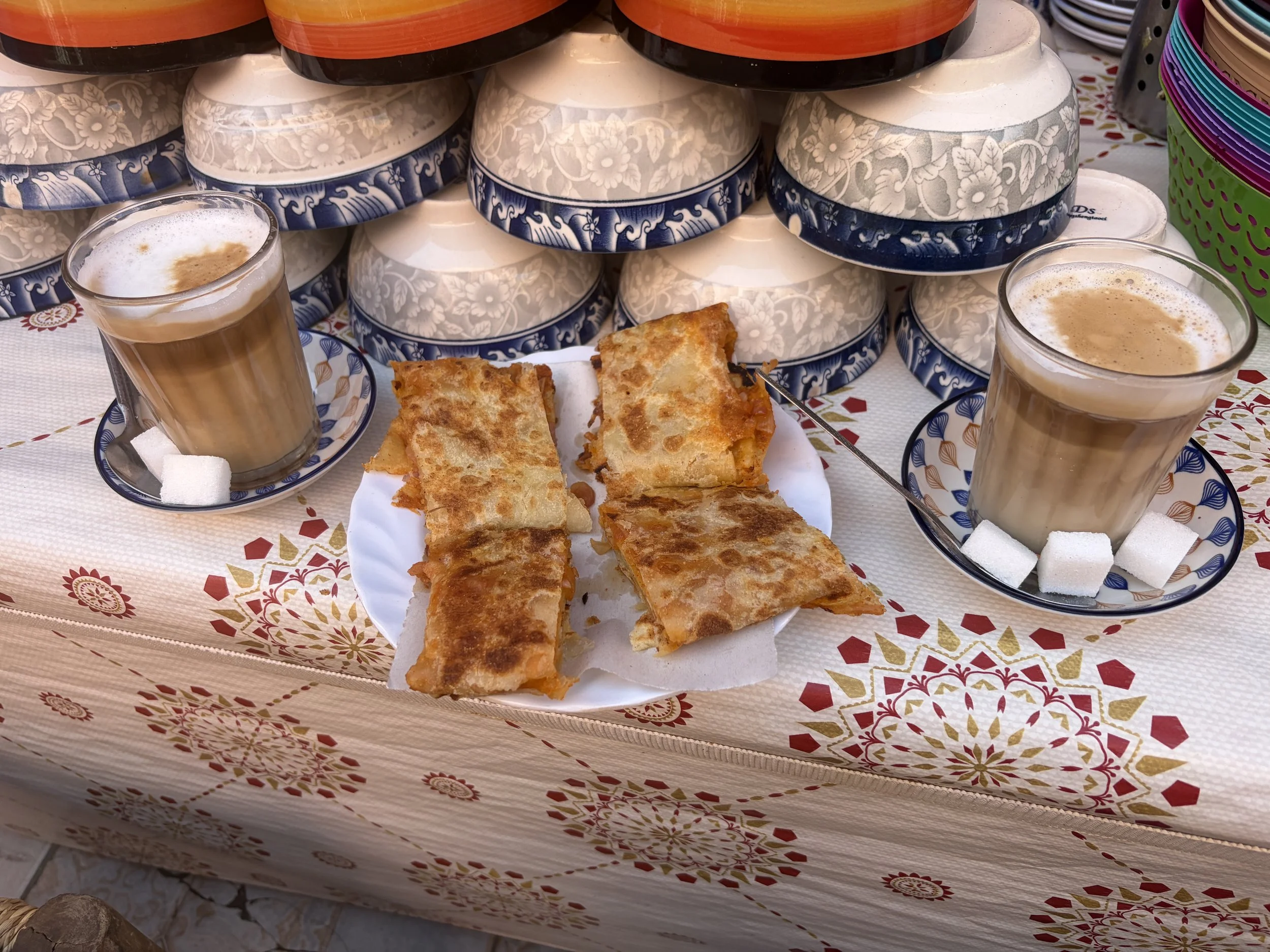
The food tour started with porridge, cookies, pancakes, baked goods, and fried doughnuts. At a spice market, I bought ras el hanout, a Moroccan spice blend whose name roughly means “top of the shop.” Recipes vary, but the blend may contain cumin, coriander, cinnamon, ginger, turmeric, pepper, and other spices chosen by the seller. Mine came wrapped in a plain plastic bag and looked suspiciously like something I did not want to explain at customs. I had watched too many movies. I kept it on me that evening but left it in the Riad when packing up.
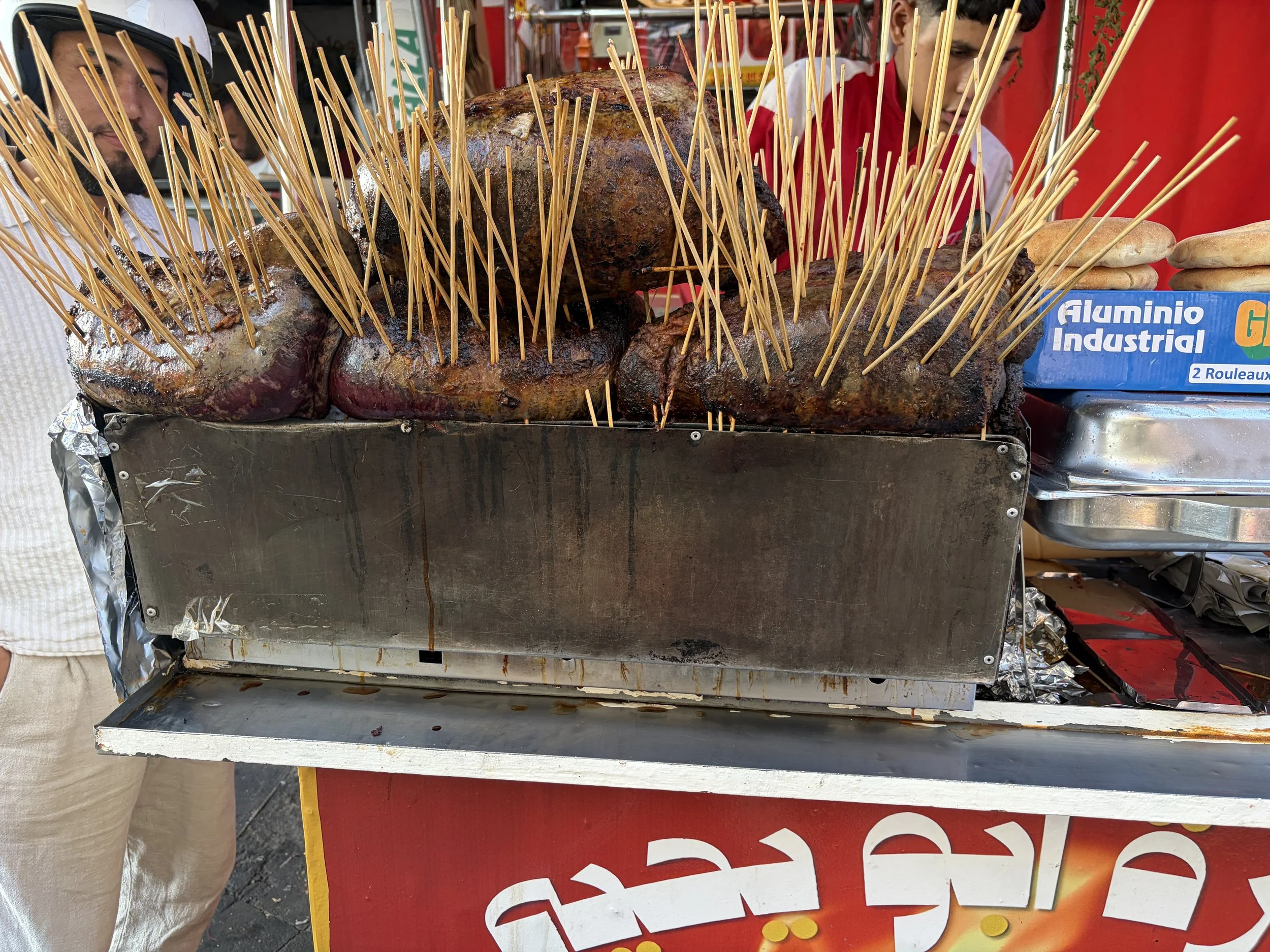
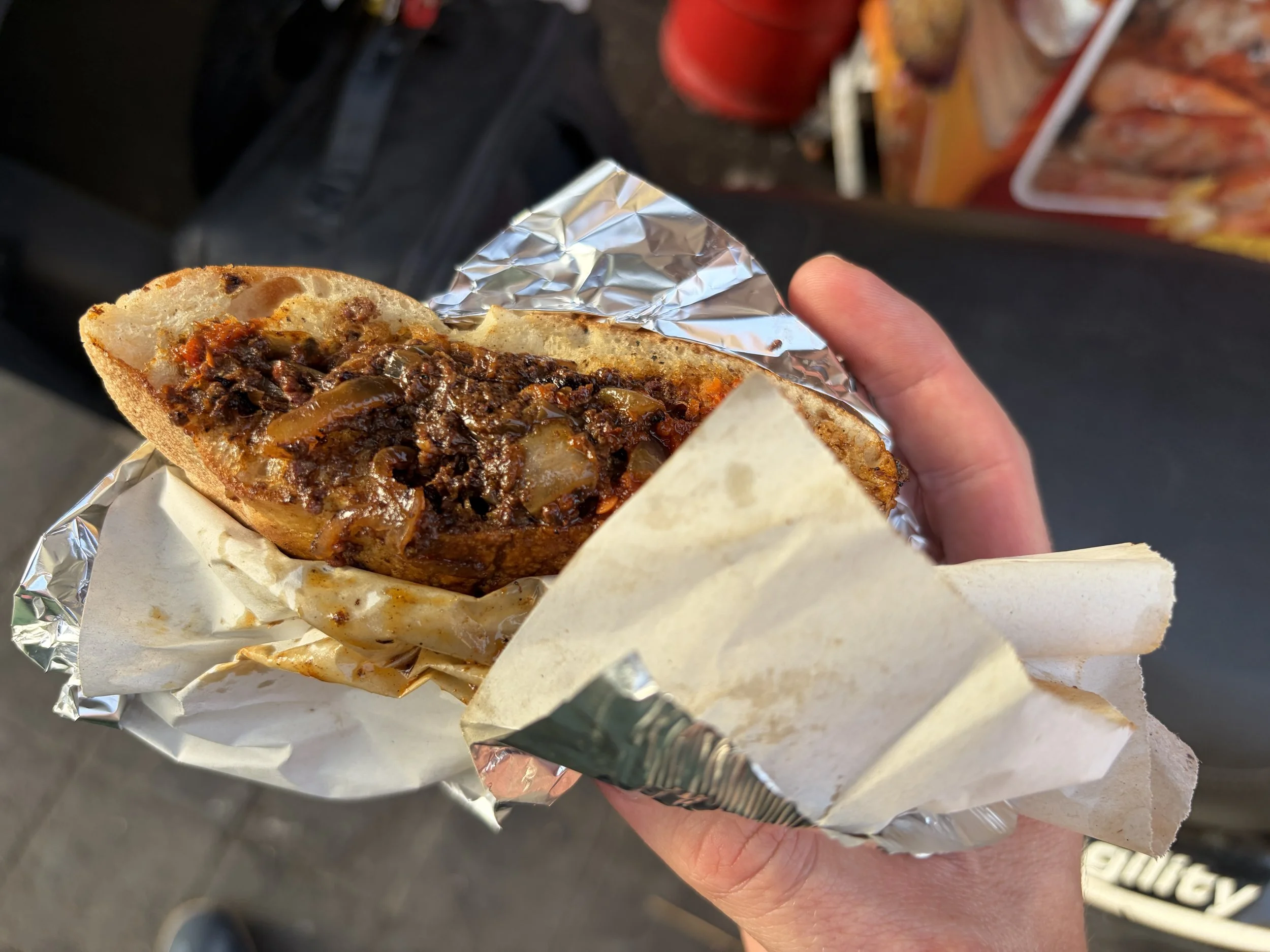
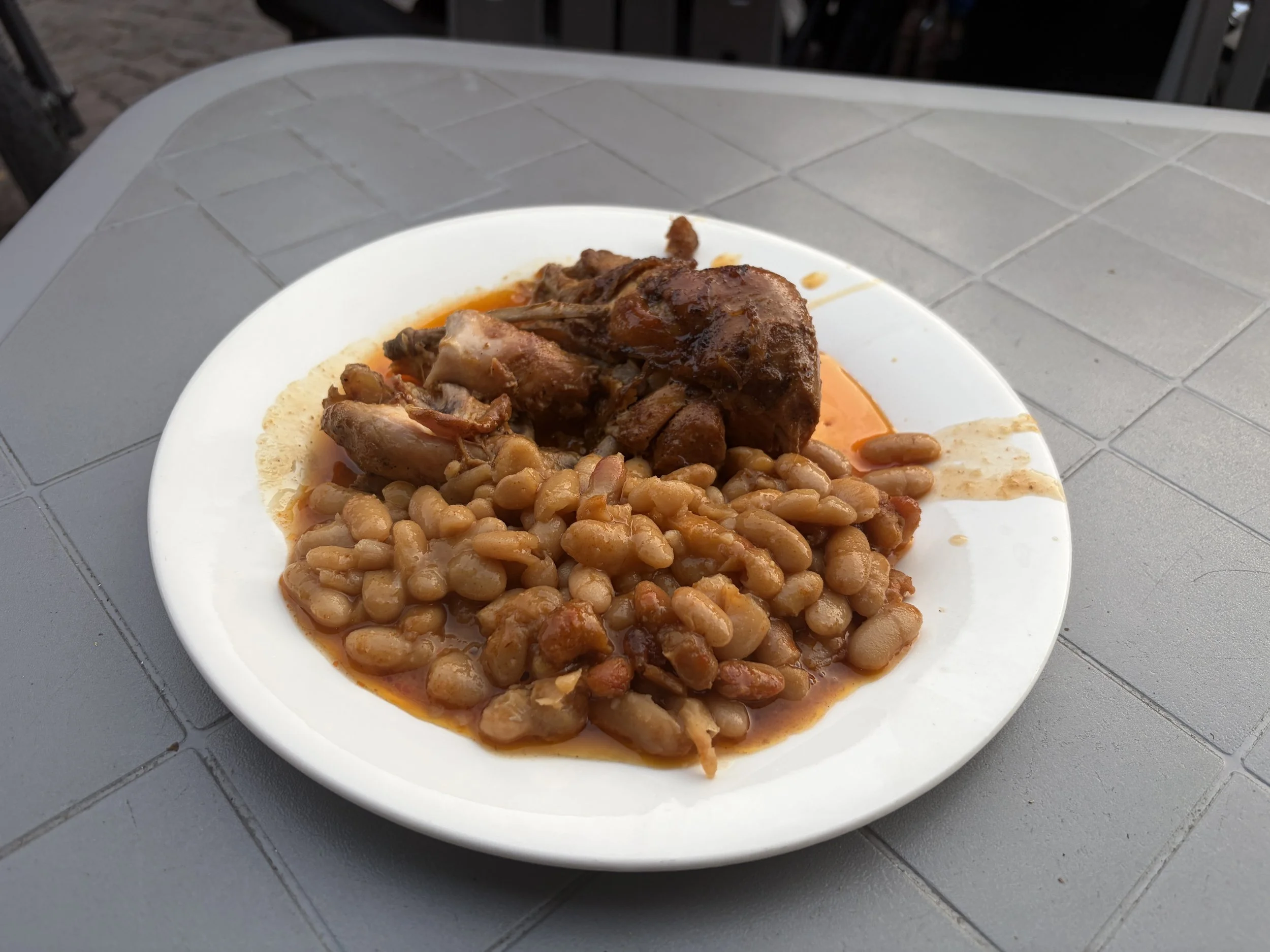
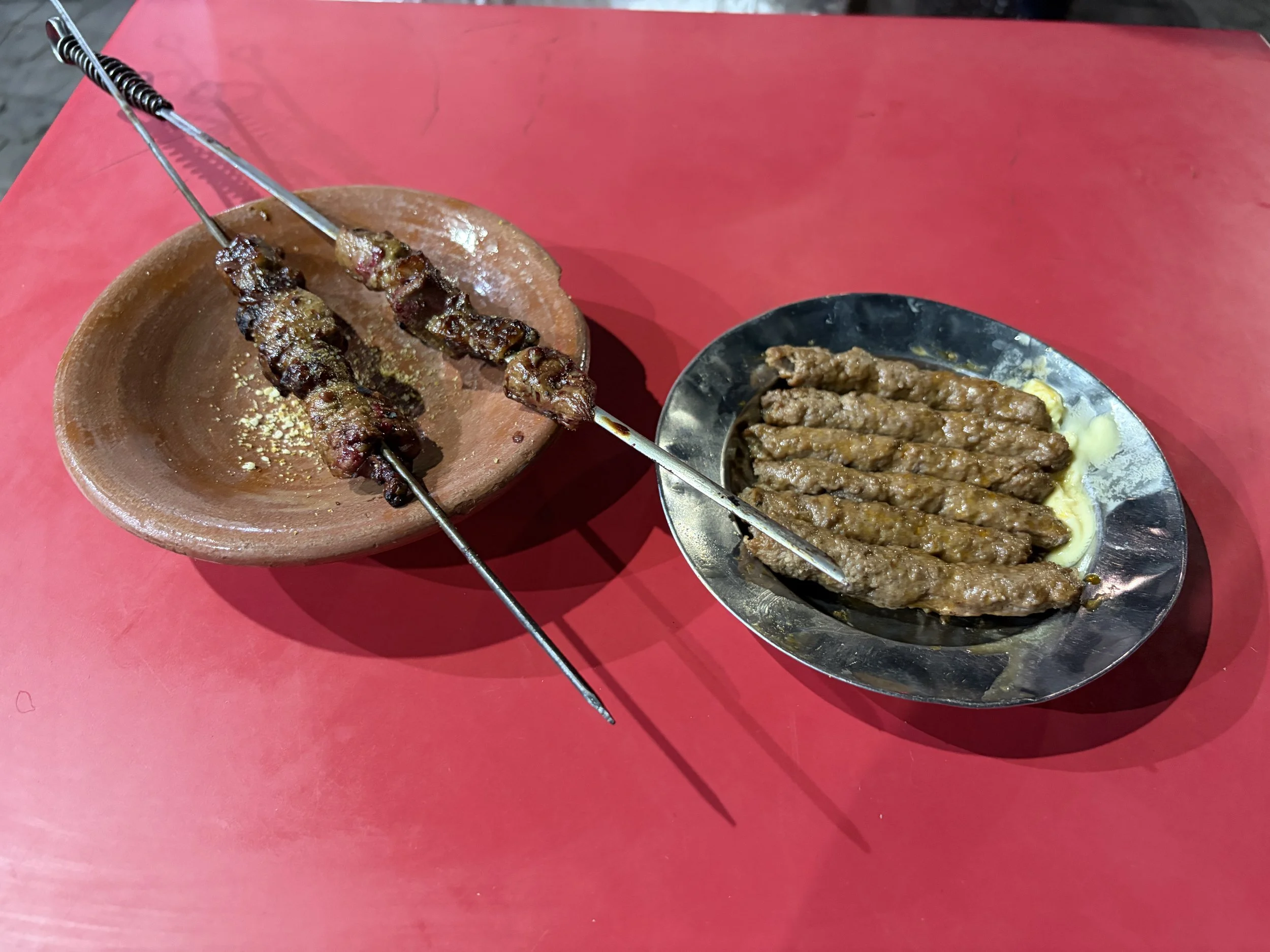
The guide then took me away from the usual tourist route and into his neighborhood. We stopped at a tiny butcher-and-barbecue shop serving spleen. Once I got past knowing what it was, it was pretty good. Then came liver, chicken, kefala with ghee, and a smoothie. The food kept arriving until the clock finally reached ten.
Compared with food tours I had taken in Rome and Lima, Marrakech had the least impressive food—but by far the best conversation. That made it a success. Sometimes the experience you would not have chosen at the beginning becomes the one you value most at the end.
Into the Atlas Mountains
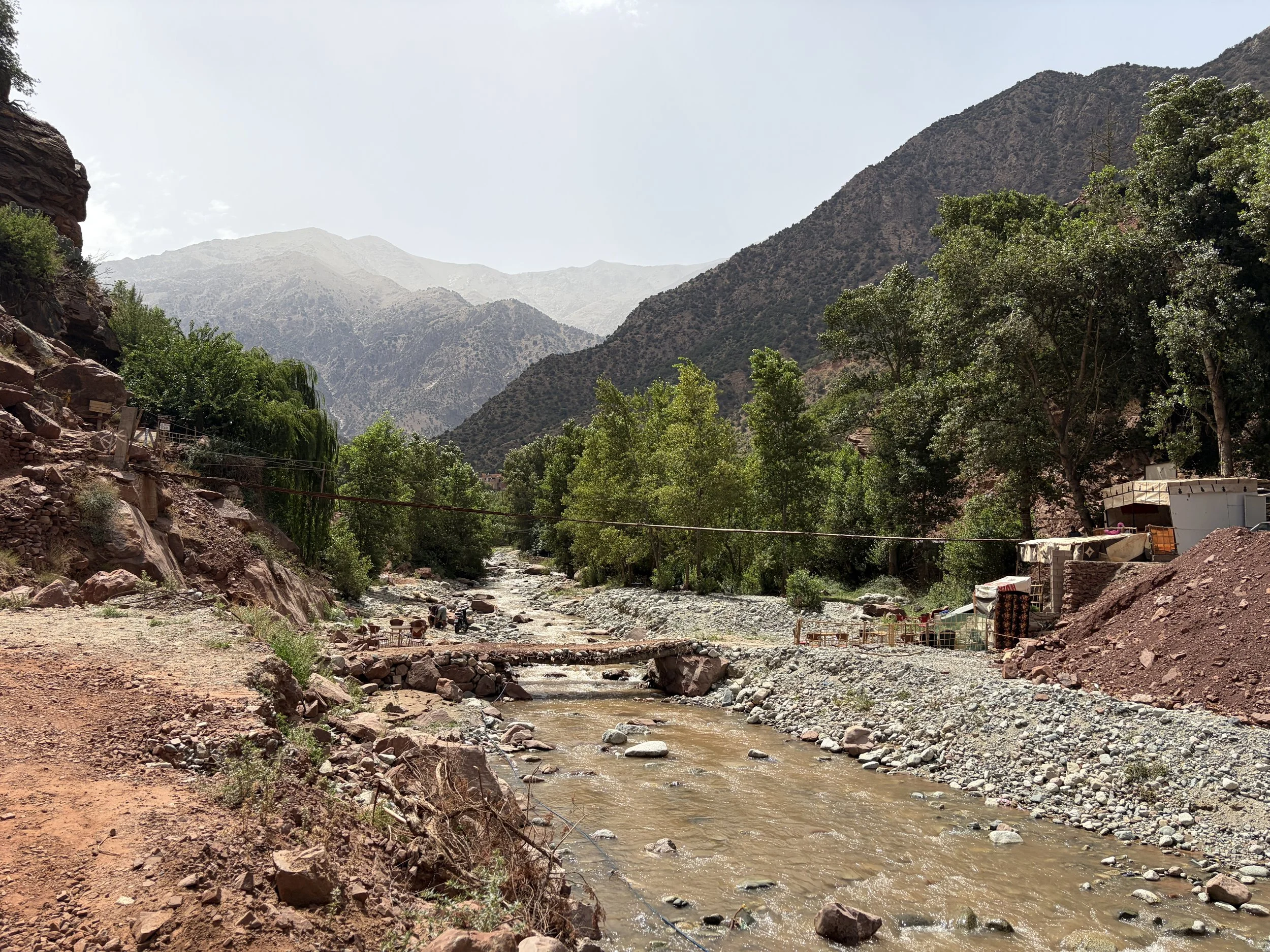
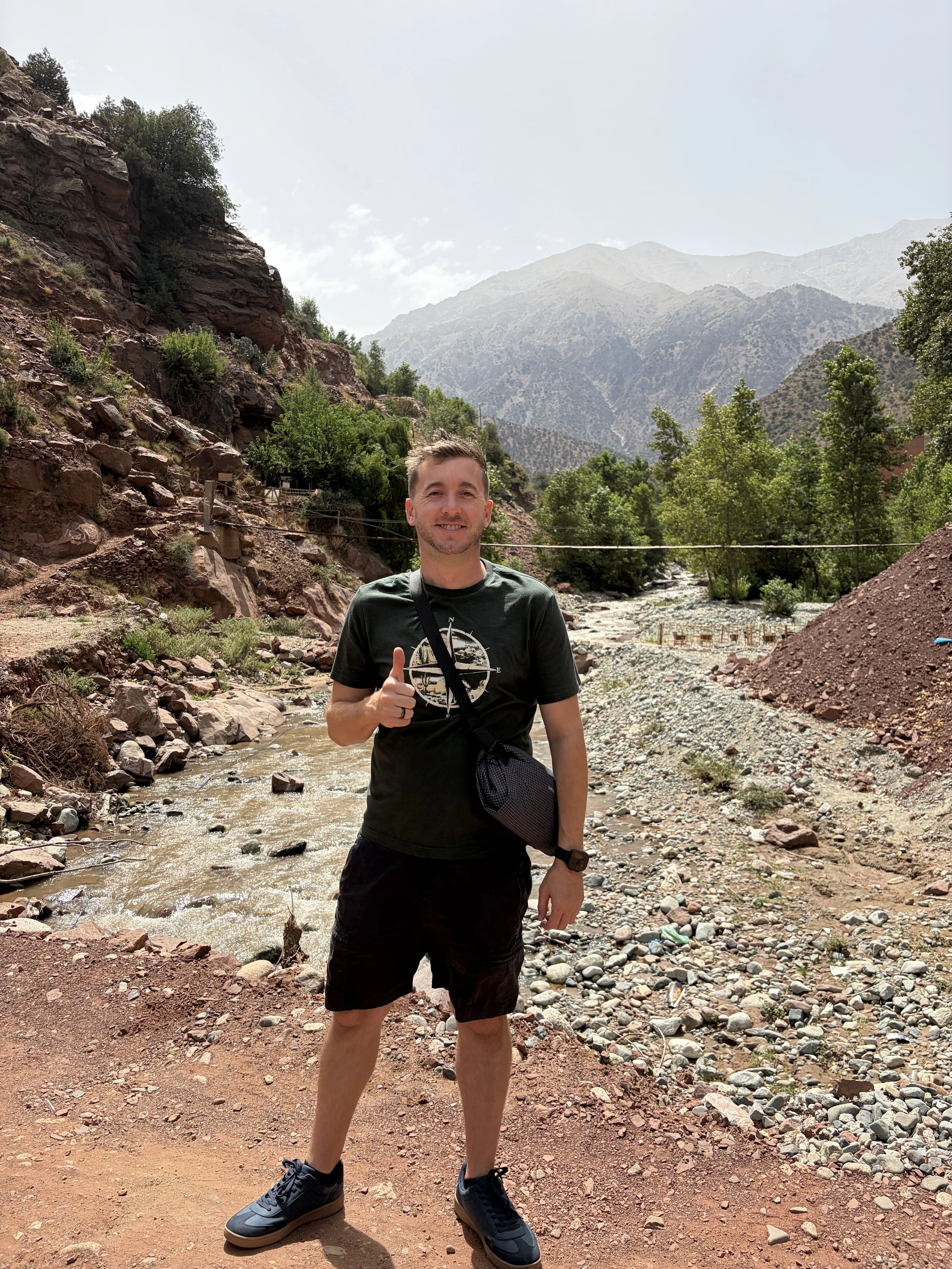
The next morning, breakfast arrived in my room again before my trip to the High Atlas Mountains. The range stretches across Morocco and includes Mount Toubkal, the highest peak in North Africa. For centuries, its terrain helped mountain communities preserve Amazigh languages, traditions, and ways of life distinct from those of the cities.
Once again, nobody else had booked my tour. I had a private driver for the day.
On the way, we talked about Morocco’s preparations to co-host the 2030 FIFA World Cup, including stadium construction, investment, and development. These conversations with people who actually lived in the country added more to the trip than any travel guide could have.
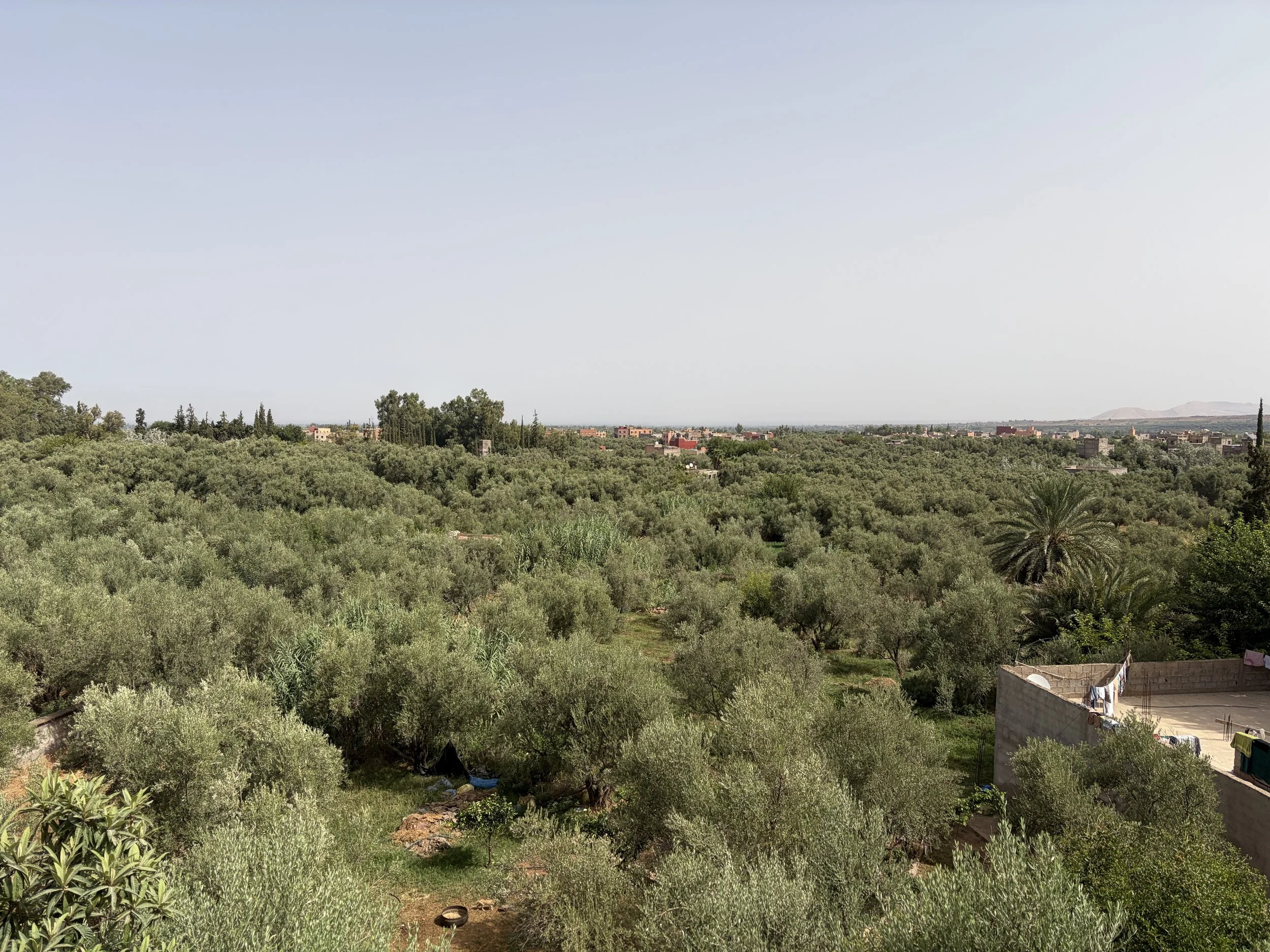
Like many organized tours, this one included required stops at places that sold goods to tourists. Our first “panoramic mountain view” happened to be on the upper floor of a gift shop. I looked outside and tried to determine which part of the distant mountains, olive trees, laundry, and neighboring buildings was supposed to take my breath away. I didn’t see the view. Then came the salesman, and it all made sense.
The store carried many of the same items I had seen throughout Marrakech. I eventually bought a silly camel for Ripley. After I paid by card, the salesman asked for an additional gift “for the family.” I said I had no cash but would check my bag. I found an open package of gummy bears that I had been eating far too many of and handed it to him. “For the family.” He accepted it with a mixture of shock and disappointment. I guess I had learned quickly how to deal with these tactics.
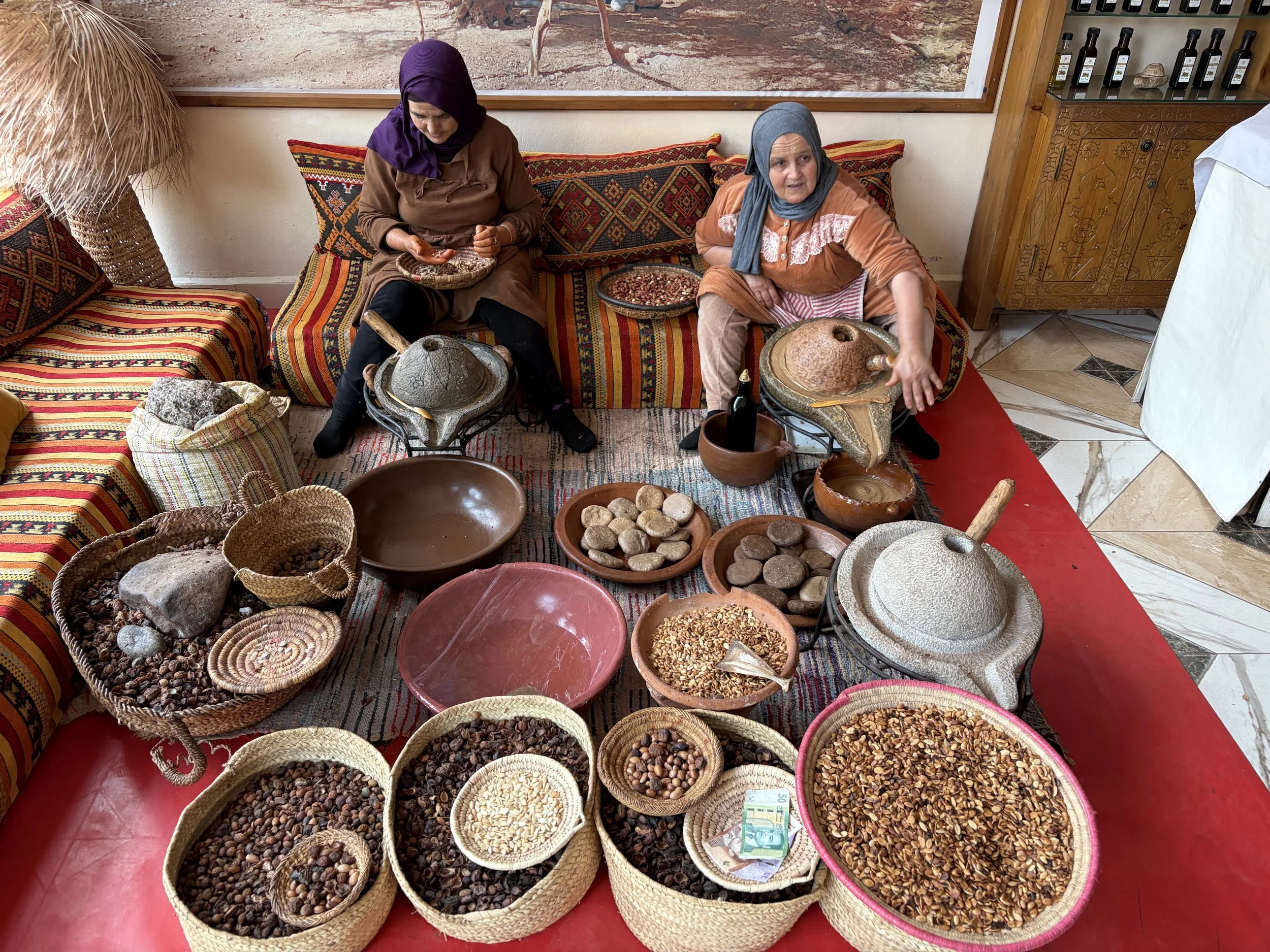
The next stop was an argan-oil cooperative. I saw the fruit and seeds and watched the roasting and grinding process. The workers let me taste argan mixed with peanuts. I had promised Rosa I would bring some home, so I bought two bottles.
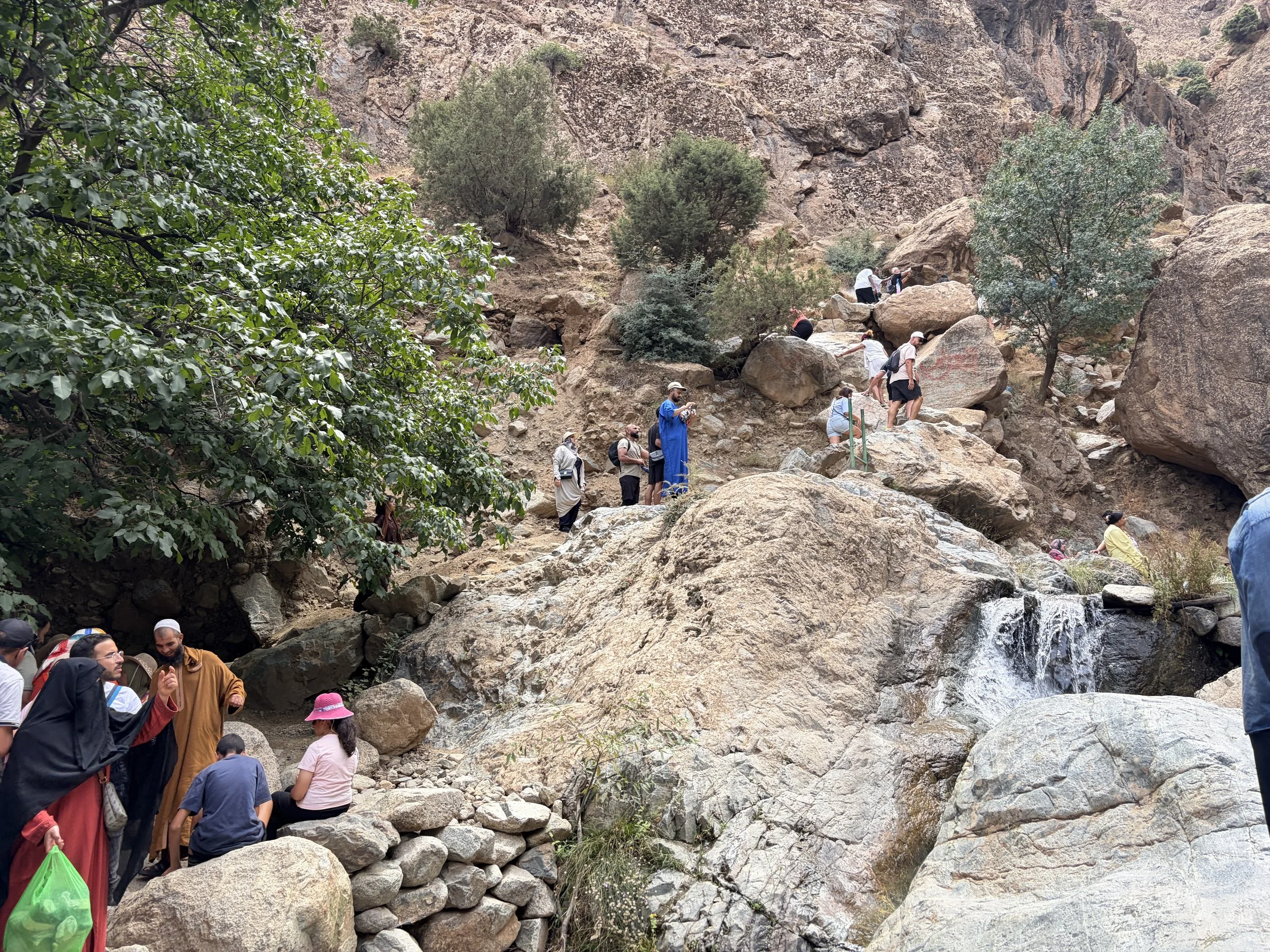
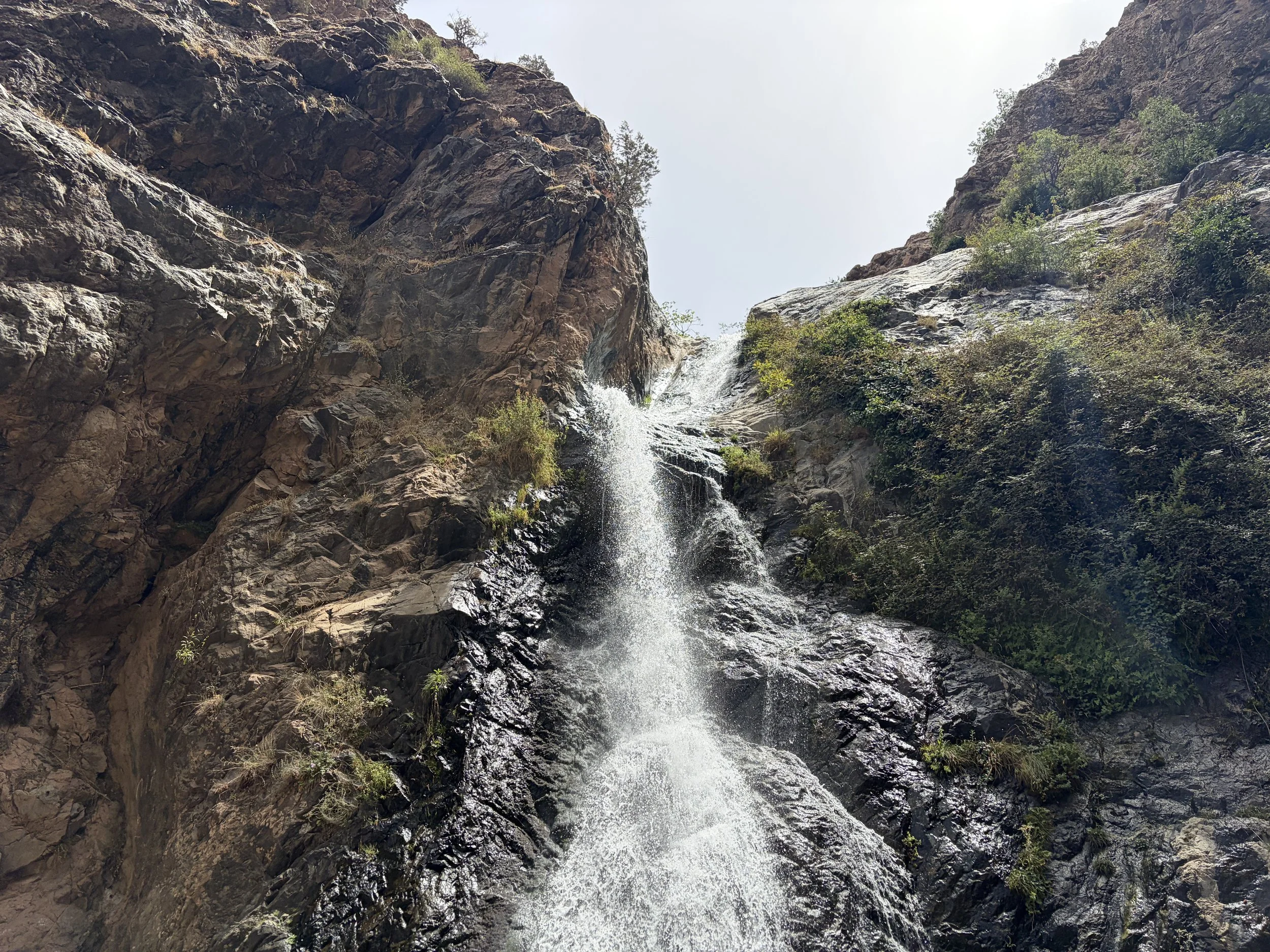
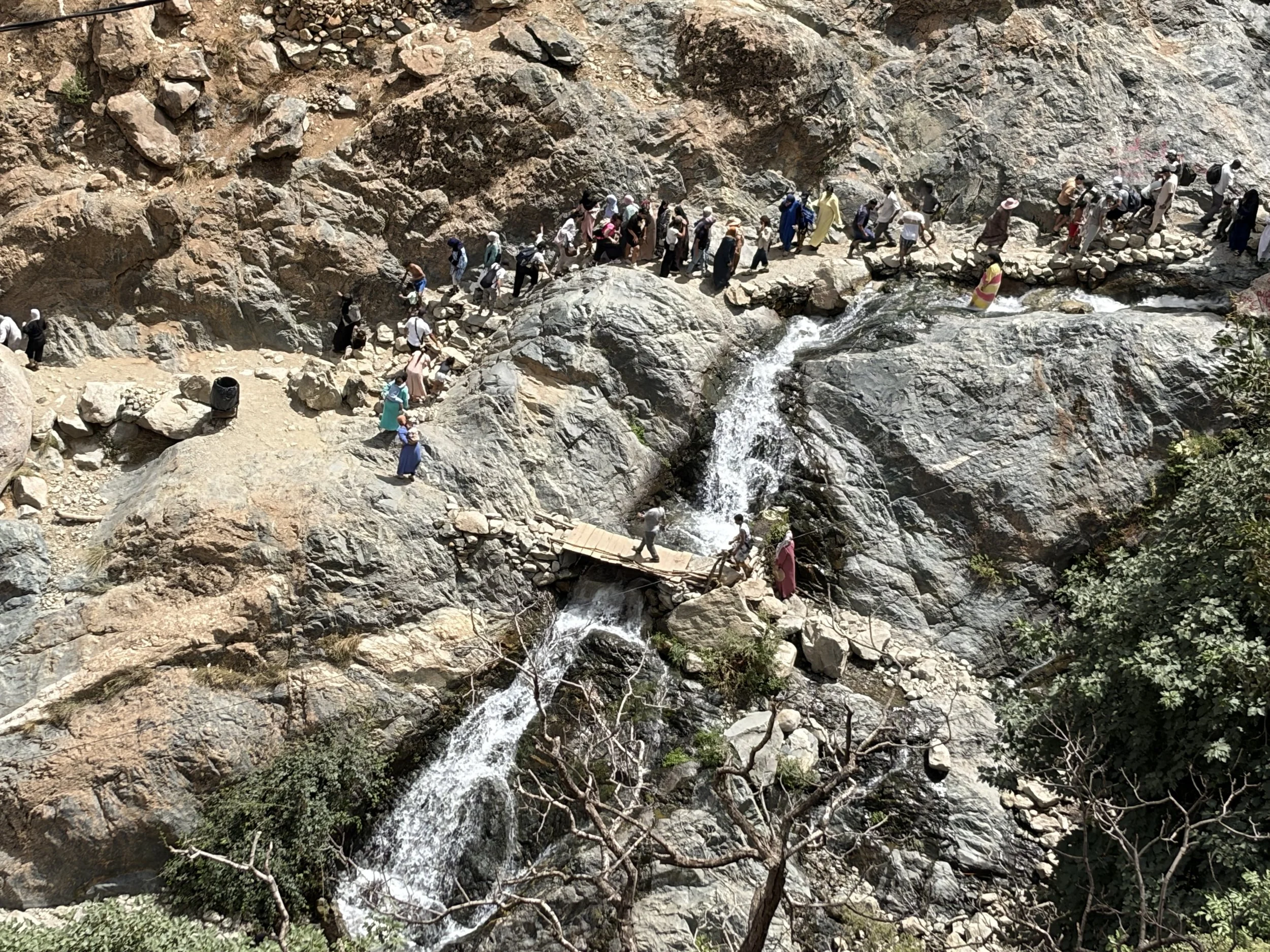
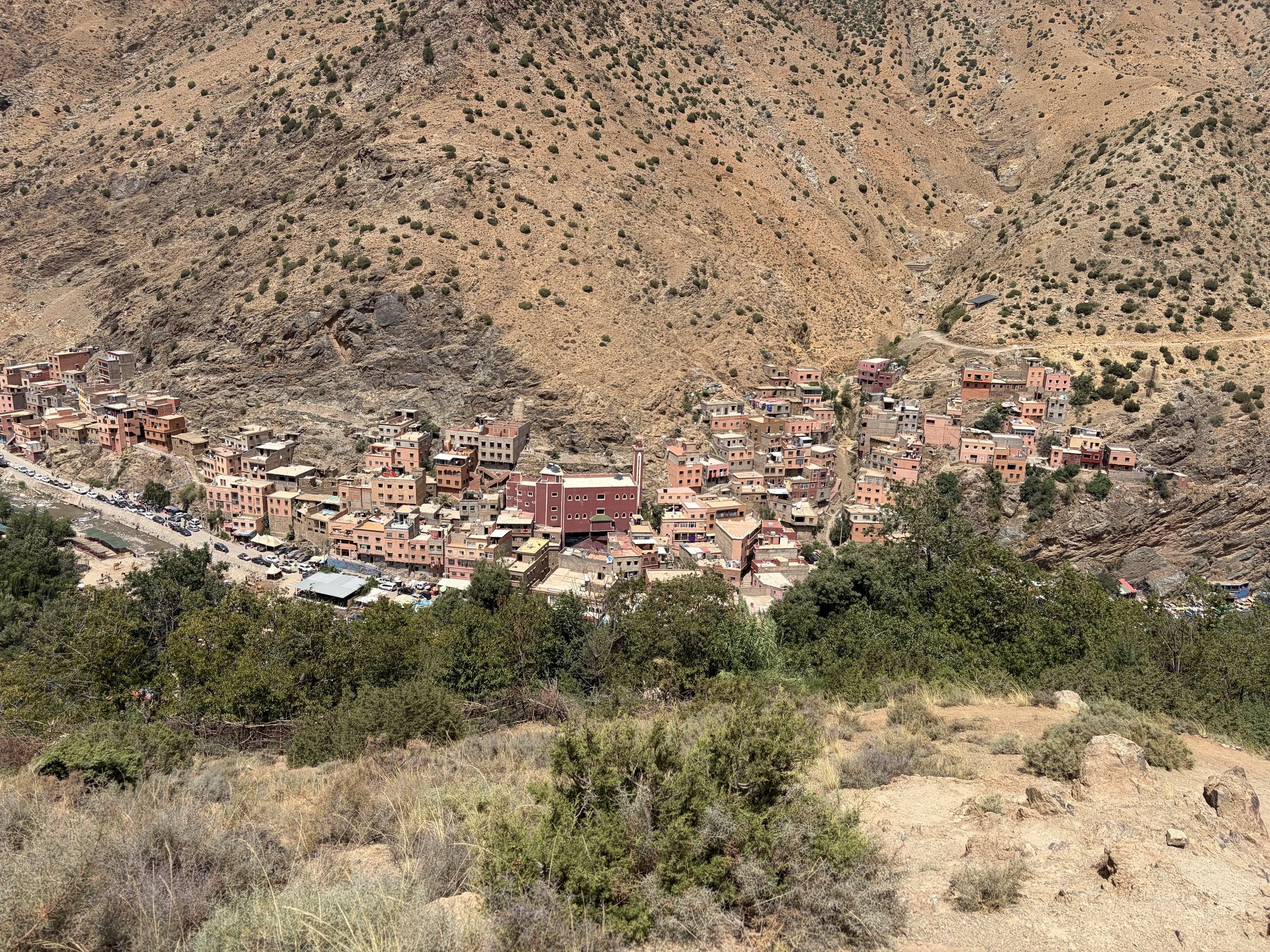
At the base of the mountains, my driver connected me with a local hiking guide. Because I had allowed the riad to arrange the tour, I did not really know what to expect. Every part of the day was a surprise. We climbed in search of waterfalls. The trail was steeper than I anticipated, but I kept pace. My guide repeatedly asked whether I wanted a break and explained that most people took three or four hours to complete the route. We finished in an hour and twenty minutes—and only because the guide eventually needed water. Apparently, carrying an oversized backpack and a 32-pound child had prepared me for the Atlas Mountains. Being alone also meant I did not have to wait for stragglers. For once, nobody else’s pace limited my choices.
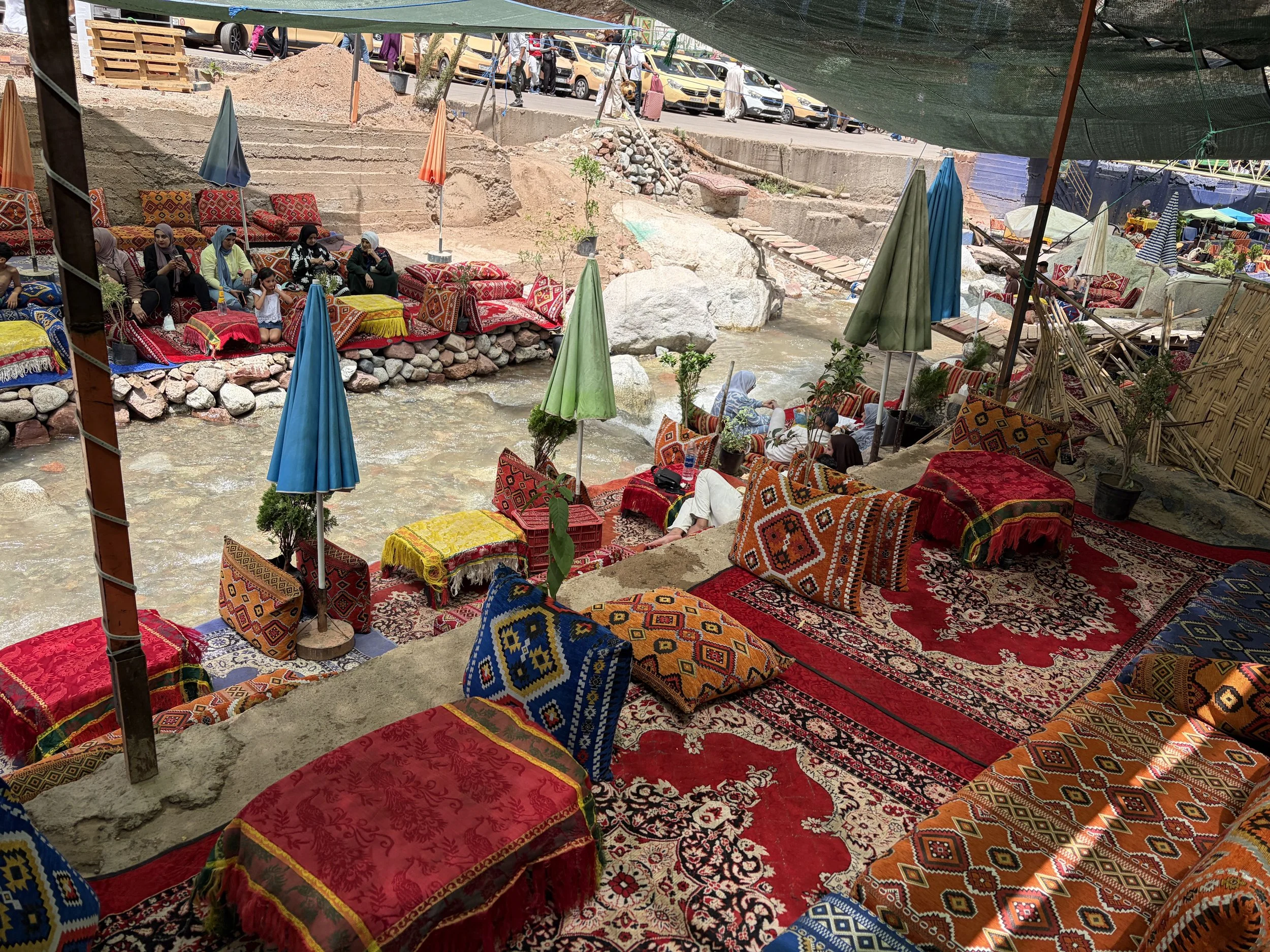
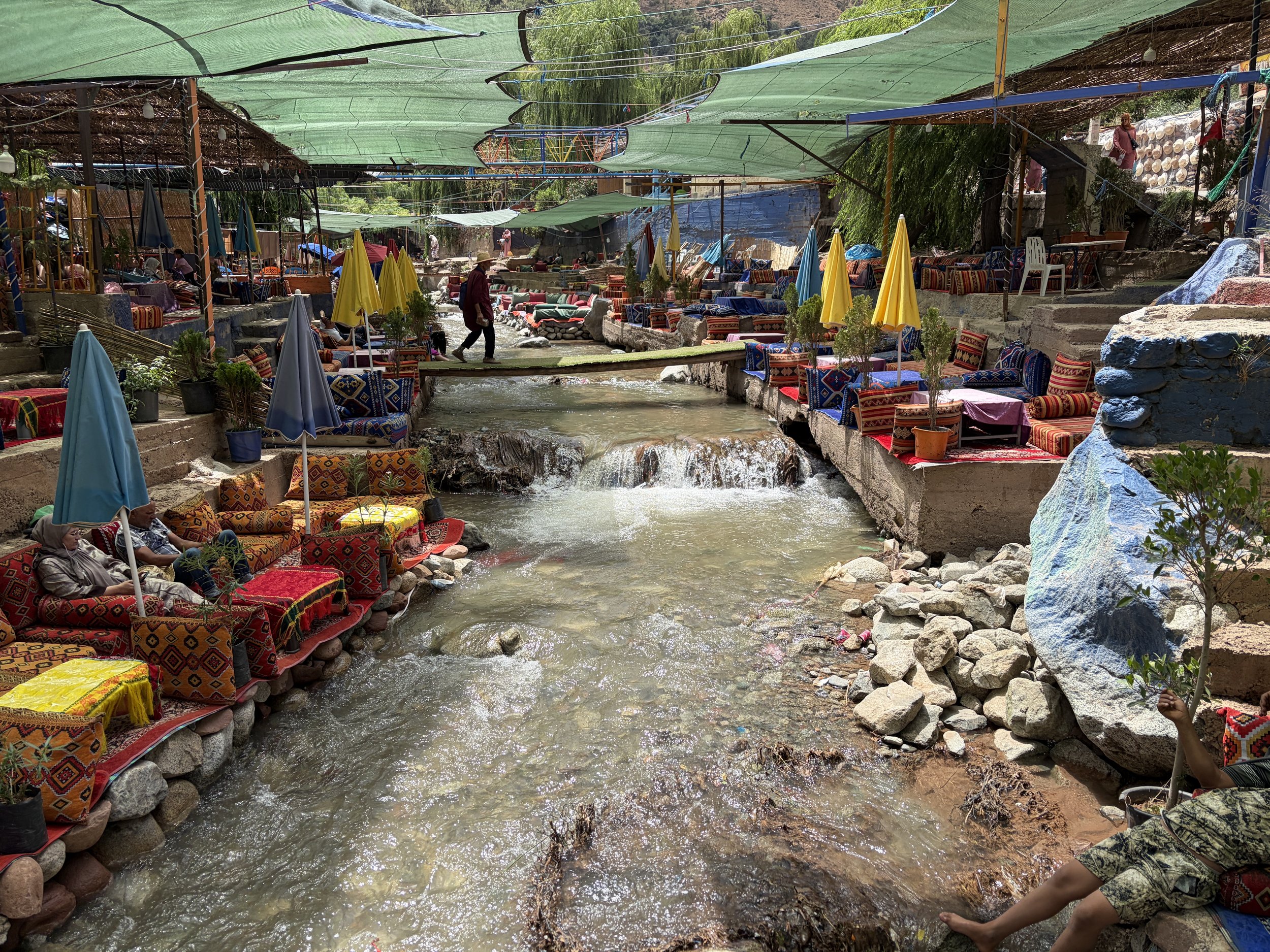
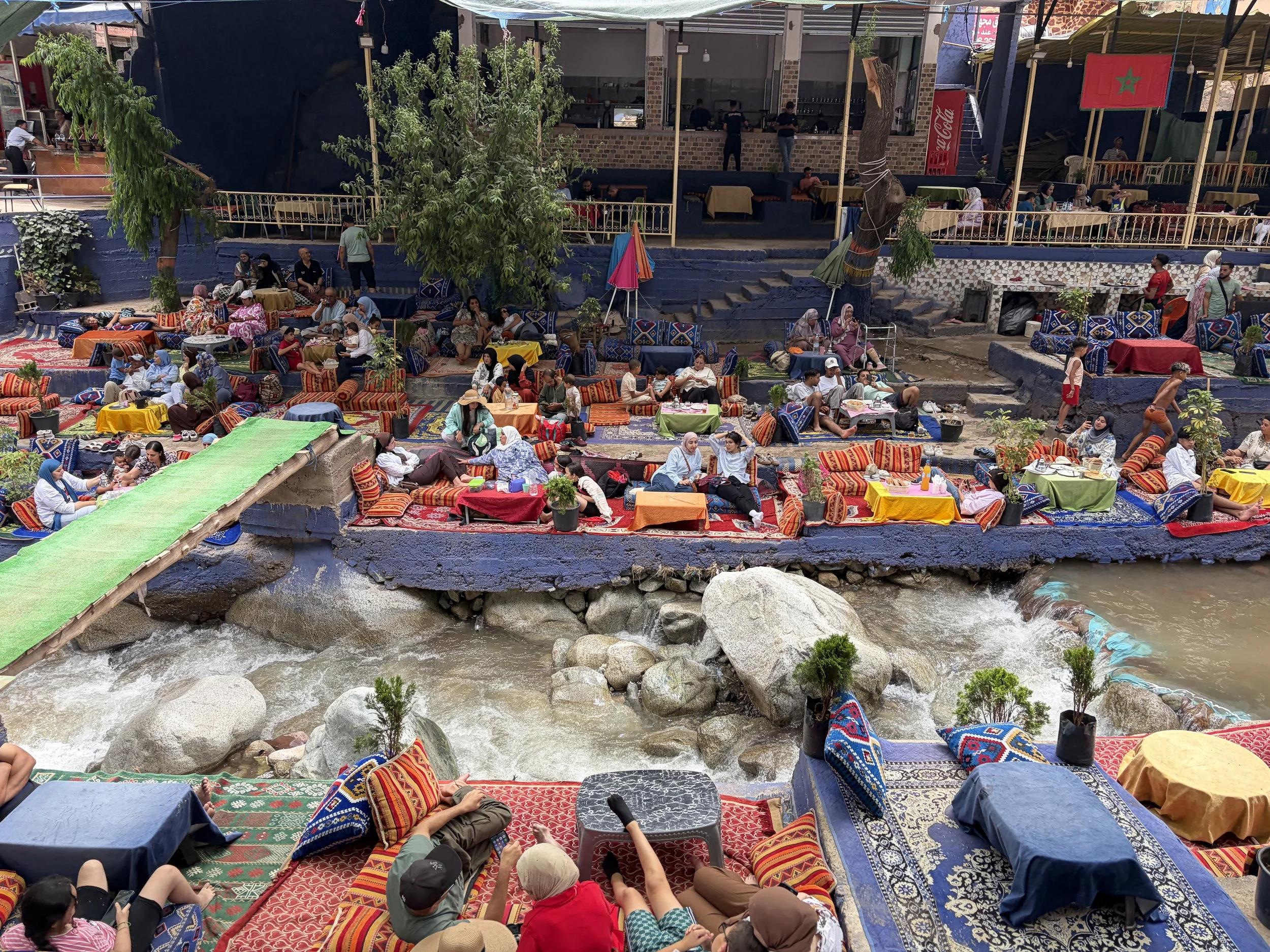
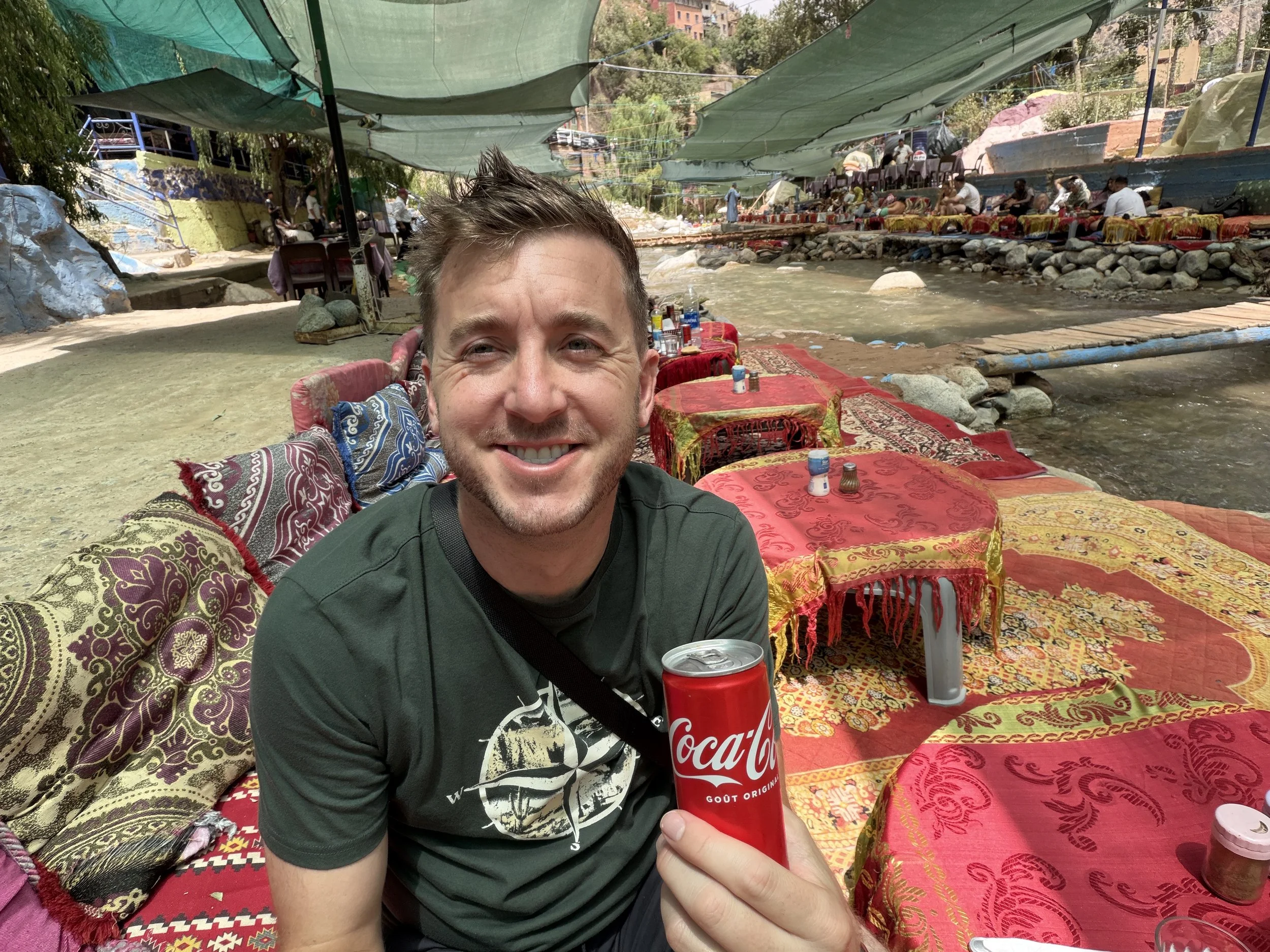
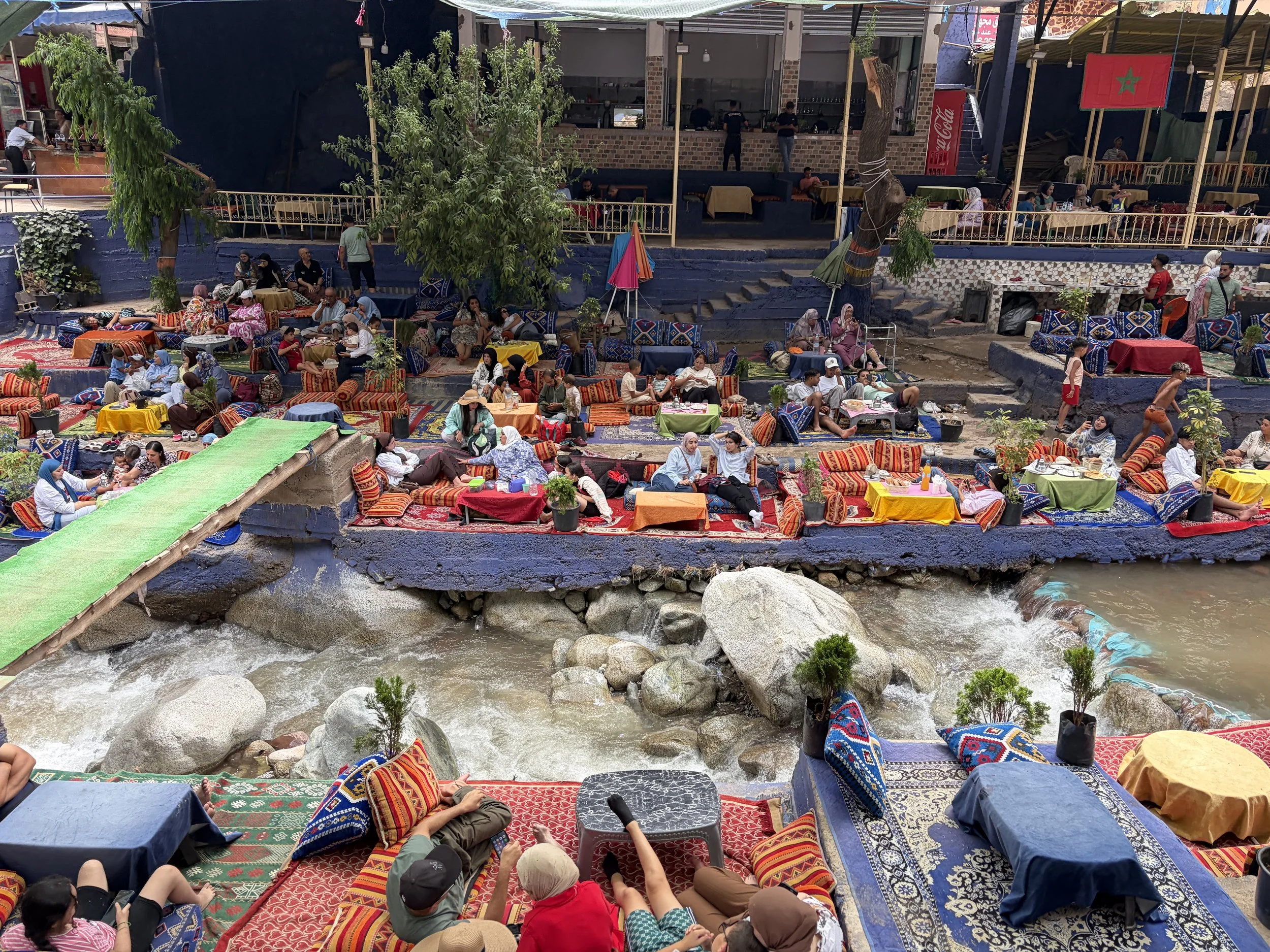
Lunch was served beside the Ourika River. Family-run restaurants sit extremely close to the water. Small dams create pools where children play and adults soak their feet. I chose a table directly beside the river and ordered a Sprite. The waiter returned with a Coca-Cola. This was the second time that had happened in Morocco. I laughed and drank it. Apparently, beverage choice had limits.
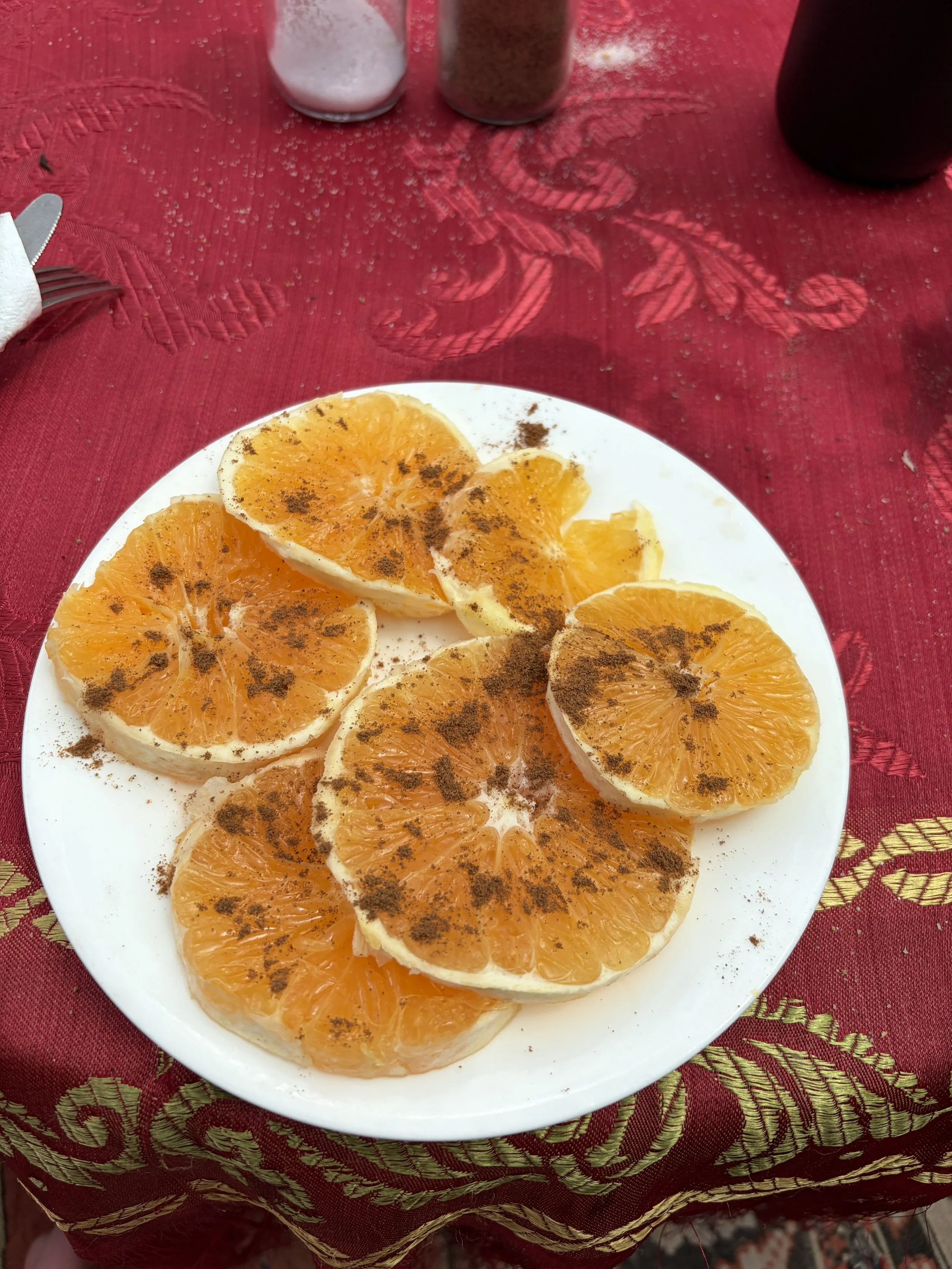
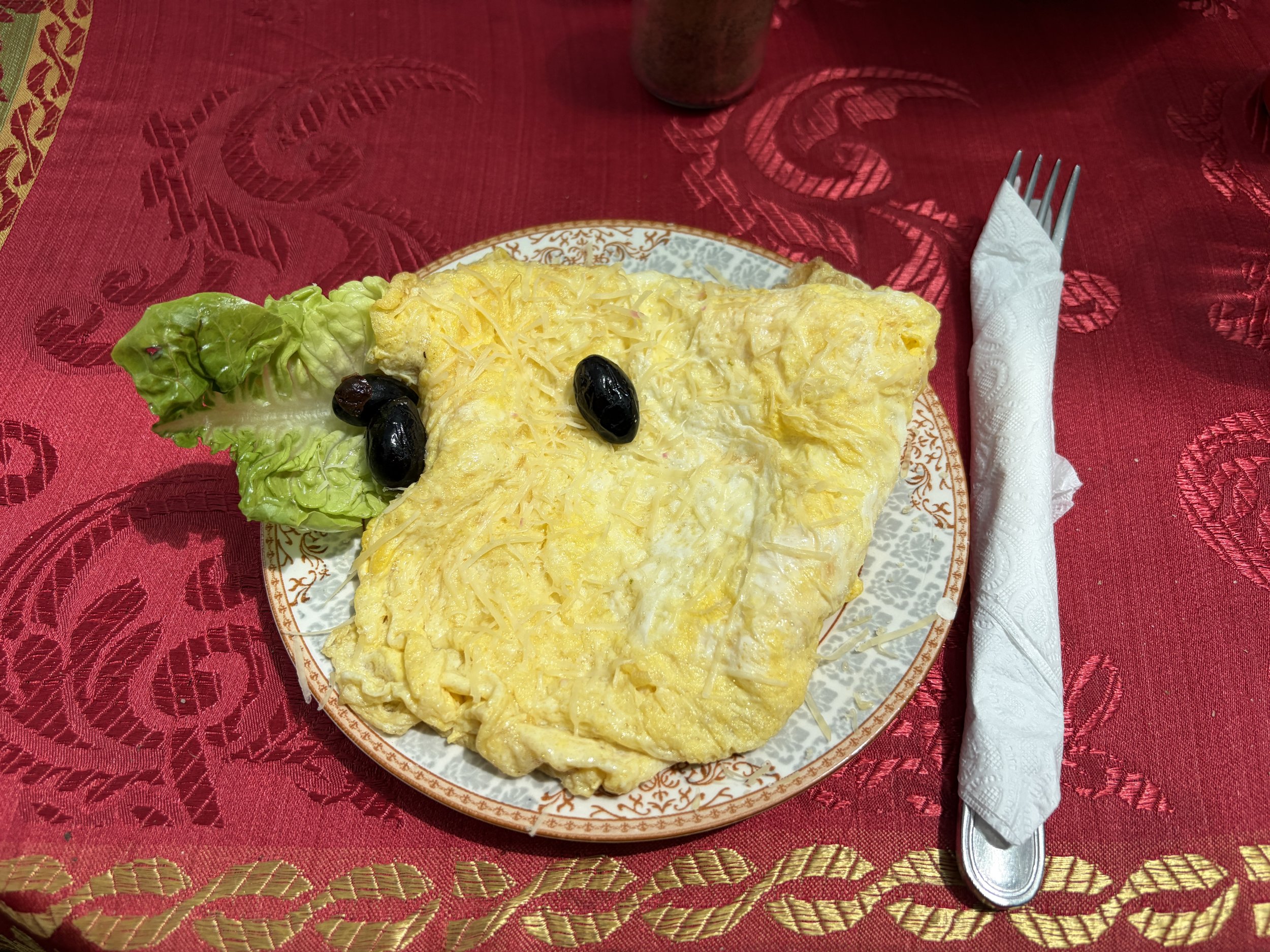
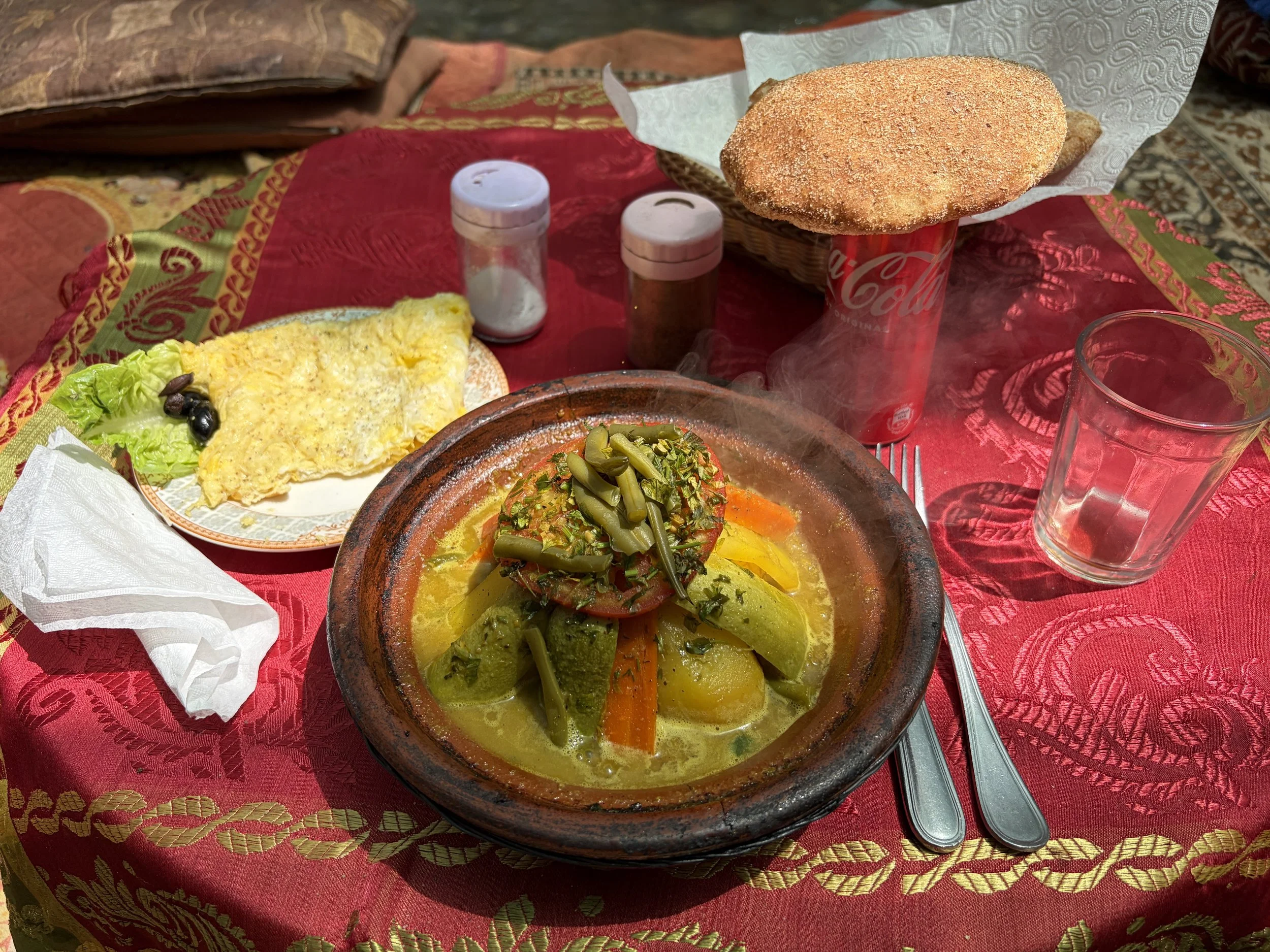
The meal included a cheese omelet, spiced Berber chicken, and oranges with cinnamon. None of it was exceptional, but the setting made the meal memorable. The sound of the river, the mountain air, and the tables beside the water created an atmosphere unlike anywhere I had eaten before.
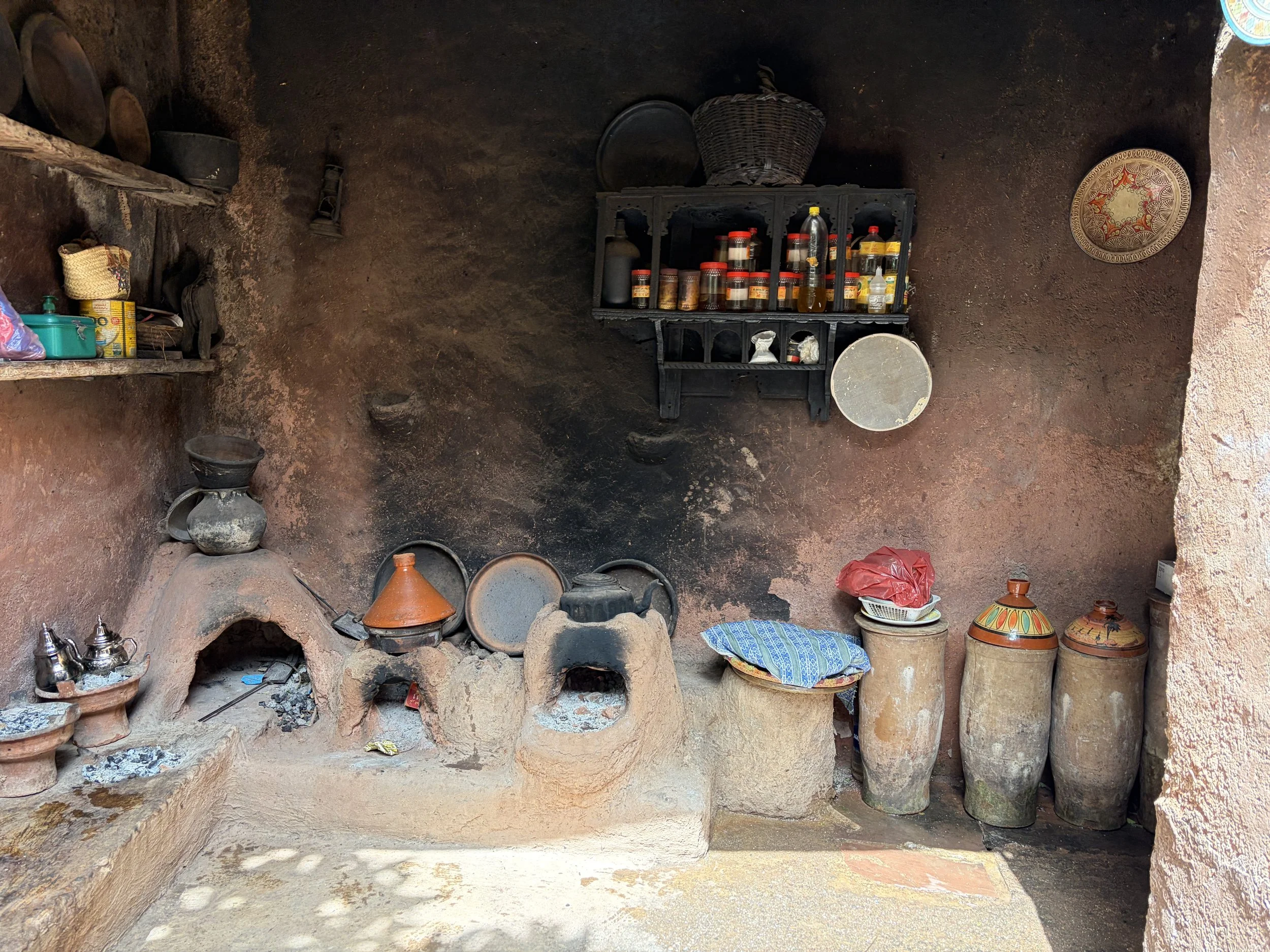
Our final cultural stop was an Amazigh village. The Amazigh are the Indigenous peoples of North Africa, with a history predating the Arab settlement of the region. Many mountain villages use locally sourced stone and packed earth, allowing homes to blend into the landscape. Walking through the village felt like stepping into another century. There were modern additions, but farming, family, and community remained central. It was a reminder that the choices available to people are often shaped first by geography, history, and birth.
Naturally, the tour ended at another gift shop. I had seen heavy stone masks in the region and wanted one, although I knew carrying it home would be miserable. I debated with myself, made the least practical choice possible, and bought the largest one they had. My walls would thank me. My back would not.
Choosing to Stay
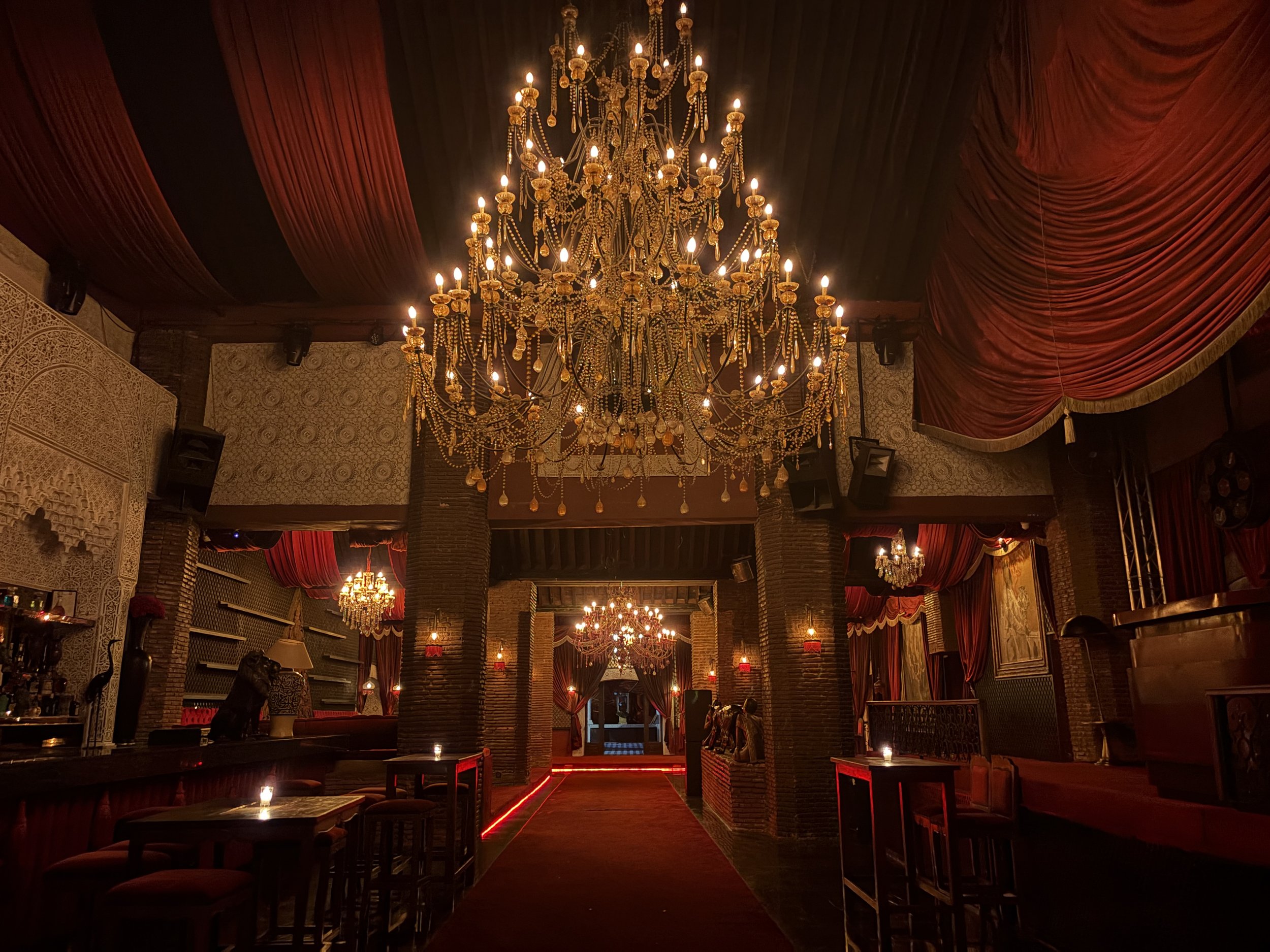
My final activity was an evening at Palais Dar Soukkar, described as the closest thing Marrakech has to a Las Vegas production. The venue occupies the grounds of a former sugar factory—“Dar Soukkar” means “House of Sugar”—and combines dinner with live music, dancers, acrobats, aerial performers, and fire acts.
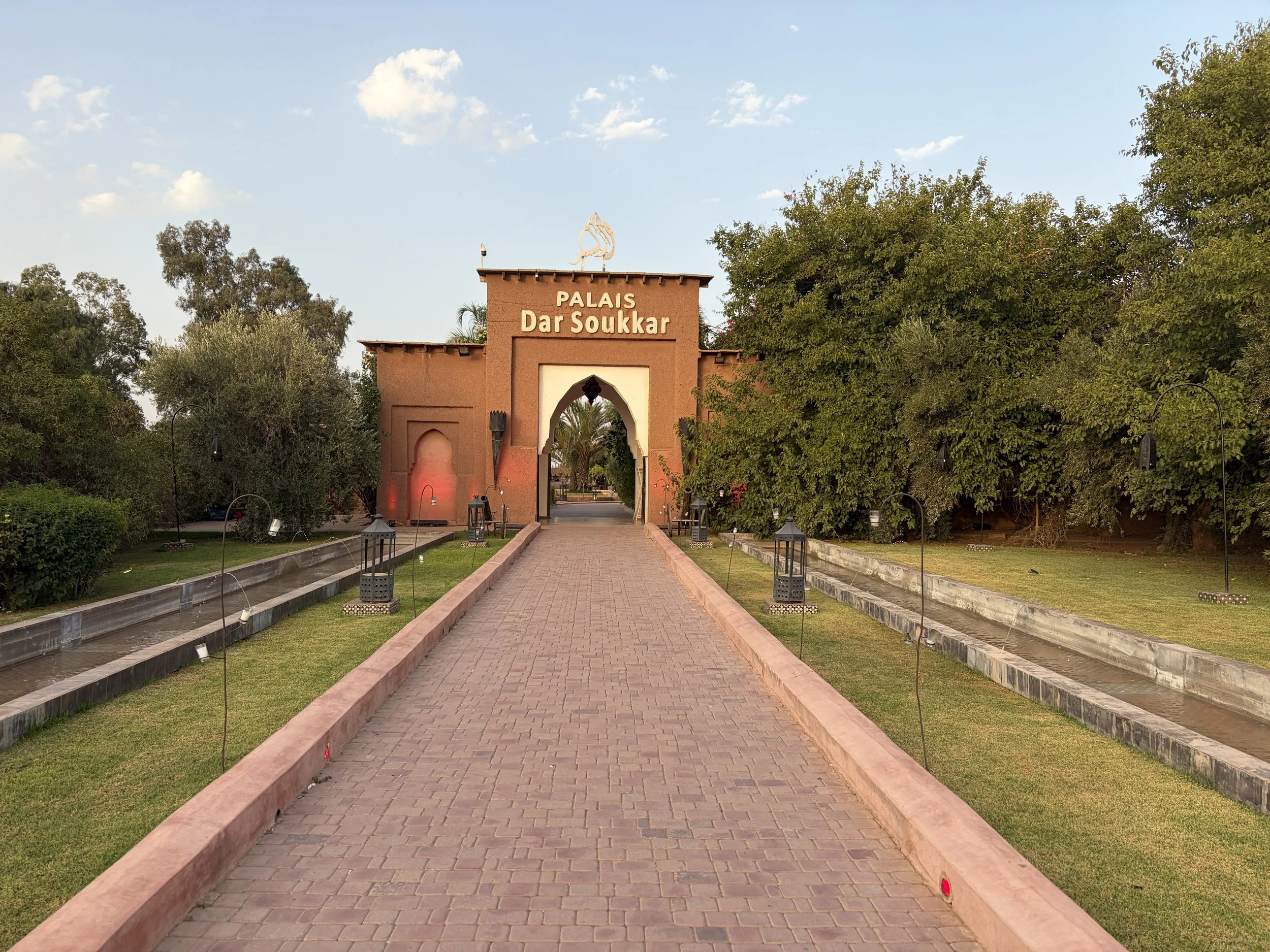
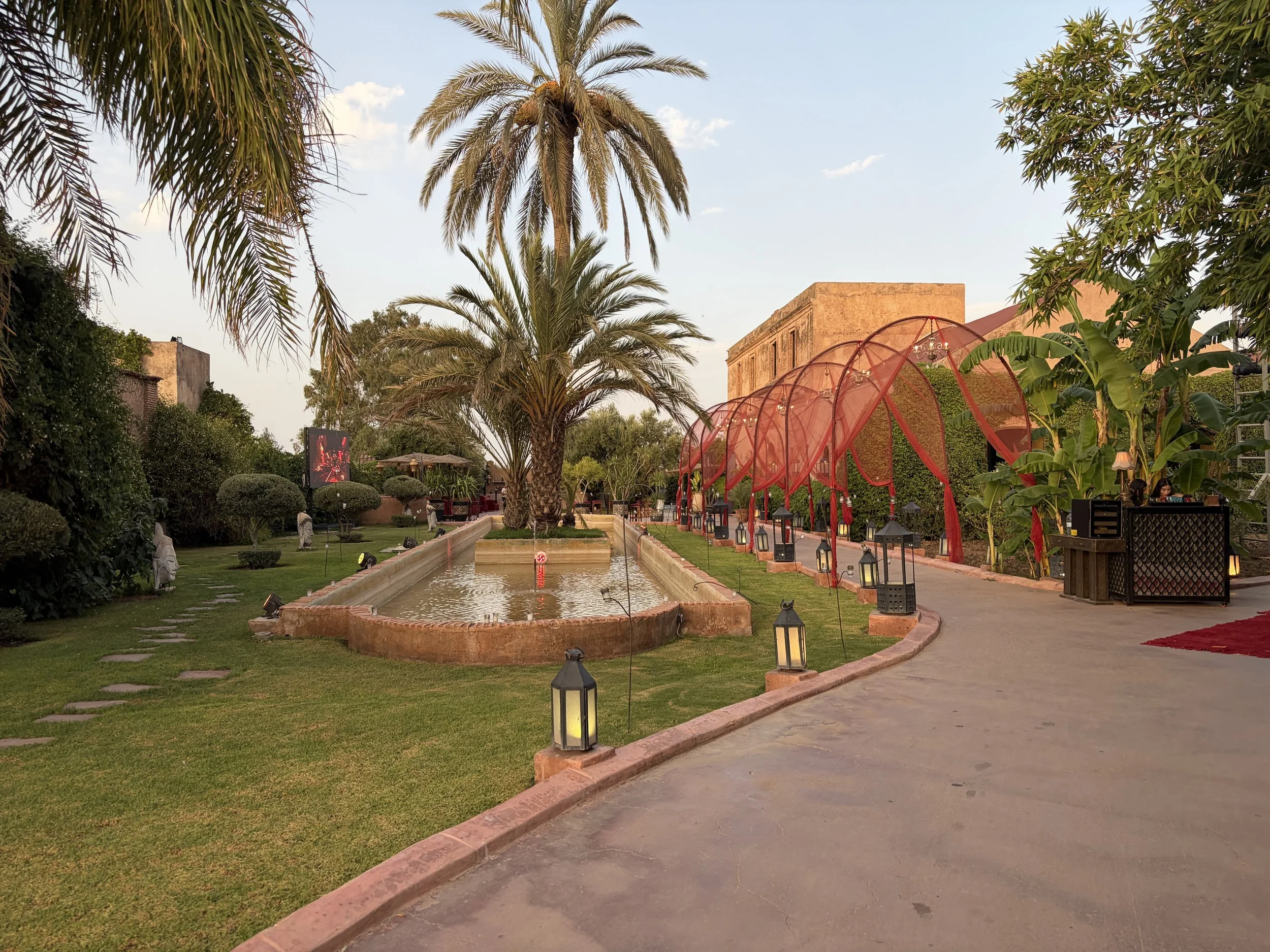
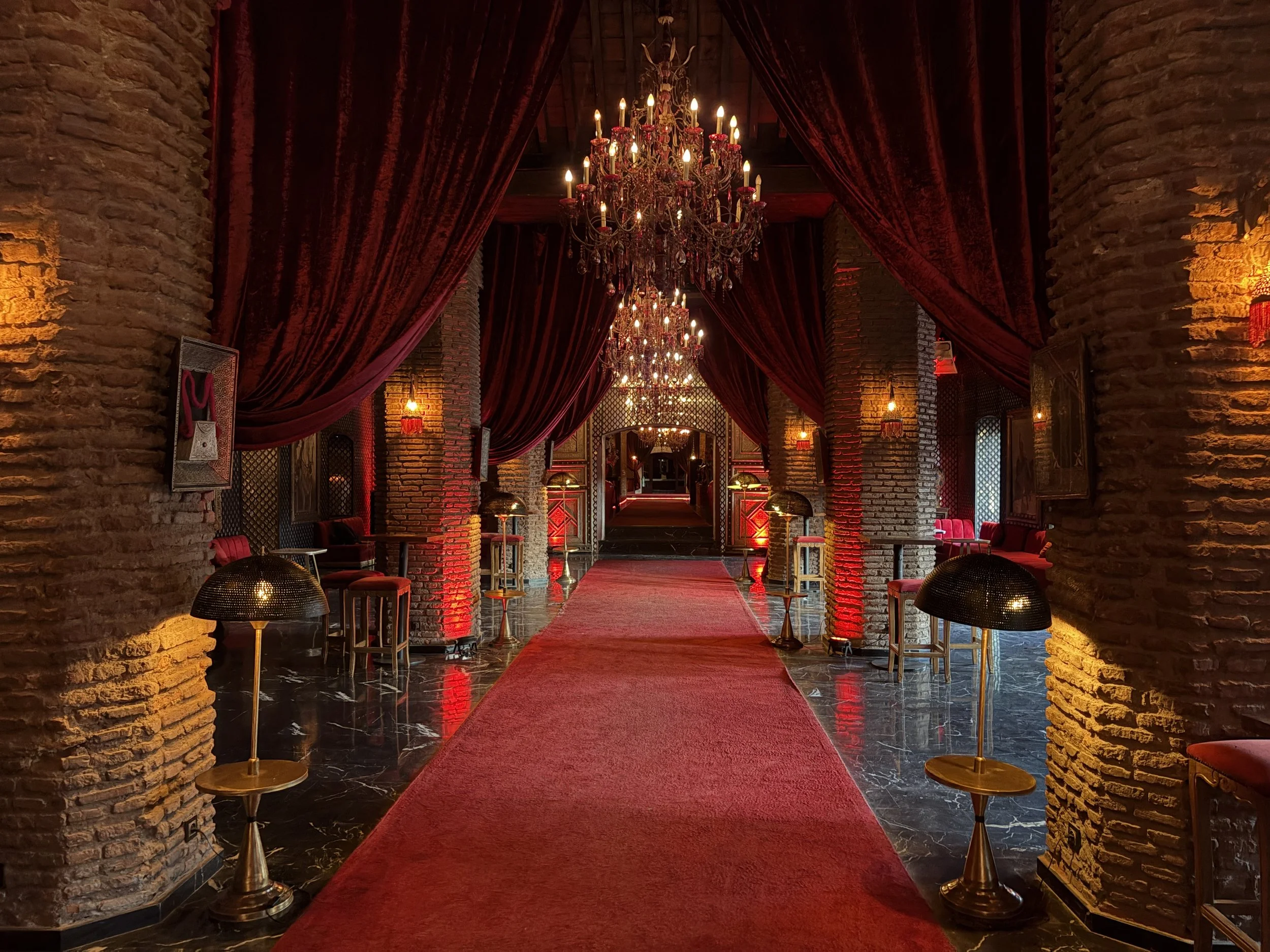
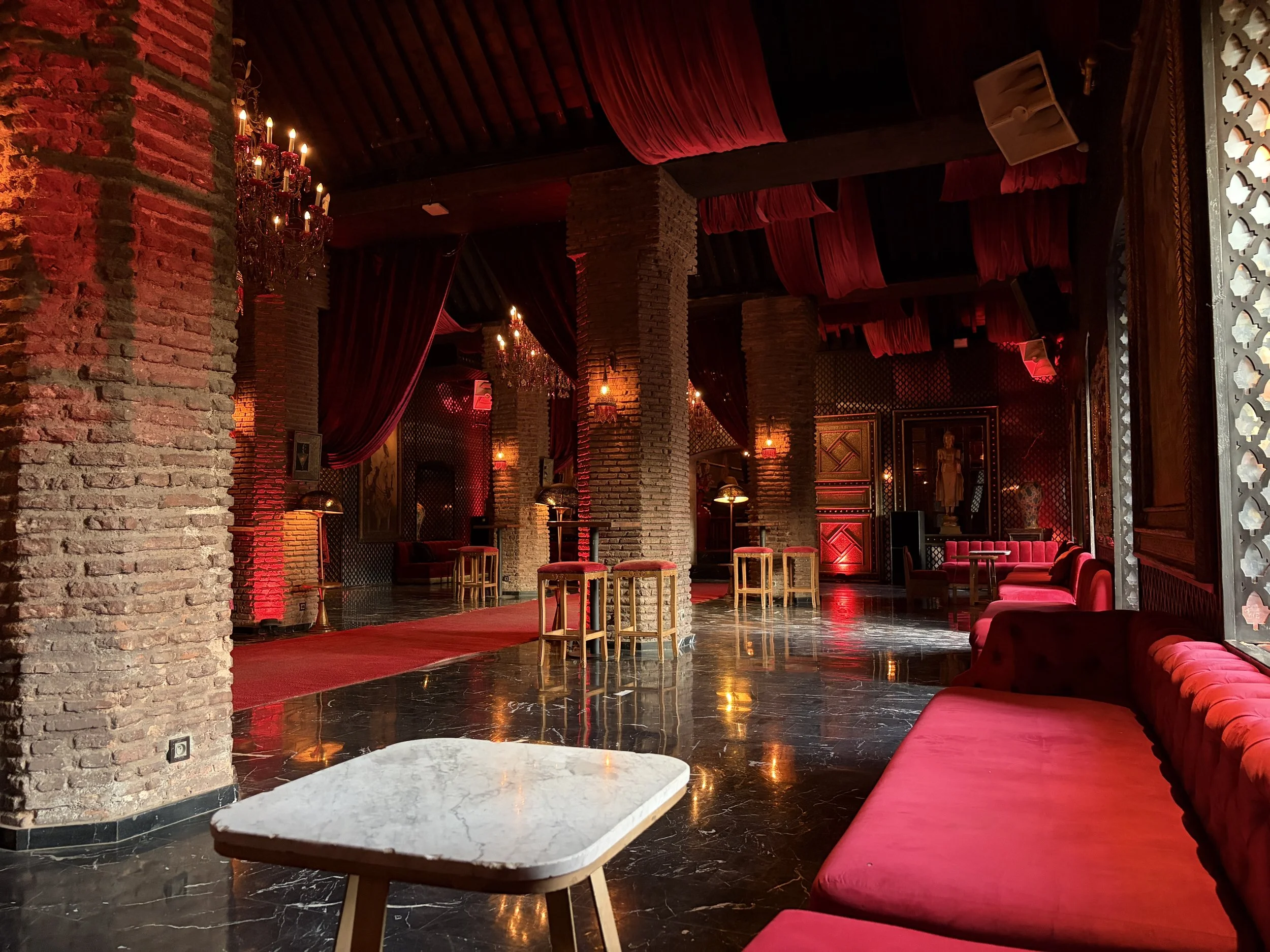
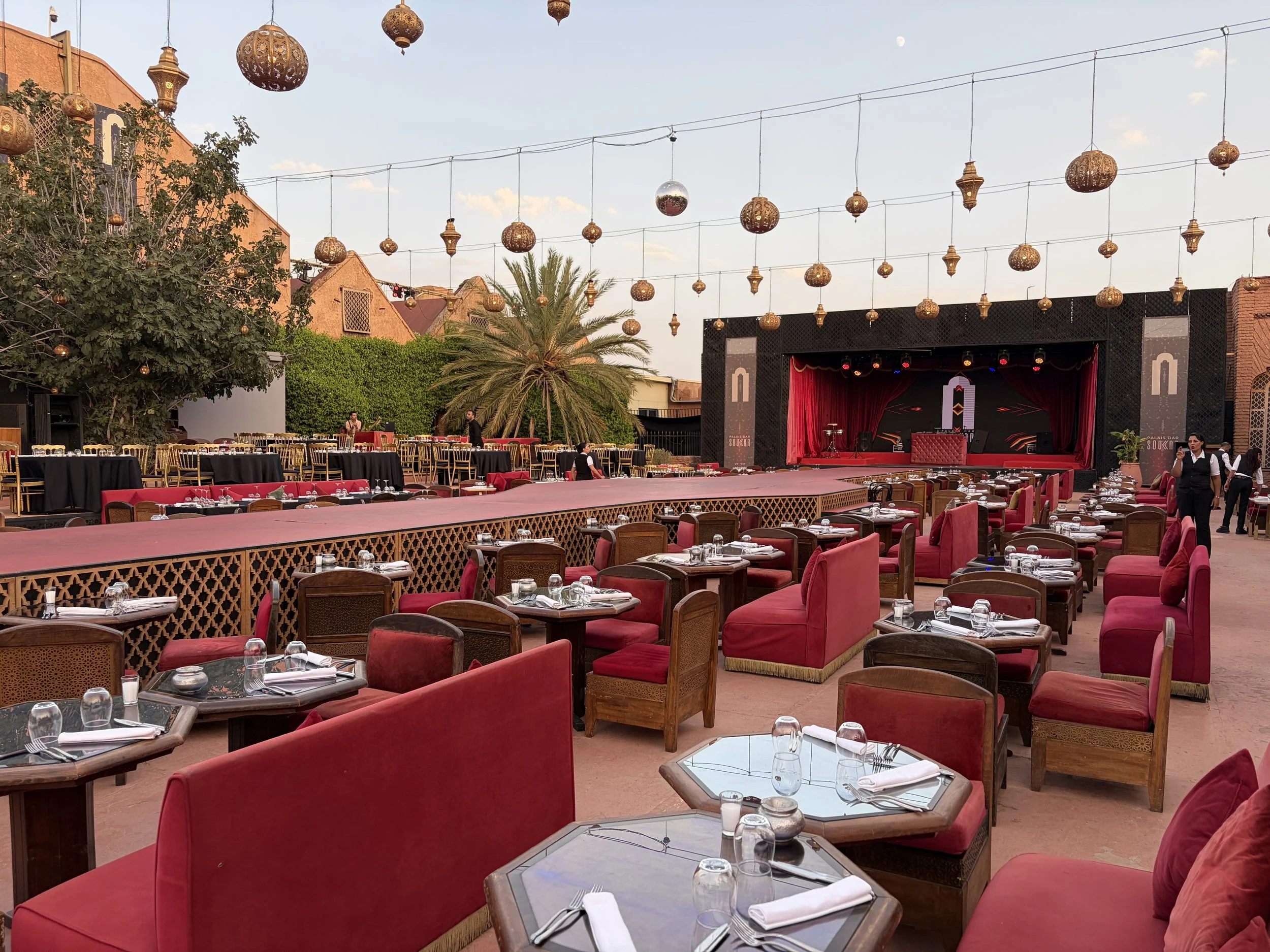
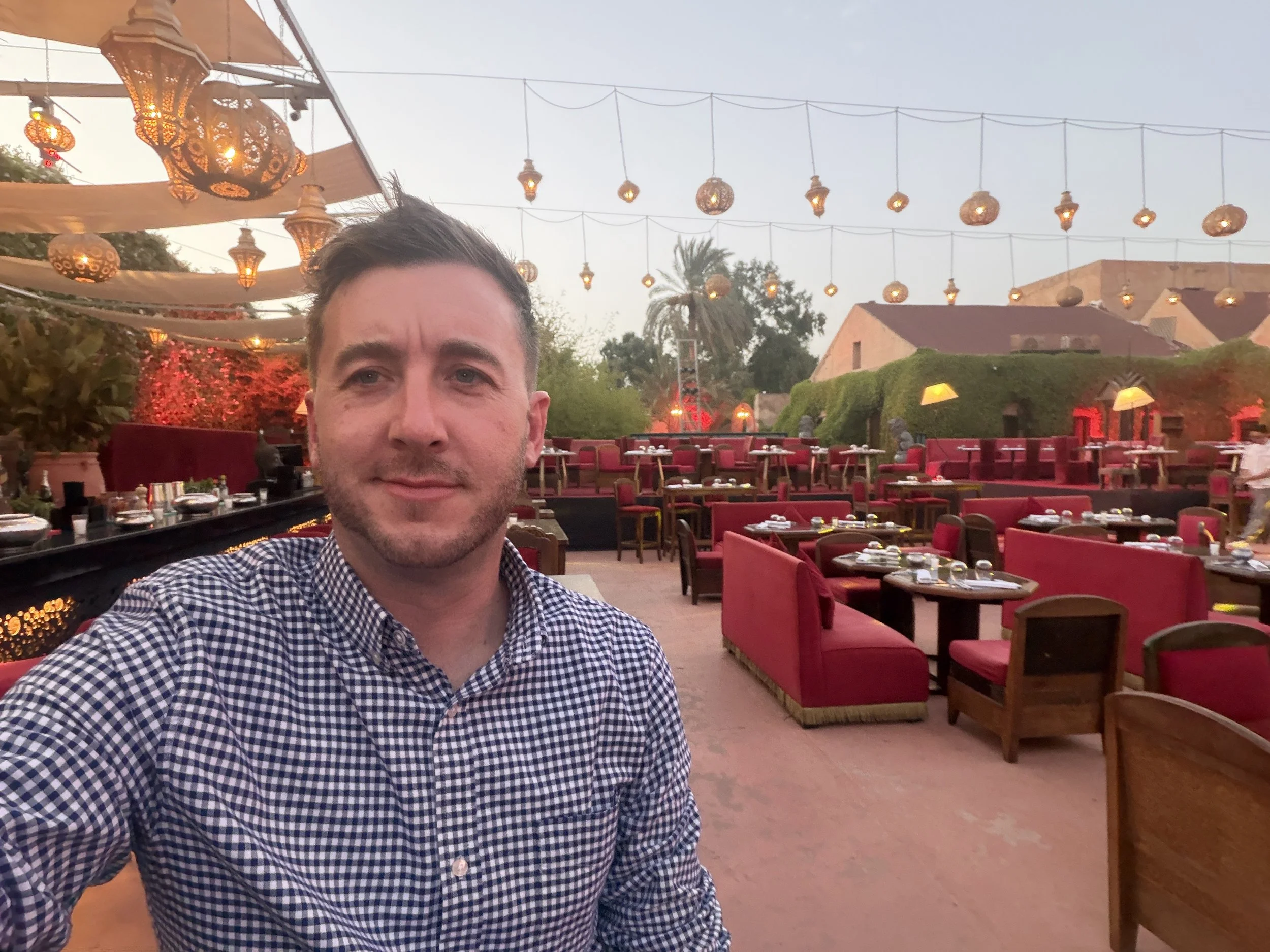
I made a reservation for eight. The show supposedly ran until two in the morning, and because I was leaving the next day, I planned to arrive early and leave early. That plan failed. I arrived at 7:45 and discovered that I was the only guest. The staff was still setting up. I was escorted inside, then outside, then eventually to a table. Nobody else arrived until about 8:45, and the performance did not begin until ten.
At first, I felt embarrassed sitting alone in a nearly empty venue. Then I made another choice: who cared? I asked the bartender to make me a drink and relaxed. A stray cat appeared, and I named her Sugar. She kept me company until the performance began.
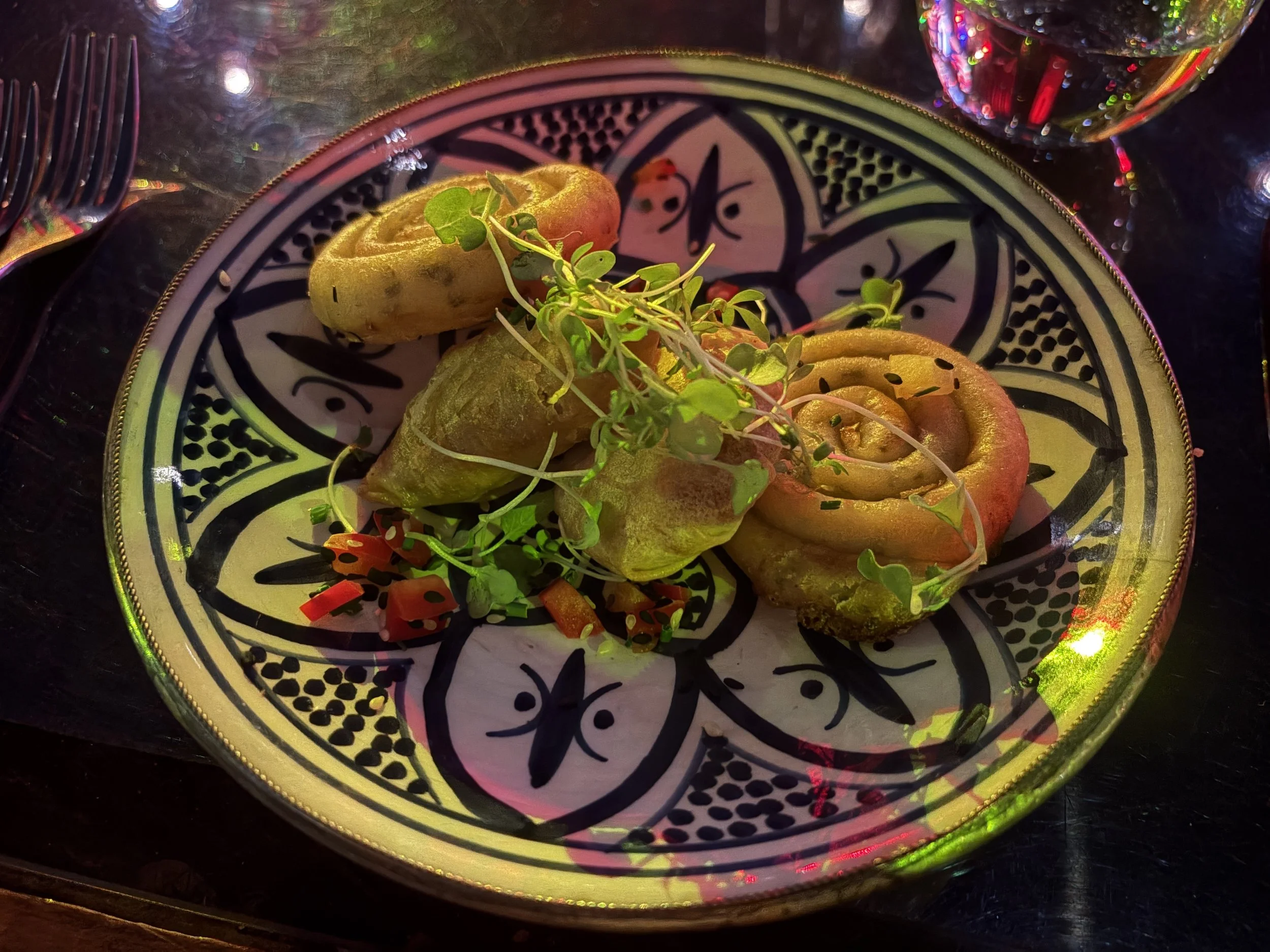
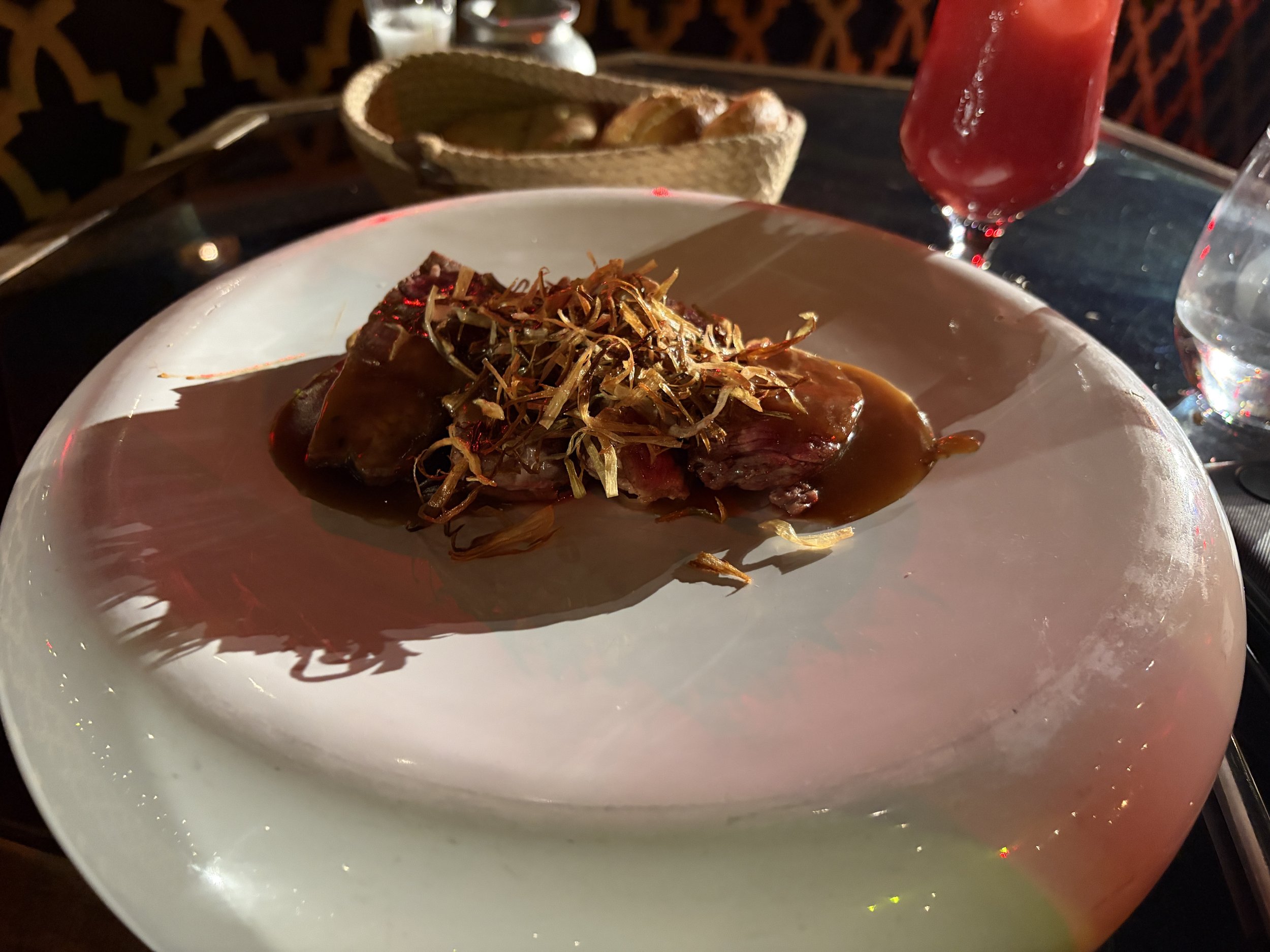
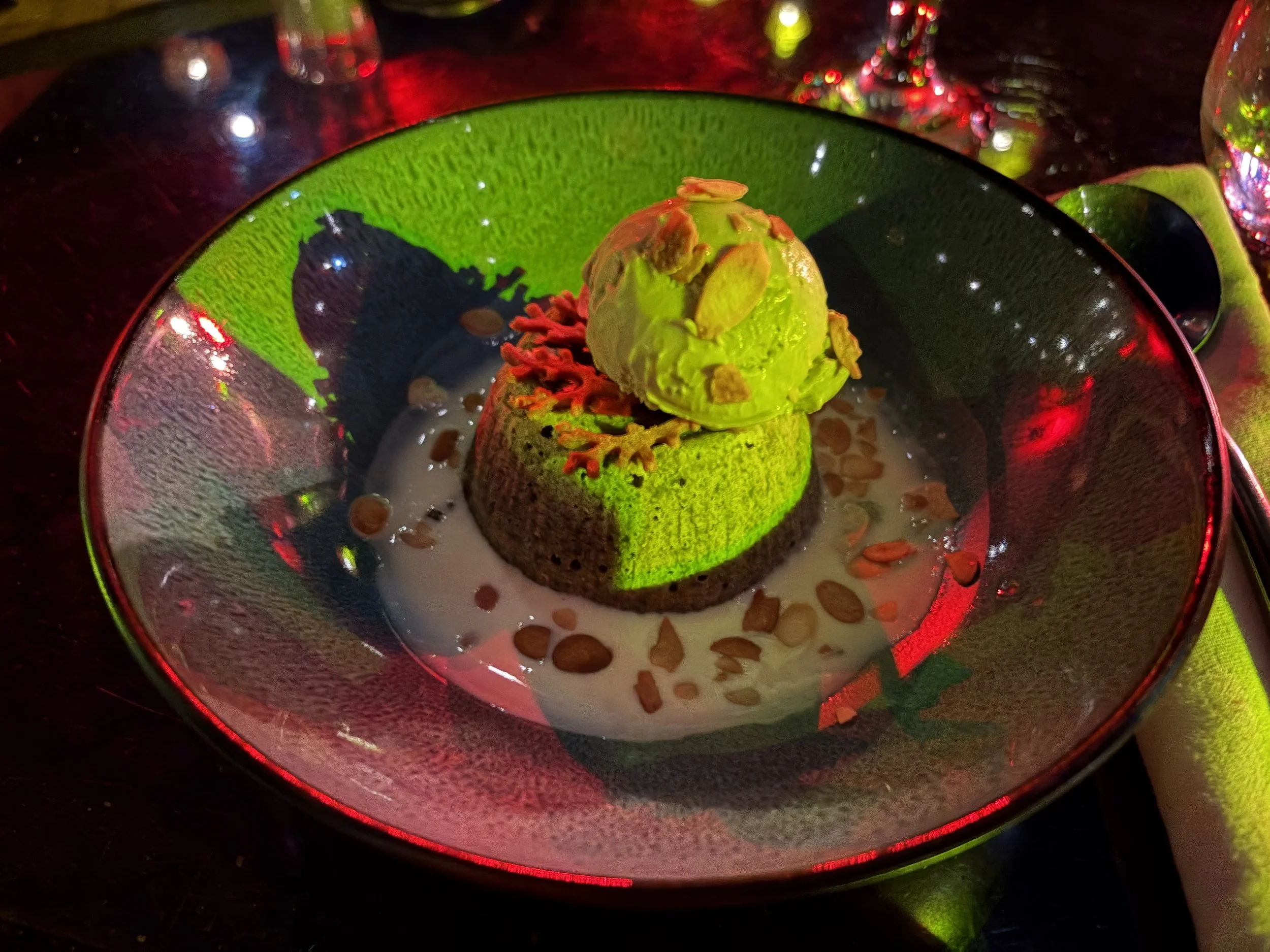
I ordered a three-course dinner and ate every bite. This was genuinely good food. My reward for arriving absurdly early was the best table in the house. Eventually, every seat filled. The show was fantastic. I stayed past midnight watching the dancers, acrobats, and musicians. In a country known for its Islamic traditions, I also had not expected such a provocative production.
Morocco was not the simple land of deserts and camels I had pictured. It was traditional and modern, restrained and theatrical, sacred and commercial. It contained choices and contradictions that refused to fit neatly into my expectations.
The Last Choice
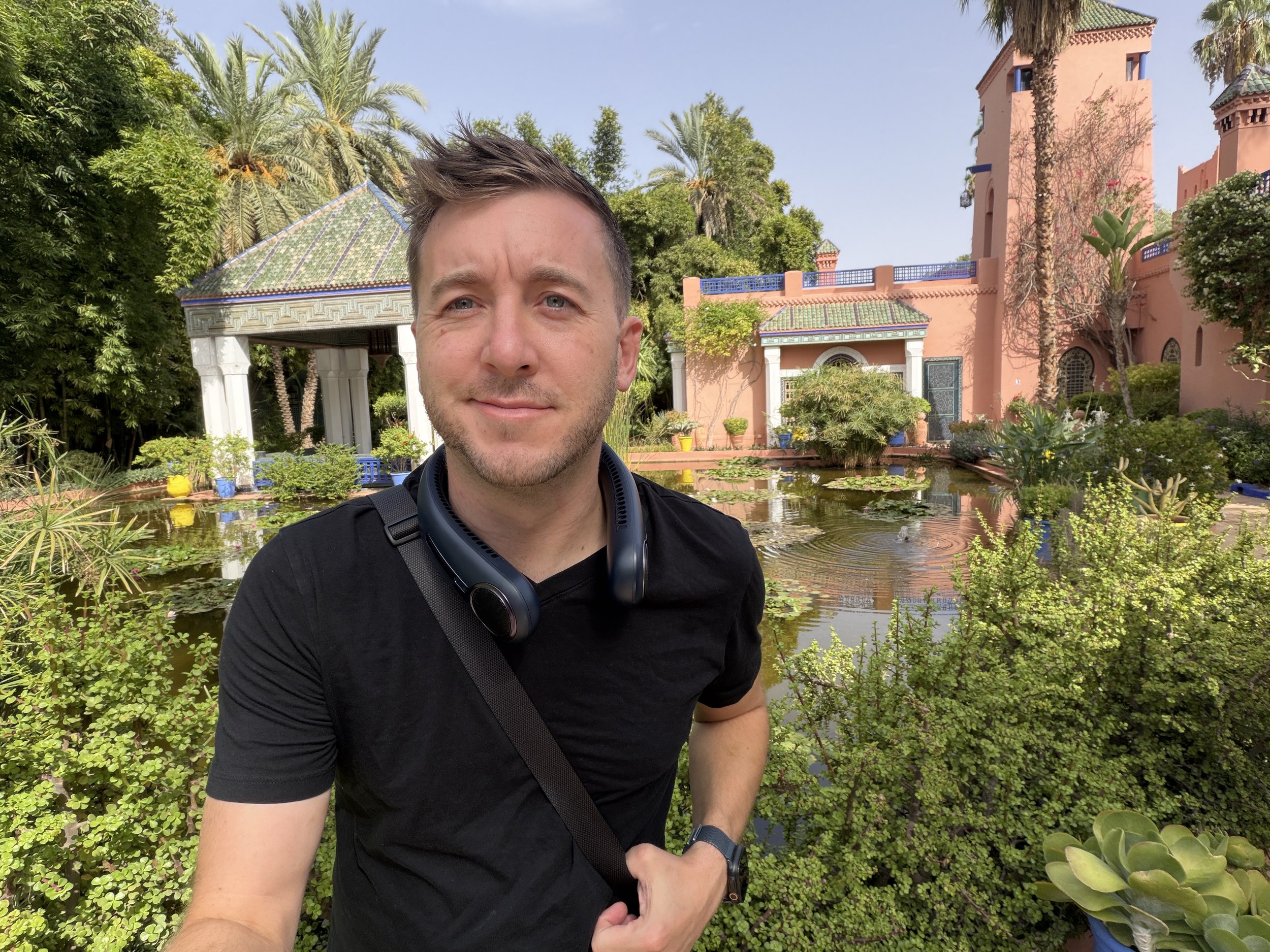
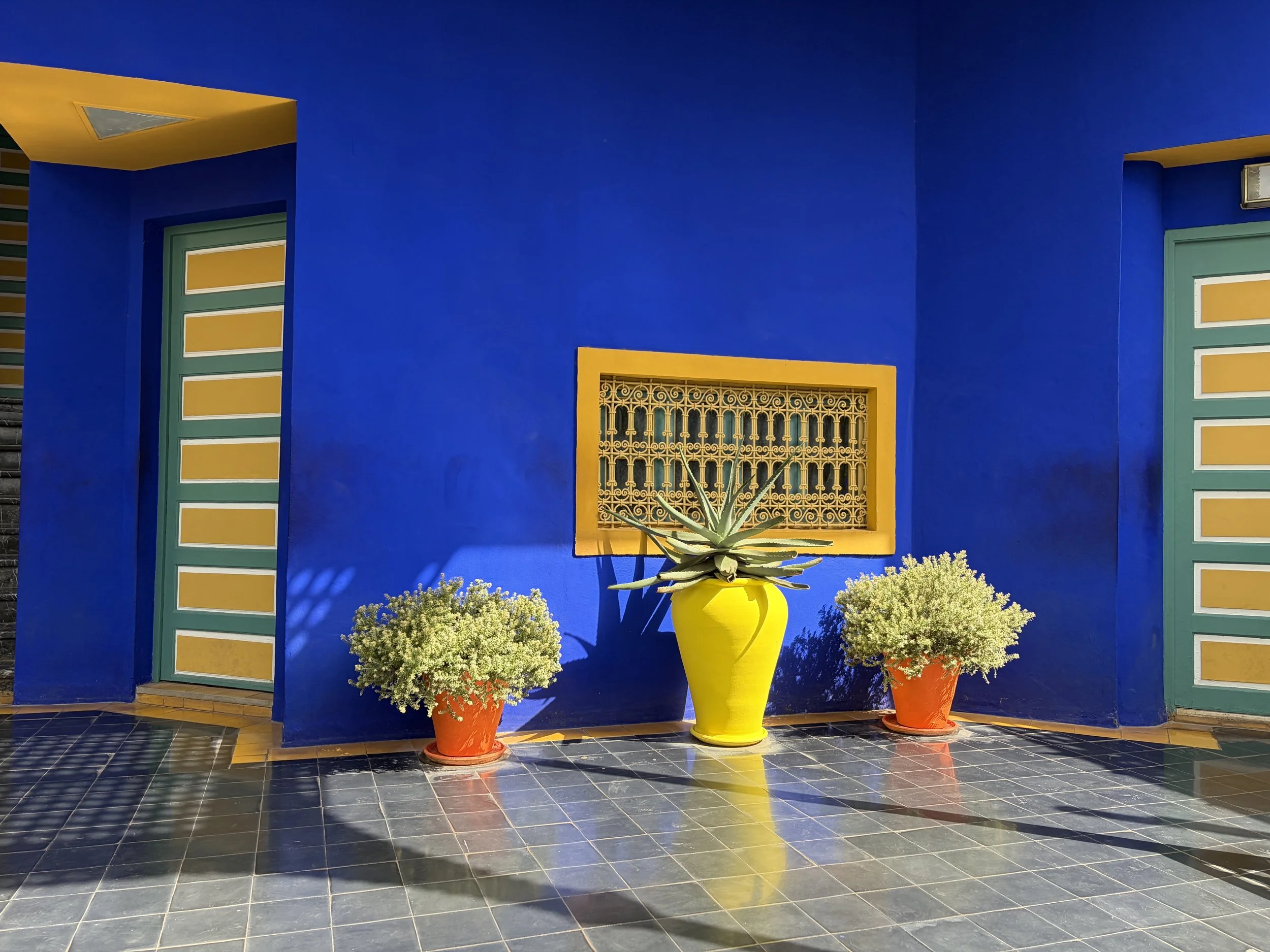
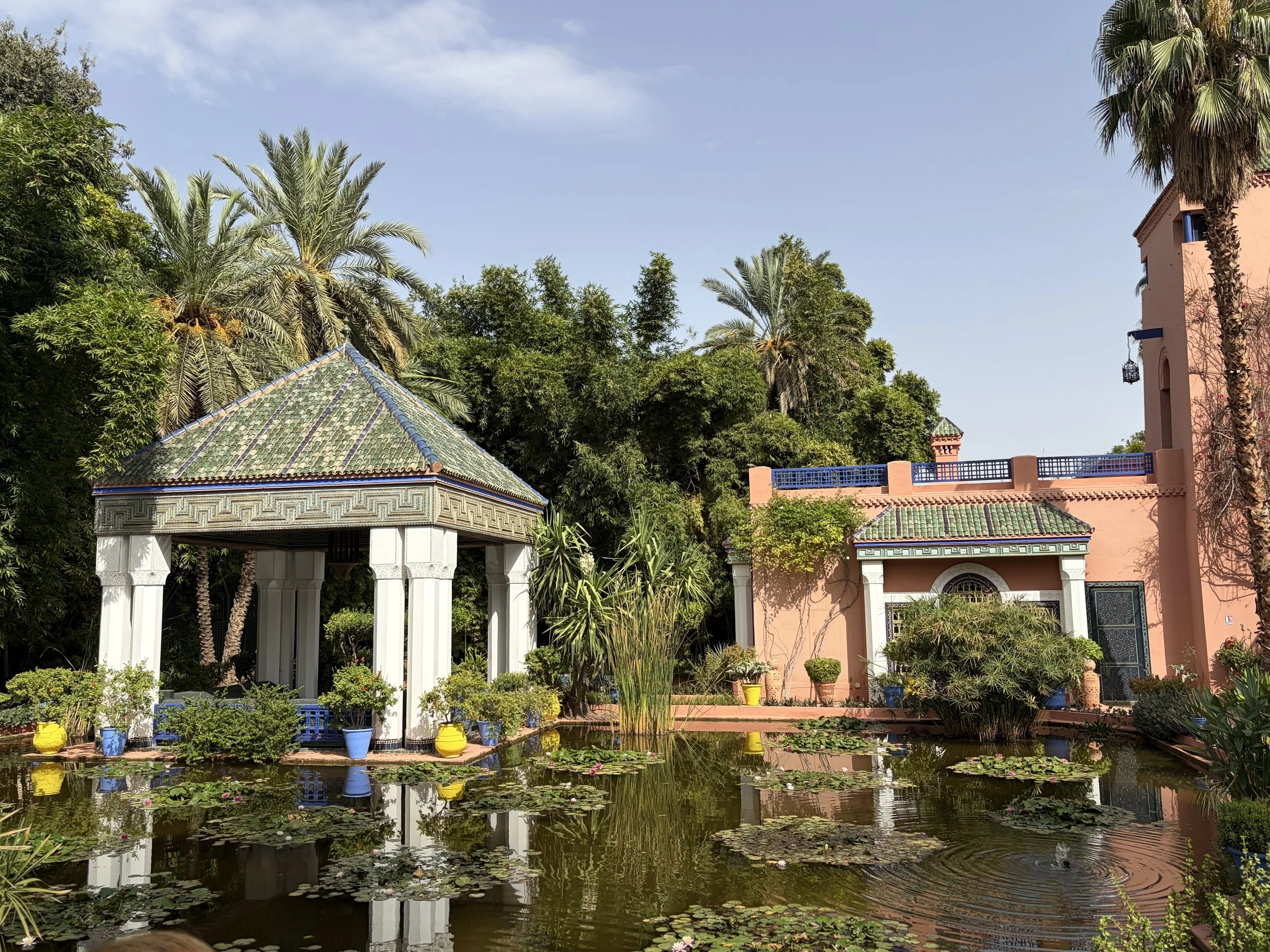
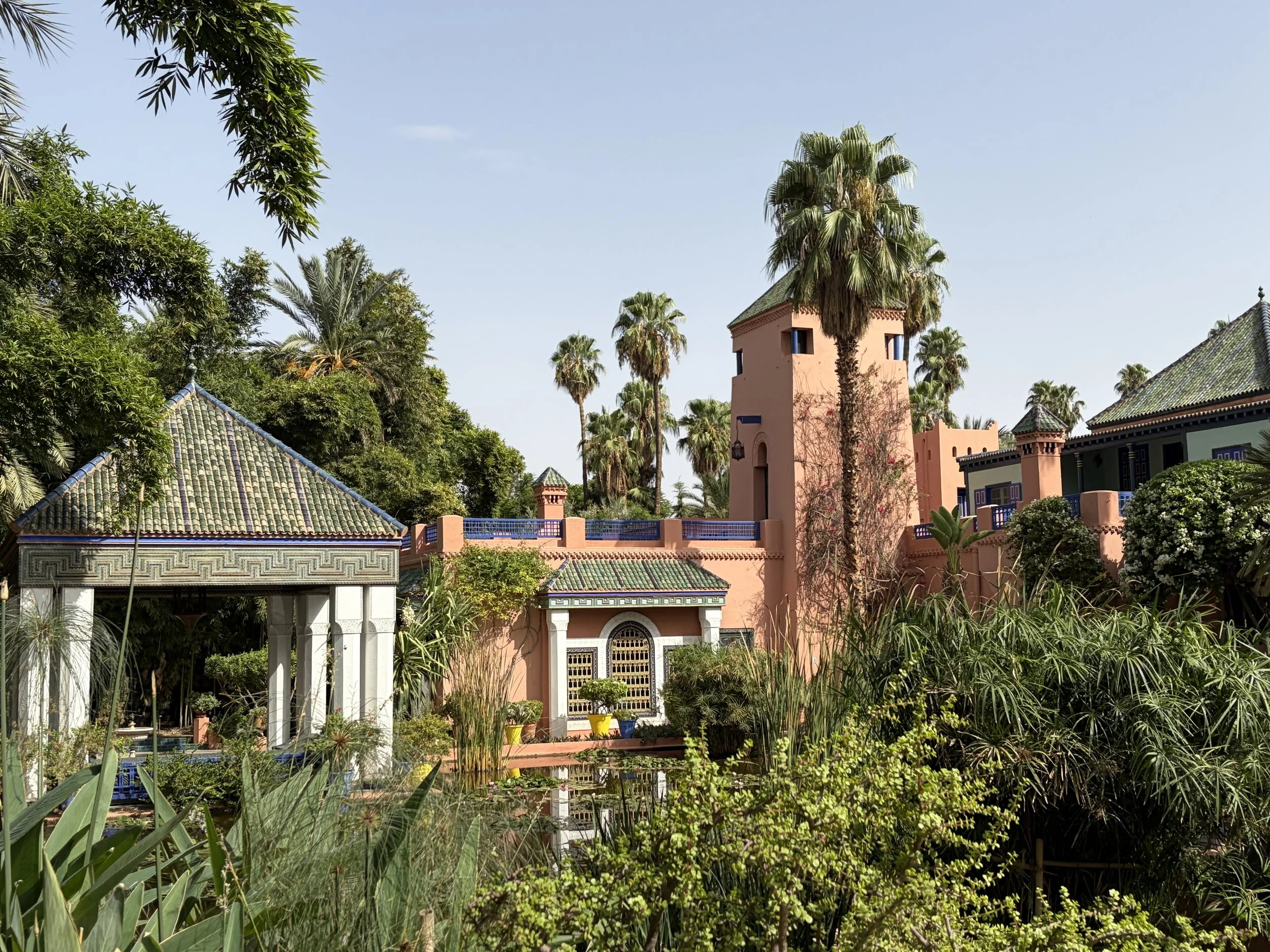
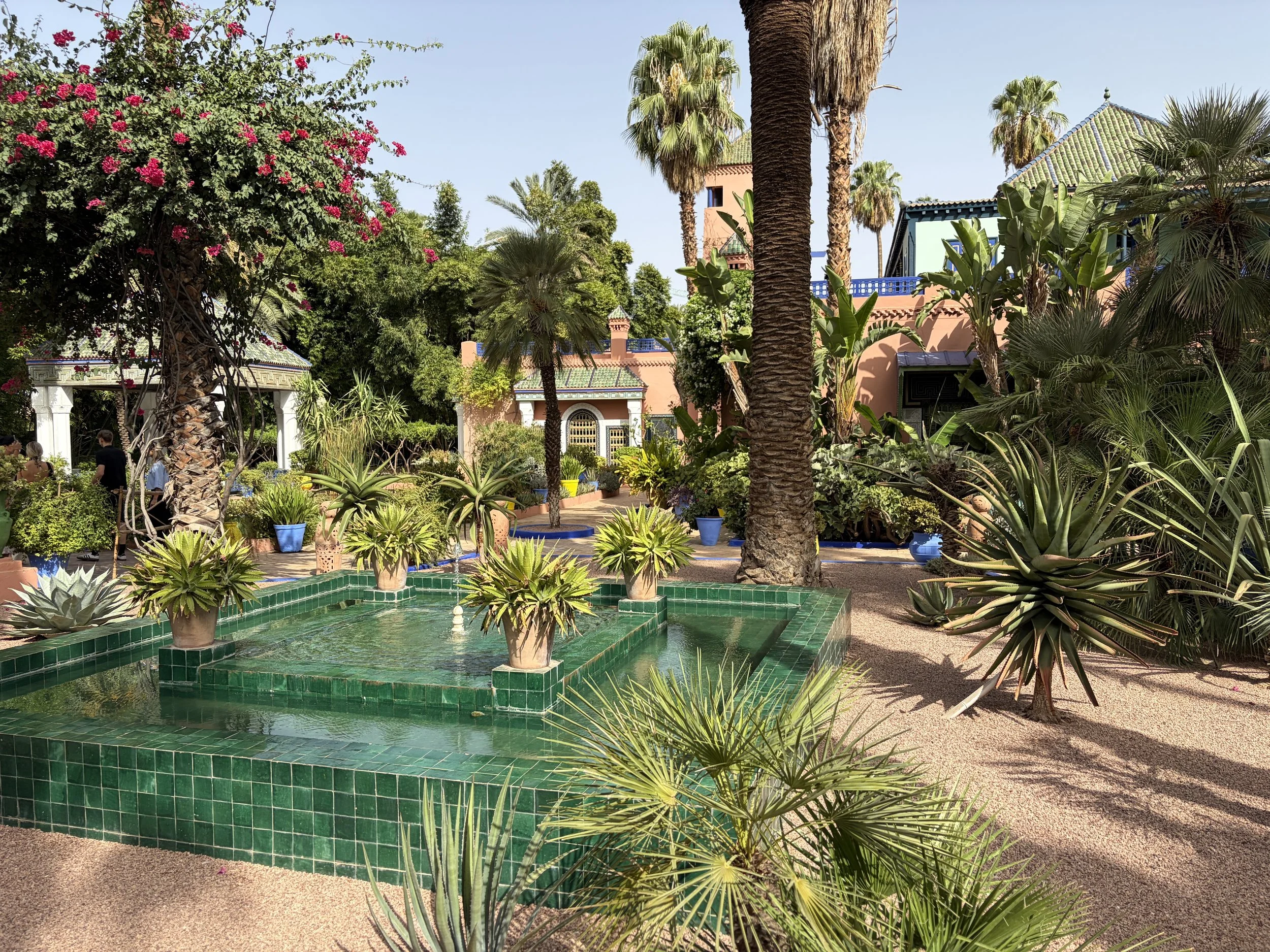
Monday, my final day, passed quickly. I began at Jardin Majorelle, created by French painter Jacques Majorelle beginning in the 1920s. Fashion designer Yves Saint Laurent and his partner, Pierre Bergé, later purchased and restored the neglected property. Its vivid blue buildings, exotic plants, and shaded walkways make it one of Marrakech’s most photographed places. It was packed with visitors taking pictures, but it was still beautiful. I was glad someone had chosen to preserve it.
Back at the riad, I prepared for a hammam and massage as my final experience. A Moroccan hammam is more than a bath. It is a traditional cleansing ritual involving heat, washing, exfoliation, and relaxation. Public hammams have historically served an important social role, while luxury-riads offer a quieter introduction for visitors.
One guide told me that hammams became popular partly because people needed to cleanse themselves before prayer, including after sex. I cannot vouch for the historical accuracy of his explanation, but it certainly made the ritual more memorable.
After being scrubbed, cleaned, and covered in oils, I packed my increasingly heavy luggage and headed to the airport. I flew from Marrakech to Amsterdam, slept for a few hours at a hotel near the airport, and boarded my final flight to San Diego.
The trip began because I chose to see snake charmers. That one decision led to Amsterdam canal houses, Nutella stroopwafels, Moroccan mint tea, crowded souks, a questionable scooter ride, spleen for dinner, an Atlas Mountains waterfall, gummy bears offered as a family gift, an impractical-looking stone mask, and a stray cat named Sugar.
But the trip also made me think more carefully about choice itself.
I could choose the country. I could choose to travel alone. I could choose where to stay, what to eat, which risks to take, and when to walk away. I could even choose poorly and change my mind. I had always treated that freedom as ordinary because it had always been available to me.
Marrakech reminded me that choice is not merely about selecting from a list. It is about who creates the list, who is permitted to select from it, and whether someone can imagine an option that was never offered.
Prepositions matter. There is a difference between traveling to a place and merely passing through it. There is a difference between freedom of choice and freedom to choose. There is also a difference between making a choice and recognizing the privilege of having one.
I am glad I chose Marrakech. And now, after choosing to write this very long story, I choose to end it.